The creation and dissemination of art have long been understood as fundamentally social endeavors, driven by an inherent human desire for connection and validation. Artists typically seek to share their work, elicit engagement from an audience, and receive feedback that confirms resonance—a process akin to spoken communication, where a speaker seeks acknowledgement and understanding from a listener. This interaction provides not only validation when a connection is forged but also valuable insights and constructive challenges when perspectives diverge. This reciprocal exchange forms the bedrock of artistic development and community building.
The Internet’s Early Promise and Subsequent Transformation
The advent of the internet initially heralded a new era for artists, promising an unprecedented platform for global reach and direct audience engagement. In its nascent stages, particularly around the turn of the millennium and into the early 2010s, the digital landscape fostered a vibrant ecosystem where independent creators could achieve significant discovery and interaction. This period, often romanticized as the "blogosphere" era, was characterized by decentralized platforms, thriving online communities, and search functionalities that genuinely facilitated the discovery of niche content. Independent game developers, musicians, writers, and visual artists could organically cultivate fan bases, with enthusiasts readily creating derivative works, sharing gameplay videos, and engaging directly with creators through forums and personal websites. The success of early independent projects, even those with modest production values, served as a testament to this accessible digital environment. For instance, a game released in 2010 might have garnered widespread attention and interviews from numerous online publications, not necessarily due to a substantial marketing budget or exceptional polish, but rather the internet’s inherent design that favored broad visibility and genuine community interaction.
However, over the past decade, this initial promise has undergone a significant transformation. A series of strategic decisions by large technology corporations, coupled with a notable absence of proactive governmental regulation, has led to an increasingly centralized and "top-heavy" internet. This structural shift has profoundly altered the dynamics of content discovery and creator visibility. The digital landscape has evolved into an environment where a disproportionately small number of creators capture the vast majority of audience engagement, creating a stark imbalance. Hypothetically, where 10 years ago 100,000 creators might have each cultivated 100 dedicated fans, the contemporary scenario often sees perhaps 100 prominent figures commanding 100,000 fans each, with this disparity continuing to intensify year after year.
The Mechanisms of Centralization: Algorithms and Consolidation
The primary drivers behind this centralization are multifaceted, encompassing the pervasive influence of algorithms and widespread corporate consolidation. Modern digital platforms, from social media giants to streaming services, employ sophisticated algorithms designed primarily to maximize user engagement and, consequently, advertising revenue. These algorithms often prioritize content from established, high-follower accounts or content that aligns with trending topics, effectively creating a feedback loop that further elevates already popular creators. While ostensibly aiming to personalize user feeds, these systems often inadvertently stifle the visibility of emerging artists and diverse voices, trapping them in a cycle of low exposure despite the quality or originality of their work. Independent creators are increasingly forced to "optimize" their content not for human appeal or artistic merit, but for algorithmic approval, often resorting to viral trends or sensationalism to gain a fleeting moment of visibility.
Parallel to algorithmic shifts, the digital and creative industries have witnessed an unprecedented wave of corporate consolidation. Major tech and media conglomerates have systematically acquired smaller companies, studios, and platforms, effectively reducing the number of independent entities and concentrating power in the hands of a few dominant players. In the gaming industry, for example, the past decade has seen numerous independent studios absorbed by titans like Activision Blizzard, Tencent, and Take-Two Interactive. This trend mirrors broader economic patterns where fewer, larger corporations control an ever-expanding share of the market. For independent game developers or aspiring Twitch streamers in 2025, the barrier to entry has become astronomically high. Achieving prominence often necessitates not only significant financial investment in marketing but also the radical optimization of creative output itself to appease algorithmic demands, fundamentally shifting the focus away from human connection and artistic integrity.
Regulatory Lapses and Their Consequences
A critical factor enabling this transformation has been the regulatory inaction of governments worldwide. Critics argue that existing antitrust laws, designed to prevent monopolies and foster fair competition, have not been adequately enforced in the digital sphere. This regulatory vacuum has allowed tech giants to grow unchecked, consolidating their market power and dictating the terms of engagement for millions of users and creators. Furthermore, governments have largely failed to introduce new legislation specifically tailored to the unique challenges of the digital age. This oversight has contributed to the erosion of the early internet’s vision—a decentralized "blogosphere" characterized by diverse communities, functional search capabilities, and genuine content discovery. The absence of robust regulatory frameworks has inadvertently fostered an environment where platform control trumps public interest, leading to diminished opportunities for independent voices and a less diverse digital ecosystem.
The Open Mic as a Counter-Narrative to Digital Gatekeeping
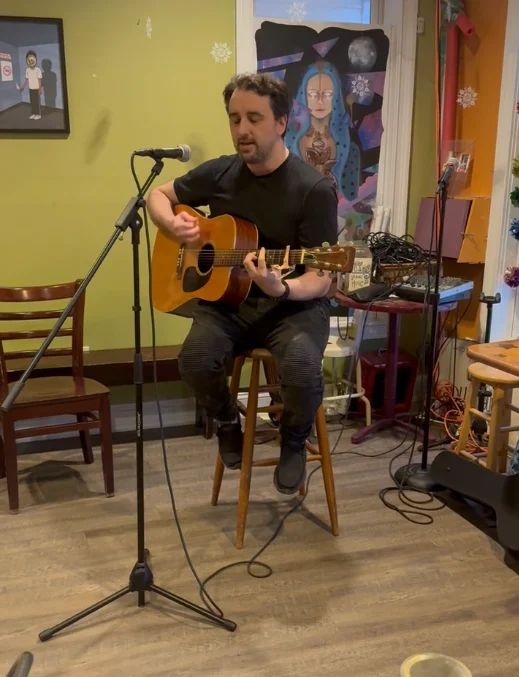
In stark contrast to the algorithm-driven, top-heavy digital landscape, physical spaces offer a compelling alternative model for authentic artistic engagement. The "open mic" embodies this alternative ethos, standing as perhaps the most democratically accessible platform for creative expression. In such settings, the inherent limitations and biases of the internet simply dissolve. Corporations have yet to devise effective mechanisms to interfere with or monetize genuine human interaction in shared physical spaces like coffee shops or community centers.
At an open mic, every participant is afforded an equal opportunity—typically a 3-5 minute slot—to present their work, regardless of their background, experience, or artistic medium. Whether it’s poetry, an experimental musical piece, a stand-up routine, or simply a personal reflection, the stage is open to all. People from diverse socioeconomic backgrounds, age groups, body shapes, and ethnic origins converge, united by a shared curiosity and a willingness to engage. There are no algorithms to appease, no gatekeepers determining visibility, no million-dollar marketing budgets required. The primary commonality is the shared physical presence: individuals sharing space, time, and a spirit of mutual curiosity.
While it is important to acknowledge that the broader "in real life" (IRL) art world is not entirely free from arbitrary barriers, biases, or the influence of corporate interests, the open mic represents a powerful ideal. Its equitable nature stems largely from its non-commercial essence; performers typically do not make or spend money in these engagements, thus removing the financial incentives that often corrupt other creative avenues. This model underscores the potential for truly inclusive platforms, both online and offline, where genuine connection and creative expression take precedence over profit and algorithmic optimization.
Towards a More Equitable Digital Future
Despite the current challenges, the internet remains an integral part of modern life. Therefore, the imperative is not to abandon digital platforms but to advocate for their transformation towards a more equitable and open model, mirroring the principles of the open mic. Platforms that prioritize direct, peer-to-peer interaction and minimize algorithmic filtering, such as certain chat applications, offer glimpses of this potential. In such environments, all participants can engage on a relatively equal footing, fostering a sense of community and shared attention that is increasingly rare elsewhere online.
The ongoing conversation about the future of the internet extends beyond artistic expression; it touches upon fundamental societal structures and civic engagement. In an era marked by increasing social fragmentation and political polarization, the ability to connect authentically, share diverse perspectives, and mobilize collectively becomes ever more crucial. Physical presence and community building are vital not only for fostering artistic collaboration and inspiration but also for strengthening social bonds and enabling collective action. Being physically present in one’s community can mean encountering a future collaborator, witnessing an inspiring performance, or even serving as an inspiration for others. More broadly, it signifies being an active participant in society, ready to engage in civic discourse and respond to societal challenges.
The call for a re-envisioned internet, one that prioritizes human connection and equitable access over algorithmic control and corporate consolidation, is gaining momentum. This shift would necessitate concerted efforts from policymakers to enforce antitrust laws, introduce new regulations for digital platforms, and perhaps even explore models for public-interest internet infrastructure. Simultaneously, creators and users must continue to champion and build spaces, both digital and physical, that embody the principles of openness, equity, and genuine human engagement. The ultimate goal is to bridge the digital divide, ensuring that the internet once again serves as a democratizing force for creativity and community, rather than a centralized conduit for a select few.
About the Author