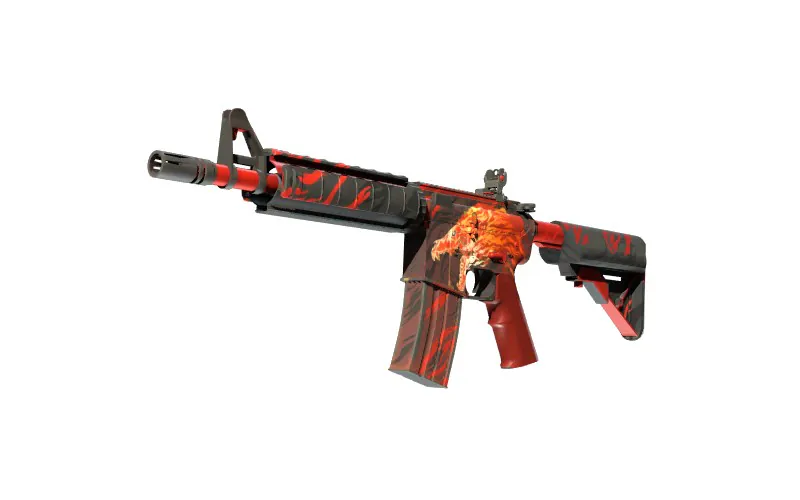
In the dynamic and highly lucrative ecosystem of Counter-Strike 2 (CS2) cosmetic items, a specific and accurate source of information is not merely a convenience but a fundamental necessity for players, collectors, and professional traders alike. The DMarket CS2 Wiki Skins database has emerged as a central pillar in this digital marketplace, providing an indispensable resource for users seeking to verify item authenticity, understand aesthetic upgrades, and analyze intricate technical specifications. As CS2 transitioned from its predecessor, introducing updated lighting models, enhanced textures, and refined item details, the demand for such a centralized, high-fidelity database intensified, empowering users to make informed decisions within the global skins market.
The Indispensable Role of a Centralized Database in CS2’s Economy
The CS2 skins market represents a unique intersection of gaming, digital art, and speculative finance, where virtual assets can command real-world values ranging from a few cents to hundreds of thousands of dollars. The sheer volume and complexity of these items necessitate a robust, easily accessible information repository. The DMarket CS2 Wiki serves this crucial function by meticulously cataloging every known skin, detailing its attributes, market history, and unique characteristics. This centralized approach mitigates the risks associated with misinformation, which can lead to significant financial losses or misjudged investments. For a community where the aesthetic appeal and rarity of an item directly translate into its market valuation, precision in data is paramount. The wiki’s utility extends beyond simple identification; it acts as a comprehensive educational tool, demystifying the intricate layers of skin mechanics, from wear values to pattern indexes, and providing the context necessary for both novice players and seasoned investors to thrive. Industry analysts frequently emphasize the role of such transparent data sources in fostering a healthier, more trustworthy trading environment.
Background and Evolution: From CS:GO to the CS2 Era
The phenomenon of in-game cosmetic items first gained widespread prominence with the introduction of weapon skins in Counter-Strike: Global Offensive (CS:GO) in August 2013, as part of the "Arms Deal" update. What began as a novel way to customize in-game weaponry quickly blossomed into a multi-billion dollar secondary market, driven by rarity, aesthetic appeal, and the thrill of unboxing virtual treasures from weapon cases. Over the decade that followed, the CS:GO skins market matured, developing intricate trading networks, specialized platforms, and a dedicated community of collectors and investors. The valuation of skins became a complex interplay of supply and demand, rarity, aesthetic preference, and historical significance.
The transition to Counter-Strike 2 in September 2023 marked a significant technological leap for the franchise. Built on Valve’s Source 2 engine, CS2 introduced physically based rendering, volumetric smoke, and dramatically improved lighting. These graphical enhancements profoundly impacted how existing skins appeared in-game, often revealing previously unnoticed details or altering the perceived desirability of certain finishes. For instance, the way metallic surfaces glinted or how vibrant colors popped under the new lighting engine could elevate the aesthetic appeal of some skins, while others might appear less striking. This shift underscored the urgent need for updated visual references and detailed technical breakdowns, which the CS2 Wiki promptly began to provide, adapting its extensive catalog to the new engine’s realities. The wiki’s continuous updates reflect the ongoing evolution of the game itself, ensuring that its information remains current and relevant in a perpetually shifting landscape, a critical factor for maintaining market stability and player confidence.
The Complete Skin Catalog: A Structured Inventory of Digital Assets
At its core, the DMarket CS2 Wiki offers an exhaustive, structured list of every available weapon finish in Counter-Strike 2. This comprehensive catalog is the foundational element for any collector, trader, or player looking to delve into the market. Its organization allows for efficient exploration and detailed study.
Browsing by Weapon Type
The wiki intelligently categorizes skins, allowing users to navigate with ease. Items are separated into primary and secondary categories, encompassing everything from heavy machine guns like the Negev and M249 to precision rifles such as the AWP and AK-47, and a wide array of pistols including the Desert Eagle and Glock-18. Furthermore, it covers sub-categories like SMGs (e.g., MP9, MAC-10), shotguns (e.g., Nova, XM1014), and unique items such as knives and gloves. Advanced filtering options enable users to narrow down results based on specific interests, whether it’s finding all available skins for a particular pistol, exploring options for their favorite rifle, or identifying new additions for their loadout. This granular categorization streamlines the search process, making the vast collection manageable and accessible for players with diverse preferences.
Rarity and Grade Classification
Each skin is assigned a specific rarity tier, a crucial determinant of its drop frequency and initial market entry price. These tiers range from the common "Consumer Grade" (white) to increasingly rare classifications such as "Industrial Grade" (light blue), "Mil-Spec" (blue), "Restricted" (purple), "Classified" (pink), "Covert" (red), and the supremely elusive "Extraordinary" (gold) for knives and gloves. Additionally, there are "Contraband" (orange) items, which are exceptionally rare and often tied to specific historical events or errors. High-tier items, exemplified by the "AWP | Dragon Lore" from the Cobblestone Collection or the "Karambit | Crimson Web" from the eSports 2013 Case, often feature intricate artwork, unique textures, and dynamic visual effects that react to in-game lighting and player movement. Understanding these rarity tiers is essential for assessing an item’s potential value and scarcity, guiding investment decisions, and informing players about the likelihood of acquiring certain skins.
Collections and Cases
Skins are systematically released as part of themed collections or contained within specific weapon cases, which typically require a corresponding key to open. The wiki meticulously tracks the history of these releases, documenting which items belong to historical sets like the "Operation Bravo Collection" (featuring the iconic AK-47 | Fire Serpent), the "Chroma Case" (known for its Fade finishes), or more recent additions such as the "Revolution Case" (which introduced the AWP | Duality). Identifying the origin of a skin is vital for players and investors, as it helps determine its long-term scarcity, historical significance, and potential for future value appreciation. For instance, skins from discontinued operations or rare, out-of-production cases tend to hold or increase their value due to limited supply, making their collection origin a key factor in market analysis.
Technical Analysis of Exteriors: Decoding Wear and Tear
Beyond aesthetic appeal, the technical specifications of a skin significantly influence its value. The "exterior" or "wear level" of a skin is not arbitrary but a precise mathematical calculation defined by the game engine. Every dropped or unboxed item receives a specific "Float Value" (a number typically between 0.00 and 1.00) that dictates its level of wear and tear. A lower float value indicates less wear, while a higher value indicates more wear.
These are the primary exterior characteristics, determined by the float value range:
- Factory New (FN): Float Value range typically 0.00 – 0.07. These skins exhibit virtually no wear, appearing pristine, vibrant, and highly reflective. They are the most desirable and often command the highest prices, sometimes exponentially more than their more worn counterparts.
- Minimal Wear (MW): Float Value range typically 0.07 – 0.15. These skins show only minor signs of wear, usually confined to edges or less prominent areas, maintaining much of their original appeal. They offer a good balance of quality and cost, making them popular.
- Field-Tested (FT): Float Value range typically 0.15 – 0.38. These skins display noticeable wear and scratches, but the core artwork remains largely intact. This is often a popular choice for budget-conscious buyers who still desire a recognizable skin.
- Well-Worn (WW): Float Value range typically 0.38 – 0.45. Skins in this condition show significant wear, with scratches, abrasions, and fading across much of the surface, often diminishing the artwork’s clarity and vibrancy.
- Battle-Scarred (BS): Float Value range typically 0.45 – 1.00. These skins are heavily worn, with extensive scratches, abrasions, and faded textures, often making the artwork barely discernible. Despite their poor condition, some Battle-Scarred skins can paradoxically be valuable if they possess unique patterns that are only visible or accentuated in high wear (e.g., specific "blacki-sac" patterns on some knives or specific "Blue Gem" patterns that are more prominent on a highly worn surface).
The DMarket CS2 Wiki provides detailed information on float values for specific skins, often including visual representations of how different float values affect a particular finish. This technical insight is critical for evaluating the true condition and worth of an item before a transaction, ensuring transparency for both buyers and sellers.
Pattern Variations and Visual Complexity: The Art of Uniqueness
Many finishes in CS2 utilize a randomized pattern template, meaning that two skins of the same type and wear level can look entirely different due to how the pattern is applied. This inherent randomness creates a sophisticated secondary market where specific, rare patterns command prices significantly higher than the standard market average. This phenomenon adds another layer of depth to the skin economy, moving beyond just rarity and wear.
Pattern Index Explained
The "Pattern Index" is a figure between 1 and 1,000 which precisely defines the specific position of the randomized pattern on the weapon model. This seemingly small detail can lead to iconic and highly sought-after variations. For example, on a "Case Hardened" knife or AK-47, a particular pattern index could result in a "Full Fade" (where the entire blade or weapon surface is covered in vibrant blue, purple, and yellow hues) or, most famously, a "Blue Gem" (where a significant portion, often the entire play-side, is covered in pure blue, such as the legendary Karambit Case Hardened #387). Collectors utilize the wiki to cross-reference these pattern indexes with known rare seeds, allowing them to verify the authenticity and desirability of their items, distinguishing a common pattern from a multi-thousand-dollar rarity. This meticulous verification process underscores the importance of precise data in a market where subtle visual differences can equate to vast financial disparities.
Special Case Finishes
Certain finishes, such as "Doppler" and "Gamma Doppler" knives, are further divided into specific "phases" that drastically alter their color palette and visual appeal. These phases are determined by their pattern index but are distinct enough to be categorized separately by the community. For instance, a "Phase 4 Doppler" knife, like the "Karambit Doppler Phase 4," will feature a predominantly blue and black appearance, making it highly coveted. In contrast, a "Phase 1" might show more red and black, while "Phase 2" combines blue and black with splashes of red, and "Phase 3" leans towards purple and black. Even rarer are the "Ruby" and "Sapphire" gems within the Doppler line, which are entirely monochromatic red or blue, respectively, and are among the most expensive skins in the game due to their extreme rarity and striking appearance. The wiki provides visual guides and pattern indexes for these phases, helping users identify and value these complex variations accurately.
The following factors primarily influence pattern desirability:
- Rarity of Specific Pattern: Patterns that occur very infrequently (e.g., a "Blue Gem" on a Case Hardened) are inherently more valuable due to their scarcity.
- Aesthetic Appeal: Patterns that are visually striking, symmetrical, or cover a large, prominent portion of the weapon’s visible surface are often more desired.
- Community Recognition: Patterns that have been historically recognized, named, and highly valued by the community (e.g., "Web" patterns, "Diamond" patterns on specific knives) often carry a significant premium.
- Unique Visual Effects: Patterns that create distinct, consistent effects, such as an all-blue blade or a perfectly centered graphic, are highly sought after.
- Play-Side vs. Back-Side: The pattern’s appearance on the "play-side" (the side visible to the player during gameplay) is generally more important and valuable than its appearance on the "back-side."
- Float Value Interaction: For some patterns, a specific float value range can either enhance or diminish the pattern’s visibility or appeal.
Price Validation and Market Accuracy: Navigating Volatility
The financial aspect of CS2 skins is characterized by extreme volatility and requires constant, vigilant monitoring of global trade data. Guessing the value of a rare item without reliable data can lead to significant losses during a trade or direct sale. The DMarket CS2 Wiki database directly addresses this challenge by providing comprehensive, real-time pricing data, ensuring every user has access to the most recent and accurate valuation insights. This financial transparency is critical for both the health of the market and the protection of individual traders.
Real-Time Pricing Data
The wiki integrates live market feeds, enabling it to display the current cash value of skins across multiple reputable trading platforms, including DMarket itself, Steam Community Market, and other third-party marketplaces. This real-time data is crucial for preventing users from falling victim to predatory low-ball offers or inadvertently overpaying for listings on third-party sites. In a market where prices can fluctuate by hundreds or thousands of dollars within hours due to game updates, tournament results, or speculative trading, up-to-the-minute information is an invaluable asset. This feature also aids professional traders in executing arbitrage strategies, capitalizing on minor price discrepancies across different marketplaces to secure profits.
Historical Value Trends
Beyond current prices, the wiki offers robust tools for viewing the price history of an item over extended periods, spanning several months or even years. This historical perspective is essential for investors who wish to "buy the dip" during market downturns or predict future market movements based on past performance. Trends often reveal predictable spikes in value following major Counter-Strike tournaments (e.g., Majors, IEM Katowice) or after the announcement of new game updates, cases, or operations. Analyzing these trends allows for more strategic buying and selling, transforming speculative trading into data-driven investment. For example, observant traders might notice a recurring pattern of certain souvenir skins appreciating significantly just before a Major, allowing them to make informed pre-event purchases.
Verification of Cash Value
For players and traders looking to convert their Steam community market credit into real-world currency, understanding the precise conversion amount is critical. The wiki assists users in calculating the difference between platform-locked funds (which often include Valve’s transaction fees, typically 15%) and the actual withdrawable balance from third-party sites. These third-party sites often offer better cash-out rates, but understanding the precise fees and exchange rates is paramount. This transparency helps users maximize their returns and avoid hidden fees, providing a clear picture of their net earnings from their digital assets.
Data-Driven Inventory Management: The Future of Collecting
Effective collection building and profitable trading in CS2 rely heavily on the ability to verify every technical and market parameter before any transaction occurs. The rapid evolution of the CS2 economy, with its increasing complexity and financial stakes, has transformed high-fidelity databases like the DMarket CS2 Wiki from a luxury for the elite into an indispensable tool for every participant. It empowers individuals to engage with the market not just as gamers, but as informed consumers and potential investors.
The broader implications of such a comprehensive resource are profound. It fosters market transparency, significantly reducing the prevalence of scams, misleading information, and unfair trading practices. It empowers casual players to understand the true value of their in-game possessions, enhancing their overall gaming experience and potentially opening doors to profitable opportunities they might otherwise miss. For serious collectors and investors, it provides the analytical edge needed to make strategic decisions, mitigating risk and maximizing potential returns in a volatile market. By democratizing access to complex market data and technical specifications, the DMarket CS2 Wiki ensures that today’s players are equipped for a more profitable, secure, and aesthetically pleasing experience on the server tomorrow, solidifying its role as a cornerstone of the Counter-Strike 2 community and a benchmark for information integrity in virtual economies.
About the Author