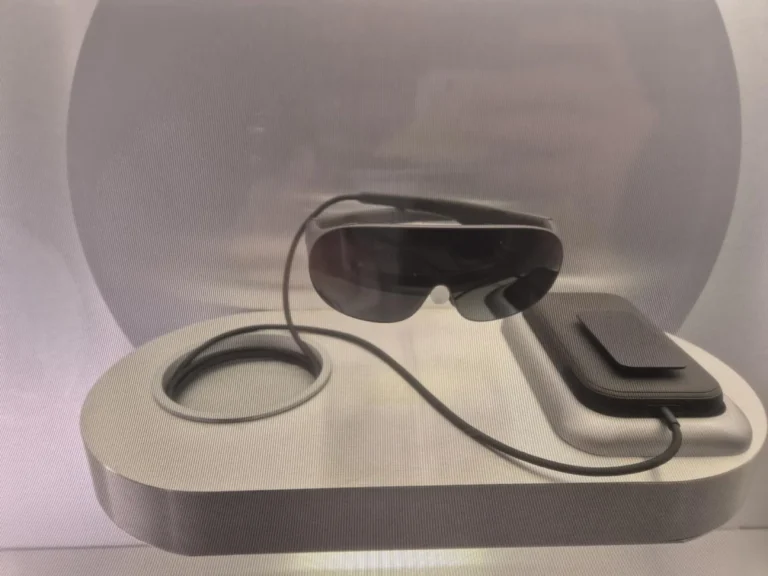
The adult entertainment industry has historically served as a critical incubator for emerging technologies, often providing the initial momentum required for mass-market adoption. From the early days of the internet and digital payment processing to the stabilization of the VR video market, this sector acts as a real-world stress test for media formats. Today, a significant shift is occurring as the industry moves beyond isolated virtual reality (VR) toward integrated augmented reality (AR) and mixed reality (MR), driven by advancements in passthrough hardware and artificial intelligence. This transition represents a maturation of spatial computing, where technical feasibility, production efficiency, and consumer demand are finally aligning to create a sustainable new medium.

The Historical Trajectory: From Mobile Novelty to Spatial Presence
The evolution of AR in adult entertainment can be divided into distinct phases, beginning with the experimental mobile period between 2018 and 2019. During this time, developers utilized early frameworks such as Apple’s ARKit and Google’s ARCore to create short, looping 3D animations. These experiences allowed users to place digital performers on flat surfaces detected by their smartphones. However, the technology was hampered by significant technical hurdles, including tracking drift, inconsistent lighting estimation, and a lack of realistic occlusion, where virtual objects failed to interact naturally with physical furniture.
Furthermore, user engagement remained low due to physical constraints. Holding a smartphone for extended periods was ergonomically uncomfortable, and the small screen size limited the sense of immersion. By 2020, while VR had established a viable commercial footprint, AR remained a fragmented landscape of technical demos and proof-of-concept applications. The conceptual bridge to the modern era was eventually built by the community; enthusiasts on forums and social platforms discovered that by manipulating headset settings to remove dark backgrounds from standard VR scenes, they could create a rudimentary passthrough effect. This grassroots experimentation signaled a clear market desire for content that blended digital performers into the user’s immediate physical environment.

The Hardware Catalyst: The Role of Full-Color Passthrough
The release of consumer-grade headsets with high-fidelity passthrough capabilities, most notably the Meta Quest 3 and the Apple Vision Pro, marked a definitive turning point for the industry. Unlike earlier "see-through" AR glasses, which often suffered from narrow fields of view and transparent imagery, passthrough VR uses onboard cameras to capture the real world and re-project it digitally. This allows for the seamless blending of high-resolution video content with the user’s actual surroundings.
Data from industry observers suggests that the adoption of the Meta Quest 3 significantly accelerated the demand for MR content. The introduction of full-color, low-latency passthrough allowed digital performers to appear spatially grounded. This hardware stability enabled studios to shift from speculative experimentation to repeatable production workflows. By 2023, dedicated MR productions began to emerge, utilizing chroma-key (green screen) backgrounds and specialized lighting to ensure that performers could be cleanly "matted" into any physical room.

Technical Innovations in Production: AI and Gaussian Splatting
A major challenge in the growth of AR adult entertainment has been the cost and complexity of production. Traditional volumetric capture—which uses dozens of cameras to create a 3D model of a performer—remains prohibitively expensive and difficult to scale for long-form content. Consequently, the industry has pivoted toward video-based passthrough, enhanced by artificial intelligence.
In 2022, major platforms such as SexLikeReal began implementing AI-driven matting algorithms. These tools are designed to automate the process of isolating performers from their original backgrounds, a task that previously required intensive manual labor. Because standard AI models were often not trained on adult content, leading studios developed proprietary in-house algorithms to handle the specific visual nuances of the genre. These AI tools have allowed for the conversion of vast libraries of existing VR content into AR-compatible formats, dramatically increasing the available volume of content without a linear increase in production costs.

Beyond AI matting, the industry is currently exploring Gaussian Splatting as a middle ground between 2D video and 3D volumetric models. Gaussian Splatting reconstructs a scene as a dense cloud of 3D points (Gaussians), each encoding color, opacity, and position. This allows viewers to move their heads and see natural parallax shifts, providing a much deeper sense of presence than flat video. Projects such as BraindanceVR have demonstrated that splat-based rendering can create spatially anchored performers that maintain depth consistency even as the viewer moves around the room. While computationally demanding, this technology represents the next frontier in realistic digital integration.
The Emergence of Centralized Discovery Platforms
As the volume of MR content grew, the market faced a significant fragmentation issue. Unlike the consolidated nature of traditional adult media, AR and passthrough content were often siloed across individual studio websites. This led to the development of dedicated aggregation platforms, such as ARPornTube, which launched in 2019 to track the evolution of the niche.

The transition of these sites from blogs to "tube-style" discovery platforms mirrors the broader maturation of the XR ecosystem. These platforms now provide 8K previews and trailers, allowing users to evaluate the quality of spatial anchoring and environmental blending before committing to a purchase. This infrastructure has been vital for independent producers, who can gain visibility alongside established VR brands. It also serves as a feedback loop for developers, highlighting the importance of neutral lighting and flexible staging techniques that work across various real-world environments, from bedrooms to living offices.
Broader Impact and Industry Implications
The innovations occurring within the AR adult sector have broader implications for the spatial computing industry at large. The techniques developed for AI-assisted background removal, real-time spatial anchoring, and lighting consistency are directly applicable to other sectors, including telepresence, remote healthcare, and immersive education.

- Production Efficiency: The shift toward AI-assisted workflows demonstrates how high-quality spatial content can be produced at scale without the need for million-dollar volumetric stages.
- User Experience Standards: The industry’s focus on "convincing presence" over raw resolution provides a roadmap for how B2B applications can improve user engagement in MR.
- Hardware Evolution: The success of passthrough content validates the strategic direction of hardware manufacturers like Meta and Apple, who are prioritizing MR capabilities over pure VR.
Despite this progress, commercial friction remains. "Pure AR" (optical glasses) still faces hurdles related to battery life, field of view, and content moderation policies on major app stores. However, the trajectory is clear: the industry is moving toward a future where digital and physical realities are inextricably linked.
Conclusion: A Distinct Medium in the Spatial Era
AR and mixed reality adult entertainment have evolved into a distinct medium, separate from traditional VR. While VR offers total immersion in a fictional world, AR focuses on the enhancement of the user’s own reality. This distinction requires a fundamental shift in design philosophy, moving away from controlled environments toward flexible, environmentally-aware production.

As hardware continues to shrink in size and grow in power, and as AI tools further lower the barrier to entry for creators, the integration of digital performers into physical spaces will likely become a standard feature of the immersive landscape. The adult industry, by acting as an early adopter and technical pioneer, has once again provided the blueprint for how a nascent technology can transform into a commercially viable and technologically sophisticated global market.
About the Author