The relentless march of artificial intelligence (AI) continues to reshape industries, offering unprecedented opportunities for enhanced efficiency, creativity, and problem-solving. As 2023 unfolds, a select group of AI tools has emerged as frontrunners, demonstrating the transformative power of this technology. These sophisticated platforms are not merely automating mundane tasks; they are augmenting human capabilities, unlocking new avenues for innovation, and setting new benchmarks for productivity across a diverse range of applications. From revolutionizing content creation and coding to refining written communication and optimizing digital strategies, these ten AI tools represent the vanguard of technological advancement, poised to make a significant impact on both individual workflows and large-scale business operations. This comprehensive overview delves into the functionalities, benefits, and potential implications of these groundbreaking AI solutions.
Understanding the AI Landscape: A Shift Towards Augmentation
The current wave of AI tools is characterized by a move beyond simple automation. While early AI applications focused on replacing repetitive manual processes, the tools gaining prominence in 2023 are increasingly designed to collaborate with humans, acting as intelligent assistants and co-creators. This symbiotic relationship allows professionals to leverage AI’s computational power and vast data processing capabilities while retaining their critical thinking, strategic oversight, and creative direction. The development of these tools is often rooted in advancements in machine learning, particularly deep learning and natural language processing (NLP), enabling them to understand, generate, and interact with human language and complex data patterns with remarkable sophistication. The rapid evolution of these technologies is not a singular event but rather a continuous progression, with significant breakthroughs occurring annually, driven by extensive research and development by leading tech firms and academic institutions.
The Vanguard of AI: Top 10 Tools Driving Change
The following AI tools have been identified as pivotal in driving innovation and efficiency in 2023. Their widespread adoption and diverse applications underscore their significant impact on the modern digital ecosystem.
1. ChatGPT: Redefining Conversational AI and Content Generation
At the forefront of natural language processing (NLP) stands ChatGPT, a powerful large language model developed by OpenAI. Its ability to generate human-like text in response to a vast array of prompts has made it an indispensable tool for numerous applications. ChatGPT excels in tasks such as drafting emails, writing articles, answering complex questions, translating languages, and even generating creative content like poems and scripts. Its underlying architecture, based on the GPT series, allows it to understand context, maintain coherence, and adapt its tone and style to suit specific requirements.
- Key Capabilities: Text generation, question answering, summarization, translation, creative writing, code explanation.
- Impact Analysis: ChatGPT has democratized access to sophisticated language generation, empowering individuals and businesses to produce content more rapidly. However, its output requires critical review, as it can sometimes exhibit biases present in its training data or generate factually inaccurate information. The ethical implications of AI-generated content, including issues of authorship and misinformation, are becoming increasingly pertinent with its widespread use.
- Future Outlook: Continued advancements in ChatGPT’s ability to understand nuance, engage in more complex reasoning, and provide more reliable factual information are anticipated, further solidifying its role as a foundational AI technology.
2. DALL-E 2: Visualizing the Unseen with AI-Generated Art
OpenAI’s DALL-E 2 has revolutionized the field of digital art and design by enabling users to create unique images from simple text descriptions. This generative AI model, built upon sophisticated transformer architectures, can produce photorealistic images, illustrations, and artistic renderings that are both novel and highly detailed. Its capabilities extend to manipulating existing images, allowing for variations and edits based on textual commands.
- Key Capabilities: Text-to-image generation, image editing, creation of variations, concept visualization.
- Impact Analysis: DALL-E 2 has opened up new creative possibilities for designers, marketers, and artists, enabling rapid prototyping of visual concepts and the creation of bespoke imagery for various media. The potential for misuse, such as generating deepfakes or infringing on existing artistic styles, necessitates careful consideration of ethical guidelines and content moderation.
- Timeline of Development: Following the initial release of DALL-E, DALL-E 2 represented a significant leap in image quality and prompt understanding, with continuous updates refining its capabilities since its public introduction.
3. Lumen5: Streamlining Video Creation for the Digital Age
Lumen5 addresses the growing demand for video content by simplifying the creation process through AI. This platform transforms existing text content, such as blog posts or articles, into engaging videos. Its AI analyzes the provided text, identifies key themes, and automatically selects relevant visuals, music, and text overlays. Users can then customize these elements to produce professional-looking videos suitable for social media, marketing campaigns, and presentations.
- Key Capabilities: Automated video generation from text, AI-powered content analysis, customizable templates, royalty-free media library.
- Impact Analysis: Lumen5 significantly lowers the barrier to entry for video production, enabling small businesses and individuals to create high-quality video content without extensive technical skills or expensive equipment. This democratizes video marketing and communication, allowing for more dynamic and engaging content strategies.
- Broader Implications: The ease of video creation facilitated by tools like Lumen5 contributes to the explosion of online video content, impacting how information is consumed and shared across digital platforms.
4. Grammarly: Elevating Written Communication with Intelligent Assistance
Grammarly has become an indispensable tool for writers, students, and professionals seeking to enhance their written communication. This AI-powered platform goes beyond basic spell-checking, offering comprehensive suggestions for grammar, punctuation, style, tone, and clarity. Its advanced algorithms analyze context to provide contextually relevant recommendations, helping users to write more effectively and persuasively.
- Key Capabilities: Grammar and spell checking, punctuation correction, style and tone suggestions, plagiarism detection, conciseness improvements.
- Impact Analysis: Grammarly empowers users to produce polished and professional written content, reducing errors and improving overall readability. It plays a crucial role in academic settings, professional correspondence, and digital content creation, fostering clearer and more impactful communication.
- Data-Driven Improvement: Grammarly continuously refines its algorithms based on vast amounts of text data, leading to increasingly sophisticated and accurate suggestions over time.
5. OpenAI Codex: Bridging the Gap Between Natural Language and Code
OpenAI Codex is a groundbreaking AI system that translates natural language instructions into functional code. Built on the foundation of GPT-3, Codex can generate code in numerous programming languages, making software development more accessible and efficient. It can assist developers by suggesting code snippets, completing lines of code, and even generating entire functions based on descriptive prompts.
- Key Capabilities: Code generation from natural language, code completion, code explanation, bug identification.
- Impact Analysis: Codex has the potential to significantly accelerate software development cycles, reduce coding errors, and empower individuals with less programming expertise to contribute to code creation. This could lead to a more inclusive and dynamic software development landscape.
- Ethical Considerations: The ability to generate code raises questions about code security, intellectual property, and the potential for AI to create malicious software. Rigorous testing and oversight remain paramount.
6. Tabnine: Intelligent Code Completion for Developers
Tabnine is an AI-powered code completion tool designed to boost developer productivity. By analyzing vast repositories of code, Tabnine predicts and suggests relevant code snippets as developers type. It integrates seamlessly with popular Integrated Development Environments (IDEs) and supports a wide range of programming languages, offering personalized suggestions based on individual coding patterns and project context.
- Key Capabilities: AI-powered code completion, context-aware suggestions, support for multiple programming languages, IDE integration.
- Impact Analysis: Tabnine helps developers write code faster and with fewer errors, reducing the time spent on repetitive typing and syntax recall. This allows developers to focus more on problem-solving and architectural design, ultimately leading to more efficient software development.
- Developer Productivity Metrics: Studies have indicated that tools like Tabnine can improve coding speed by up to 10-15%, a significant gain in large-scale development projects.
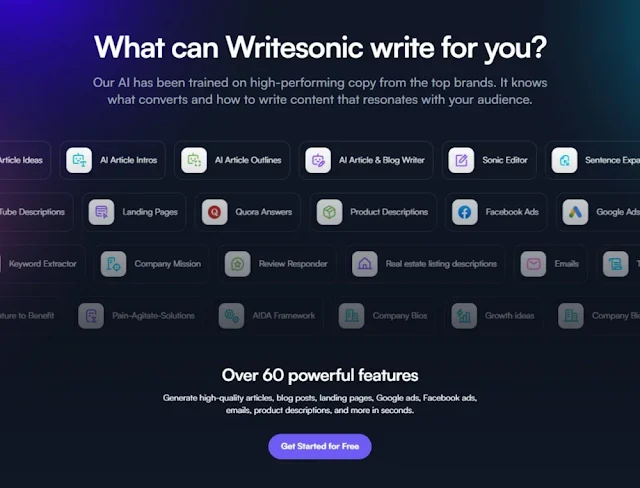
7. Jasper AI: Empowering Content Creation at Scale
Jasper AI is a sophisticated AI writing assistant designed to help businesses and individuals generate high-quality content for various marketing and communication needs. It leverages advanced language models to produce engaging blog posts, social media updates, website copy, and more, tailored to specific brand voices and target audiences. Jasper AI excels at overcoming writer’s block and scaling content production efficiently.
- Key Capabilities: Blog post generation, social media copy creation, ad copywriting, website content writing, long-form content assistance.
- Impact Analysis: Jasper AI enables organizations to maintain a consistent and robust content marketing presence without requiring a large in-house writing team. This is particularly beneficial for startups and small to medium-sized enterprises (SMEs) looking to compete in the digital space.
- Content Strategy Integration: Jasper AI can be integrated into broader content strategies, helping to brainstorm ideas, outline articles, and generate initial drafts, which can then be refined by human editors.
8. Surfer SEO: Optimizing Content for Search Engine Visibility
Surfer SEO is a powerful tool that leverages AI to enhance search engine optimization (SEO) efforts. It analyzes top-ranking content for specific keywords, providing data-driven insights into on-page optimization factors such as keyword density, content structure, and topical relevance. Surfer SEO helps content creators and marketers produce content that is not only informative and engaging but also highly likely to rank well in search engine results pages (SERPs).
- Key Capabilities: Content analysis based on top-ranking pages, keyword research integration, on-page SEO recommendations, content editor with real-time feedback.
- Impact Analysis: Surfer SEO empowers users to create content that aligns with search engine algorithms, leading to increased organic traffic and improved online visibility. This is crucial for businesses aiming to attract and convert customers through search engines.
- Competitive Analysis: The tool’s ability to benchmark content against competitors provides a clear roadmap for improvement, making it a vital asset in competitive digital landscapes.
9. Zapier: Automating Workflows Across Applications
Zapier is a leading web automation platform that connects disparate web applications, enabling users to automate repetitive tasks and streamline workflows. By creating "Zaps" – automated workflows that link two or more apps – users can trigger actions in one application based on events in another. This eliminates the need for manual data transfer and task execution between different software services.
- Key Capabilities: Cross-application automation, conditional logic in workflows, data synchronization, task automation, integration with thousands of apps.
- Impact Analysis: Zapier significantly enhances operational efficiency by automating mundane and time-consuming tasks. This frees up valuable human resources to focus on more strategic initiatives, leading to increased productivity and reduced operational costs.
- Business Process Optimization: Companies across various sectors utilize Zapier to automate everything from lead management and customer onboarding to data entry and social media posting.
10. Compose AI: Intelligent Text Generation from Structured Data
Compose AI is a Natural Language Generation (NLG) software company that specializes in transforming structured data into human-readable text. Their AI technology can automatically generate written or spoken content from sources like spreadsheets, databases, and APIs. This is particularly useful for creating reports, product descriptions, financial summaries, and other data-driven narratives.
- Key Capabilities: Automated report generation, data summarization, personalized content creation from data, API integration for real-time content.
- Impact Analysis: Compose AI enables businesses to communicate complex data insights clearly and efficiently, making information more accessible to a wider audience. It automates the often laborious process of report writing and data interpretation.
- Scalability in Data Reporting: For organizations dealing with large volumes of data, Compose AI offers a scalable solution for generating consistent and timely reports, crucial for informed decision-making.
The Broader Implications of AI Adoption
The proliferation of these advanced AI tools signifies a fundamental shift in how work is performed and how innovation is fostered. The ability to automate, augment, and accelerate processes across diverse fields promises significant economic and societal impacts.
- Increased Productivity: Businesses that effectively integrate these AI tools can expect substantial gains in productivity, leading to reduced operational costs and improved competitiveness.
- Democratization of Skills: Tools like ChatGPT and Codex are lowering the barriers to entry for content creation and coding, empowering a broader range of individuals to participate in these fields.
- Ethical and Societal Challenges: As AI becomes more powerful, critical discussions surrounding data privacy, algorithmic bias, job displacement, and the responsible use of AI are paramount. Governments, industries, and researchers are actively engaged in developing ethical frameworks and regulations to guide AI development and deployment.
- The Future of Work: The landscape of employment is evolving. While some roles may be automated, new opportunities are emerging in AI development, management, and oversight. A focus on reskilling and upskilling the workforce will be crucial to navigate this transition effectively.
Conclusion: Embracing the AI Revolution Responsibly
The top 10 AI tools highlighted in this article represent just a fraction of the rapidly expanding AI ecosystem. Their capabilities, ranging from sophisticated language generation and artistic creation to code assistance and workflow automation, are fundamentally altering the operational paradigms of businesses and individuals alike. As AI technology continues its exponential growth, its integration into daily workflows will only deepen. It is imperative for professionals and organizations to not only explore and adopt these tools but also to do so with a comprehensive understanding of their potential and limitations. A proactive approach, embracing continuous learning and ethical considerations, will be key to harnessing the full transformative power of AI while mitigating its inherent risks, ensuring that this technological revolution contributes to a more efficient, innovative, and equitable future.
About the Author