The relentless march of artificial intelligence continues to reshape industries, offering unprecedented opportunities for enhanced productivity and groundbreaking innovation. As we navigate 2023, a select group of AI-powered tools stands out, demonstrating remarkable capabilities in automating complex tasks, streamlining workflows, and empowering individuals and businesses alike. These sophisticated technologies, ranging from advanced natural language processing models to generative art platforms, are no longer the stuff of science fiction but tangible assets driving efficiency across a multitude of applications. This comprehensive exploration delves into the top ten AI tools that are making a significant impact, offering a glimpse into the transformative power of artificial intelligence in the modern era.
The Accelerating Landscape of AI Integration
The integration of AI into daily operations and strategic planning has seen exponential growth in recent years. Businesses are increasingly recognizing the potential of AI to unlock new efficiencies, personalize customer experiences, and accelerate product development cycles. The tools highlighted here represent the vanguard of this technological wave, offering practical solutions to long-standing challenges and opening new avenues for creativity and problem-solving. From enhancing communication through intelligent writing assistants to revolutionizing content creation and software development, these AI tools are becoming indispensable components of a forward-thinking operational framework.
1. ChatGPT: Mastering Conversational AI
At the forefront of natural language processing (NLP) stands ChatGPT, a powerful large language model developed by OpenAI. ChatGPT excels at generating human-like text in response to a vast array of prompts, making it a versatile tool for a multitude of tasks. Its capabilities extend to language translation, sophisticated question answering, and seamless text completion. The model’s proficiency spans diverse topics and writing styles, consistently producing coherent and fluent output.
Key Capabilities and Applications:
- Content Generation: Drafting articles, blog posts, marketing copy, and creative writing pieces.
- Customer Service: Powering chatbots for instant customer support and query resolution.
- Education: Assisting students with research, explanation of complex concepts, and essay structuring.
- Coding Assistance: Generating code snippets and debugging assistance.
Pros:
- Versatility: Capable of handling a broad spectrum of language-based tasks.
- Fluency and Coherence: Produces remarkably human-like and contextually relevant text.
- Accessibility: Relatively easy to interact with and integrate into existing workflows.
- Continuous Learning: Constantly being updated and improved by OpenAI, leading to enhanced performance.
Cons:
- Potential for Bias and Inaccuracy: As with any AI trained on large datasets, ChatGPT can inadvertently perpetuate biases present in its training data. Furthermore, it may occasionally generate factually incorrect information or offensive content, necessitating careful human review and fact-checking.
- Lack of True Understanding: While it can mimic understanding, it does not possess genuine consciousness or emotional intelligence, which can be limiting in highly nuanced or sensitive situations.
- Data Privacy Concerns: Users should be mindful of the data shared with the platform, as it contributes to ongoing training.
Analysis: ChatGPT represents a significant leap forward in conversational AI, democratizing access to advanced language capabilities. Its ability to process and generate text at scale offers substantial benefits for communication, content creation, and information retrieval. However, responsible implementation requires a critical approach, acknowledging its limitations and ensuring human oversight to mitigate risks associated with accuracy and bias.
2. DALL-E: Visualizing the Imagination
DALL-E, another groundbreaking creation from OpenAI, is a generative AI model that transforms textual descriptions into unique visual art. Built upon the robust GPT-3 architecture, DALL-E leverages a massive dataset of text and image pairs to understand the relationship between language and visual concepts. It can generate images that are not only similar to its training data but also exhibit novel compositions and styles, often producing high-resolution visuals suitable for various applications.
Key Capabilities and Applications:
- Artistic Creation: Generating original artwork, illustrations, and concept art.
- Design Prototyping: Visualizing product designs, architectural concepts, and marketing materials.
- Content Augmentation: Creating custom imagery for websites, social media, and presentations.
- Storyboarding: Producing visual sequences for films, animations, and video games.
Pros:
- Unprecedented Creativity: Capable of generating imaginative and unique visual content from simple text prompts.
- High-Resolution Output: Produces images of sufficient quality for professional use.
- Speed and Efficiency: Rapidly generates multiple visual options, accelerating the creative process.
- Accessibility for Non-Artists: Empowers individuals without traditional artistic skills to create compelling visuals.
Cons:
- Potential for Unoriginality: While novel, generated images can sometimes reflect or closely resemble existing art styles and elements from its training data, raising questions about true originality.
- Ethical Considerations: Concerns exist regarding copyright, attribution, and the potential for misuse in creating deepfakes or misleading imagery.
- Prompt Engineering Skill: Achieving desired results often requires skillful crafting of descriptive prompts, which can be a learning curve.
Analysis: DALL-E is revolutionizing visual content creation, democratizing artistic expression and offering powerful tools for designers, marketers, and artists. Its ability to translate abstract ideas into concrete visuals opens up new possibilities for communication and storytelling. However, as with any generative AI, careful consideration of ethical implications and the potential for influence from training data is paramount.
3. Lumen5: Streamlining Video Content Creation
Lumen5 has emerged as a pivotal platform for content creators seeking to simplify the video production process. This AI-powered tool leverages sophisticated algorithms to transform existing content, such as blog posts and articles, into engaging video formats. Its intuitive interface and automated features make it an invaluable asset for businesses and individuals aiming to enhance their social media presence and marketing efforts.
Key Capabilities and Applications:
- Automated Video Generation: Converting text-based content into dynamic videos with stock footage, music, and text overlays.
- Social Media Content: Producing shareable video content tailored for platforms like Facebook, Instagram, and Twitter.
- Marketing and Promotion: Creating promotional videos for products, services, and events.
- Content Repurposing: Transforming long-form articles into digestible video summaries.
Pros:
- Efficiency: Significantly reduces the time and effort required to produce professional-looking videos.
- Ease of Use: User-friendly interface requires no prior video editing expertise.
- Cost-Effective: Offers a more affordable alternative to traditional video production methods.
- Customization: Allows for customization of branding, music, and text elements.
Cons:
- Quality Variability: The quality of the generated video can depend heavily on the quality and structure of the source material.
- Limited Creative Control: While customizable, the AI-driven automation may offer less granular control compared to manual editing.
- Generic Elements: Some stock footage and music selections may appear generic if not carefully curated.
Analysis: Lumen5 exemplifies how AI can democratize sophisticated content creation. By automating much of the video production pipeline, it empowers a wider range of users to engage with audiences through video. This tool is particularly impactful for businesses looking to scale their content marketing efforts without substantial investment in specialized equipment or personnel.
4. Grammarly: Elevating Written Communication
Grammarly has become an indispensable tool for anyone who writes, leveraging AI to enhance the clarity, accuracy, and overall effectiveness of written communication. This intelligent writing assistant goes beyond basic spell-checking, offering comprehensive feedback on grammar, punctuation, style, and tone. Its real-time suggestions and in-depth explanations empower users to improve their writing skills and ensure their messages are conveyed with precision.
Key Capabilities and Applications:
- Grammar and Punctuation Correction: Identifying and correcting errors in real-time.
- Style and Tone Enhancement: Providing suggestions to improve conciseness, clarity, and appropriateness of tone for different audiences.
- Plagiarism Detection: Checking text against a vast database of online content to ensure originality.
- Vocabulary Enhancement: Suggesting synonyms and more impactful word choices.
Pros:
- Accuracy and Comprehensiveness: Offers a robust suite of checks for a wide range of writing issues.
- Improved Readability: Helps users craft clearer and more engaging prose.
- Broad Integration: Available across multiple platforms and applications, including web browsers, desktop applications, and mobile devices.
- Educational Value: Explanations of suggested changes help users learn and improve their writing over time.
Cons:
- Over-Reliance: Users may become overly dependent on the tool, potentially hindering the development of their own editing skills.
- Misinterpretation of Nuance: AI can sometimes struggle with subtle nuances of language, idiomatic expressions, or specific stylistic choices, leading to sometimes incorrect suggestions.
- Privacy Concerns: As with any cloud-based service, users should be aware of Grammarly’s data usage policies.
Analysis: Grammarly demonstrates the power of AI in refining human communication. By providing intelligent, context-aware feedback, it helps individuals and organizations present a more professional and polished image. Its widespread adoption underscores the universal need for clear and error-free written communication in the digital age.
5. OpenAI Codex: Bridging Natural Language and Code
OpenAI Codex represents a significant advancement in the field of AI-assisted software development. This powerful system, an evolution of the GPT-3 model, is capable of translating natural language descriptions into functional code across numerous programming languages. Codex democratizes coding by enabling individuals with limited programming experience to generate code through simple, conversational instructions.
Key Capabilities and Applications:
- Code Generation: Creating code snippets, functions, and even entire programs from textual descriptions.
- Code Explanation: Translating existing code into human-readable explanations.
- Debugging Assistance: Identifying potential errors and suggesting fixes within code.
- Prototyping: Rapidly generating functional prototypes for software applications.
Pros:
- Increased Accessibility: Lowers the barrier to entry for software development, making it accessible to a broader audience.
- Accelerated Development: Significantly speeds up the coding process for experienced developers by automating repetitive tasks.
- Cross-Language Capability: Supports a wide array of popular programming languages.
- Educational Tool: Aids in learning new programming languages and concepts by providing practical examples.
Cons:
- Code Quality and Security: Generated code may not always be optimal in terms of efficiency, security, or adherence to best practices. Rigorous human review and testing are essential.
- Contextual Understanding Limitations: Complex or ambiguous natural language prompts can lead to incorrect or unintended code.
- Reliance Risk: Developers should view Codex as an assistant, not a replacement for fundamental programming knowledge and problem-solving skills.
Analysis: OpenAI Codex is poised to transform software development by making it more efficient and accessible. Its ability to understand and generate code from natural language has profound implications for how software is created and maintained. However, the responsibility for ensuring the quality, security, and ethical implications of the generated code ultimately rests with the human developer.
6. Tabnine: Intelligent Code Completion
Tabnine is a leading AI-powered code completion tool designed to boost developer productivity. By learning from vast amounts of open-source code, Tabnine offers context-aware suggestions for code snippets, improving efficiency and reducing the likelihood of syntax errors. Its compatibility with numerous programming languages and seamless integration into popular Integrated Development Environments (IDEs) make it a valuable asset for developers of all skill levels.
Key Capabilities and Applications:
- Predictive Code Completion: Suggests lines or blocks of code as developers type.
- Contextual Awareness: Provides relevant suggestions based on the current code context and project.
- Multi-Language Support: Works with a wide range of programming languages, including Python, JavaScript, Java, and C++.
- IDE Integration: Seamlessly integrates with popular IDEs like VS Code, IntelliJ IDEA, and PyCharm.
Pros:
- Enhanced Productivity: Significantly speeds up the coding process by reducing typing and boilerplate code.
- Improved Accuracy: Helps minimize syntax errors and common coding mistakes.
- Learning Aid: Can expose developers to new patterns and best practices through its suggestions.
- Customizable: Can be trained on private codebases to provide more tailored suggestions.
Cons:
- Suggestion Accuracy: While generally accurate, suggestions may not always be optimal or perfectly suited to the specific project requirements.
- Potential for Over-Reliance: Developers might become too reliant on suggestions, potentially slowing down their learning of fundamental syntax and logic.
- Privacy of Private Code: For organizations using Tabnine to train on private code, ensuring data security and privacy is a critical consideration.
Analysis: Tabnine exemplifies how AI can augment the skills of human professionals. By providing intelligent assistance in the form of code completion, it allows developers to focus more on problem-solving and architectural design, rather than repetitive coding tasks. This tool is a testament to AI’s ability to enhance efficiency without compromising the core expertise of its users.
7. Jasper AI: Revolutionizing Content Creation at Scale
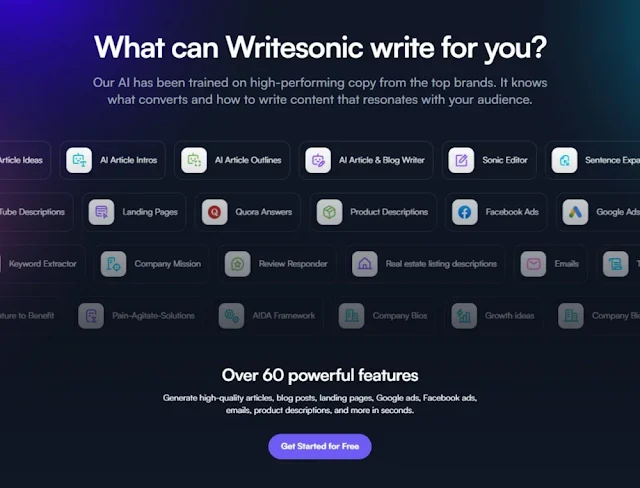
Jasper AI stands as a premier AI-powered copywriting tool designed to assist marketers, entrepreneurs, and content creators in generating high-quality written content with unprecedented speed and efficiency. Leveraging advanced natural language processing, Jasper analyzes user input and stylistic preferences to produce compelling marketing copy, blog posts, social media updates, and more, tailored to specific brand voices and target audiences.
Key Capabilities and Applications:
- Long-Form Content Generation: Creating blog posts, articles, and e-books.
- Marketing Copywriting: Producing ad copy, email subject lines, product descriptions, and social media captions.
- Content Optimization: Assisting in refining content for SEO and engagement.
- Brand Voice Consistency: Adapting its output to match a specific brand’s tone and style.
Pros:
- Speed and Volume: Enables the rapid creation of large volumes of content.
- Versatility: Supports a wide range of content formats and marketing objectives.
- User-Friendly Interface: Relatively easy to learn and operate, even for those without extensive copywriting experience.
- SEO Integration: Features and templates designed to improve search engine visibility.
Cons:
- Fact-Checking Required: AI-generated content always requires human review for factual accuracy and originality.
- Potential for Generic Output: Without careful guidance, content can sometimes lack a distinct human touch or unique perspective.
- Subscription Costs: Access to advanced features and higher output volumes typically requires a paid subscription.
Analysis: Jasper AI is a powerful engine for scaling content creation efforts. It addresses the growing demand for consistent, high-quality content by automating much of the initial drafting process. This tool is particularly valuable for businesses looking to maintain a strong online presence and engage their audience across multiple channels without a prohibitive increase in resources.
8. Surfer SEO: Optimizing for Search Engine Dominance
Surfer SEO is a sophisticated software tool that empowers website owners and digital marketers to significantly enhance their search engine optimization (SEO) strategies. By employing AI to analyze top-ranking content for specific keywords, Surfer SEO provides actionable insights and data-driven recommendations to optimize on-page elements, ensuring content aligns with search engine algorithms and user intent.
Key Capabilities and Applications:
- Content Analysis: Compares user-generated content against top-ranking competitor pages for target keywords.
- Keyword Research and Clustering: Identifies relevant keywords and groups them for comprehensive content strategies.
- On-Page Optimization: Provides recommendations for keyword density, word count, headings, and internal/external linking.
- Content Editor: Offers a real-time editor that guides users in creating SEO-optimized content.
Pros:
- Data-Driven Insights: Provides concrete, data-backed recommendations for SEO improvement.
- Competitive Analysis: Offers a clear understanding of what makes top-ranking content successful.
- Improved Rankings: Helps users create content that is more likely to rank higher in search engine results.
- Efficiency: Streamlines the SEO optimization process, saving time and effort.
Cons:
- Not a Guarantee: While powerful, Surfer SEO is a tool to aid SEO efforts; it does not guarantee top rankings, as algorithms are complex and constantly evolving.
- Requires SEO Knowledge: Users still need a foundational understanding of SEO principles to effectively leverage the tool’s insights.
- Cost: Advanced features and comprehensive analysis often come with a subscription fee.
Analysis: Surfer SEO represents the intelligent application of AI to the complex field of digital marketing. By demystifying the intricacies of on-page SEO, it provides a competitive edge for businesses striving for online visibility. Its data-centric approach empowers users to make informed decisions that can lead to tangible improvements in organic search performance.
9. Zapier: Automating Workflows Between Applications
Zapier is a revolutionary web automation tool that seamlessly connects disparate web applications, allowing users to automate repetitive tasks and streamline workflows without the need for extensive coding knowledge. By creating "Zaps"—automated workflows that link different apps—users can automate data transfer, trigger actions based on specific events, and significantly enhance operational efficiency across their digital toolkit.
Key Capabilities and Applications:
- Task Automation: Automates tasks such as data entry, email sending, and social media posting.
- App Integration: Connects hundreds of popular web applications like Google Sheets, Slack, Mailchimp, and more.
- Workflow Optimization: Streamlines multi-step processes by automating the flow of information between applications.
- Lead Generation and CRM Integration: Automates the process of adding new leads from forms to CRM systems.
Pros:
- Significant Time Savings: Automates manual, time-consuming tasks, freeing up valuable human resources.
- Increased Productivity: Enables faster execution of business processes and reduces errors.
- User-Friendly Interface: "No-code" approach makes automation accessible to a broad audience.
- Extensive App Library: Integrates with a vast and growing ecosystem of web applications.
Cons:
- Complexity for Advanced Zaps: While simple Zaps are easy to create, complex multi-step workflows can require a steeper learning curve.
- Subscription Costs: While a free tier is available, advanced features and higher task limits require paid subscriptions.
- Reliance on Third-Party Apps: The functionality of Zaps depends on the APIs and stability of the connected applications.
Analysis: Zapier is a cornerstone of modern workflow automation, empowering individuals and businesses to leverage the power of interconnected applications. Its ability to bridge the gap between different software tools without coding is a testament to AI’s role in simplifying complex technological integrations and driving operational efficiency.
10. Compose AI: Generating Content from Data
Compose AI is a specialized company focused on developing Natural Language Generation (NLG) software. Their innovative solutions utilize AI to automatically convert structured data, such as spreadsheets, databases, or API outputs, into coherent and contextually relevant written or spoken text. This capability is invaluable for organizations that need to generate reports, summaries, or personalized communications at scale.
Key Capabilities and Applications:
- Automated Report Generation: Creating financial reports, market analyses, and performance summaries from data.
- Personalized Communications: Generating personalized emails, product recommendations, and customer service responses.
- Data Storytelling: Transforming complex data sets into easily understandable narratives.
- Content Creation from Databases: Automatically populating websites or product catalogs with descriptive text.
Pros:
- Scalability: Enables the generation of vast amounts of text content from structured data.
- Consistency: Ensures a uniform tone and style across all generated content.
- Efficiency: Significantly reduces the manual effort required for data-driven content creation.
- Customization: Can be tailored to specific data sources and desired output formats.
Cons:
- Data Quality Dependency: The quality of the generated text is directly dependent on the accuracy and completeness of the input data.
- Nuance and Creativity Limitations: AI may struggle to capture the subtle nuances, creativity, or strategic insights that a human writer can bring.
- Review and Editing Essential: Generated content must always be reviewed and edited by a human to ensure accuracy, appropriateness, and adherence to brand voice.
Analysis: Compose AI highlights the critical role of AI in unlocking the value hidden within data. By translating raw information into engaging narratives, it empowers organizations to communicate more effectively and derive greater insights from their information assets. This technology is particularly impactful in fields where data analysis and reporting are core functions.
Conclusion: The Unfolding Era of AI-Enhanced Productivity
The ten AI tools detailed above represent just a fraction of the transformative technologies currently shaping our professional and personal lives. Their collective impact is undeniable, driving unprecedented levels of productivity, fostering innovation, and democratizing access to sophisticated capabilities. From crafting compelling narratives with AI writers to visualizing abstract concepts with generative art models, and from optimizing digital footprints with AI-powered SEO tools to streamlining complex processes through intelligent automation, these technologies are fundamentally altering how we work and create.
As artificial intelligence continues its rapid evolution, the sophistication and accessibility of these tools will only increase. Businesses and individuals who embrace these advancements and integrate them thoughtfully into their strategies will undoubtedly be best positioned to thrive in the increasingly AI-driven landscape of the future. The key lies not in replacing human ingenuity but in augmenting it, leveraging AI as a powerful partner to unlock new potentials and achieve previously unimaginable outcomes. The year 2023 is proving to be a pivotal moment, showcasing AI not as a distant prospect but as a present-day catalyst for progress.
About the Author