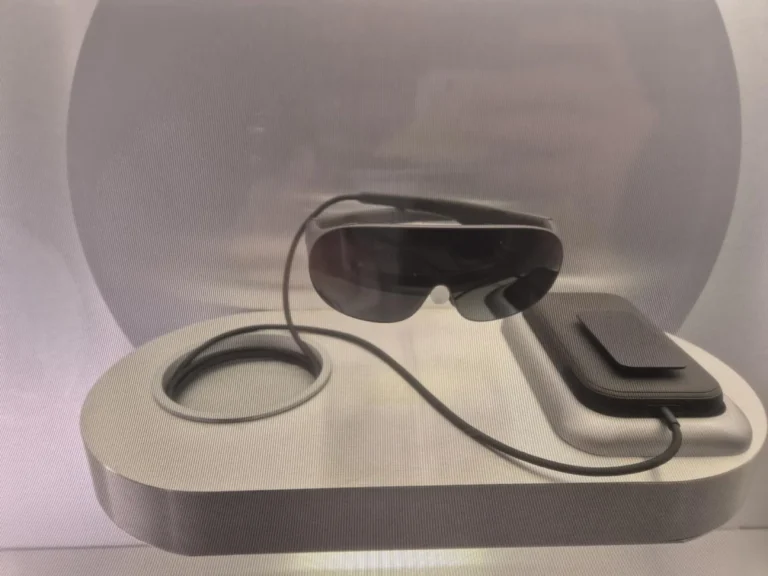
Technical Specifications and Hardware Architecture of Project Swan
Project Swan represents a departure from Pico’s previous consumer-focused iterations, adopting a sophisticated dual-chip architecture. This design mirrors the computational strategy employed by Apple’s Vision Pro, utilizing a dedicated "Pico Silicon" chip to handle low-latency tasks such as environmental tracking, sensor fusion, and spatial mapping. A separate flagship System-on-Chip (SoC)—speculated to be a next-generation Qualcomm Snapdragon XR2 Gen 3—will manage application logic and high-fidelity rendering.
Preliminary data suggests this new SoC delivers twice the computational performance of the Snapdragon XR2 Gen 2 currently found in the Meta Quest 3. This increase in processing power is necessary to drive the headset’s dual 4K displays. A critical metric for spatial computing is angular resolution, measured in Pixels Per Degree (PPD). Project Swan reportedly achieves an average of 40 PPD with a peak of 45 PPD. For context, most current consumer headsets hover between 20 and 25 PPD. The 40+ PPD threshold is widely considered the "retina" standard for XR, allowing for crisp text legibility and making the device viable for long-term professional use in virtual office environments.
Pico OS 6 and the Evolution of Spatial User Interfaces
The hardware capabilities of Project Swan are paired with Pico OS 6, an operating system engineered specifically for spatial computing. Moving away from the traditional "launcher" model, Pico OS 6 emphasizes a window-based multitasking environment where 2D and 3D applications coexist in a shared physical space. The interface adopts a multimodal interaction system, allowing users to navigate via gaze-and-pinch gestures or dedicated controllers for high-precision tasks.

To bolster its ecosystem, Pico has introduced new developer tools designed to lower the barrier to entry for non-XR developers. By supporting industry-standard environments like Android Studio and the Kotlin programming language, Pico aims to encourage the porting of traditional mobile applications into the spatial domain. While a specific release date has not been finalized, industry analysts expect Project Swan to reach the market in 2026, positioning it as a mid-cycle challenger to current market leaders.
Privacy Concerns Regarding AI-Integrated Smartglasses
Parallel to the hardware advancements in the VR sector, the smartglasses market is facing renewed criticism regarding user privacy. An investigative report by the Swedish publication Svenska Dagbladet revealed that images and videos captured by Ray-Ban Meta smartglasses are, in certain instances, reviewed by human contractors. The report identified a processing center in Kenya where workers review media files to train and refine Meta’s AI algorithms.
The data reviewed often includes sensitive personal information, ranging from private interactions in domestic settings to visible financial documents. While Meta’s privacy policy acknowledges that "manual review" may occur to improve AI performance, the report highlights a significant transparency gap between corporate policy and user expectations. This incident follows a historical pattern of human-in-the-loop data processing previously seen with Amazon’s Alexa and iRobot’s Roomba, raising questions about the ethics of data labeling in low-wage regions and the inherent privacy risks of "always-on" wearable cameras.
Strategic Open-Sourcing of The8thWall WebAR Engine
In a surprising shift for the WebXR landscape, Niantic-owned The8thWall announced the open-sourcing of its core engine framework. Previously a proprietary, subscription-based service, The8thWall has been a dominant force in browser-based augmented reality. The move to an MIT license for its core architecture and modules—including Face Effects, Image Targets, and Sky Effects—comes months after industry rumors suggested the platform might be facing a shutdown.

While the Simultaneous Localization and Mapping (SLAM) component remains in closed-source binaries, the decision to open-source the framework allows the developer community to maintain and evolve the platform independently. This transition is expected to democratize high-end WebAR development, enabling enterprises to build custom engines without the burden of proprietary licensing fees, thereby ensuring the longevity of web-based immersive content.
Chronology of Recent XR Industry Developments
The XR sector has maintained a rapid pace of development over the first quarter of 2026. The following timeline outlines the key events leading to this week’s disclosures:
- Late 2025: Dataminers discover "Project Puffin" in Meta’s Horizon OS firmware, suggesting a lightweight, eye-tracking-enabled headset is in development to counter Apple’s market entry.
- January 2026: Google previews "Glimmer," a specialized UI design language for its upcoming Gemini-powered AR glasses, focusing on readability in high-ambient-light environments.
- February 2026: Steam Next Fest showcases a record number of VR-compatible titles, indicating a resurgence in PCVR development.
- March 2026: Pico officially teases Project Swan and Pico OS 6, while Meta begins testing Air Link 2.0 to improve PC-to-headset streaming stability.
Broader Impact and Market Implications
The convergence of high-resolution hardware, spatial operating systems, and AI integration suggests that the XR industry is moving toward a "post-gaming" era. The emphasis on PPD and multitasking in Pico’s Project Swan and Meta’s rumored "Puffin" device indicates that manufacturers are prioritizing productivity and media consumption over traditional gaming.
However, the privacy revelations surrounding Meta’s smartglasses serve as a cautionary note for the industry. As devices become more integrated into daily life, the tension between AI optimization and individual privacy will likely lead to stricter regulatory oversight, particularly in the European Union.

Furthermore, Google’s involvement via the Gemini AI and Galaxy XR partnerships suggests a fragmented but highly competitive market. With Google providing the software layer for third-party hardware (like Samsung’s), and Pico and Meta maintaining vertically integrated stacks, the next 24 months will likely determine which ecosystem becomes the standard for spatial computing. The open-sourcing of tools like The8thWall further complicates this by providing a "third way" via the open web, potentially preventing any single corporation from achieving a total monopoly on the spatial interface.
About the Author