Mobile gaming giants are increasingly turning to extended soft launch periods to refine monetization and retention metrics in an environment defined by high user acquisition costs and shifting privacy regulations. The practice of "soft launching"—releasing a game in restricted territories to gather data before a global rollout—has become a cornerstone of the industry’s risk-mitigation strategy. Current market data suggests that for every game that reaches a global audience, dozens are iterated upon or canceled entirely within these testing phases. This report examines the current pipeline of titles from major publishers, including Blizzard, Supercell, and Playrix, providing a comprehensive look at the future of the mobile ecosystem.

The Strategic Shift in Mobile Game Development
The mobile gaming landscape in 2025 is characterized by a "quality over quantity" approach. Following the acquisition of major studios—such as Sega’s purchase of Rovio and Take-Two’s integration of Zynga—publishers are under immense pressure to deliver high-yielding intellectual properties (IP). Soft launches typically occur in specific "test-bed" markets. Historically, the Philippines and Indonesia are used for English-language technical testing due to lower advertising costs, while Canada, Australia, and the Nordic countries are utilized to gauge the behavior of high-spending users.

Recent removals from the testing phase, such as Rovio’s Sonic Blitz—a collectible card game (CCG) that was recently pulled from its limited technical launch in the Philippines—highlight the volatility of this stage. When a game is removed from soft launch, it often indicates either a pivot in development or a failure to meet internal Key Performance Indicators (KPIs) regarding Long-Term Value (LTV) and Day-30 retention.

Action and Shooter Innovations: Blizzard and Supercell
Blizzard Entertainment is currently testing Overwatch Rush, a top-down, mobile-exclusive hero shooter. Unlike the core Overwatch experience on PC and consoles, Rush is designed specifically for the ergonomic constraints of mobile devices. Blizzard has characterized the project as being in early development, with testing expected to expand into additional territories throughout the year. This move signals Blizzard’s intent to diversify its mobile portfolio beyond the success of Diablo Immortal.

Supercell, the Finnish developer known for its "kill-fast" philosophy regarding underperforming titles, currently has two major projects in the pipeline. "Boat Game," a third-person looter-shooter, is reportedly approaching soft launch on Google Play across 29 markets, including the United States, Canada, and various European nations. Simultaneously, Project Rise—a reboot of the previously announced Clash Heroes—is being positioned as a social action RPG roguelite. Supercell’s shift toward more social, cooperative experiences reflects a broader industry trend toward "forever games" that prioritize community interaction over purely competitive mechanics.

Ubisoft’s The Division Resurgence remains one of the longest-running soft launches in recent history. Despite multiple delays, Ubisoft’s latest financial disclosures suggest a global launch window targeting the end of the 2025-2026 fiscal year. The game represents a high-fidelity attempt to translate the "looter-shooter" console experience to mobile, a feat that requires extensive balancing and technical optimization.

The Evolution of the Puzzle and "Scapes" Genres
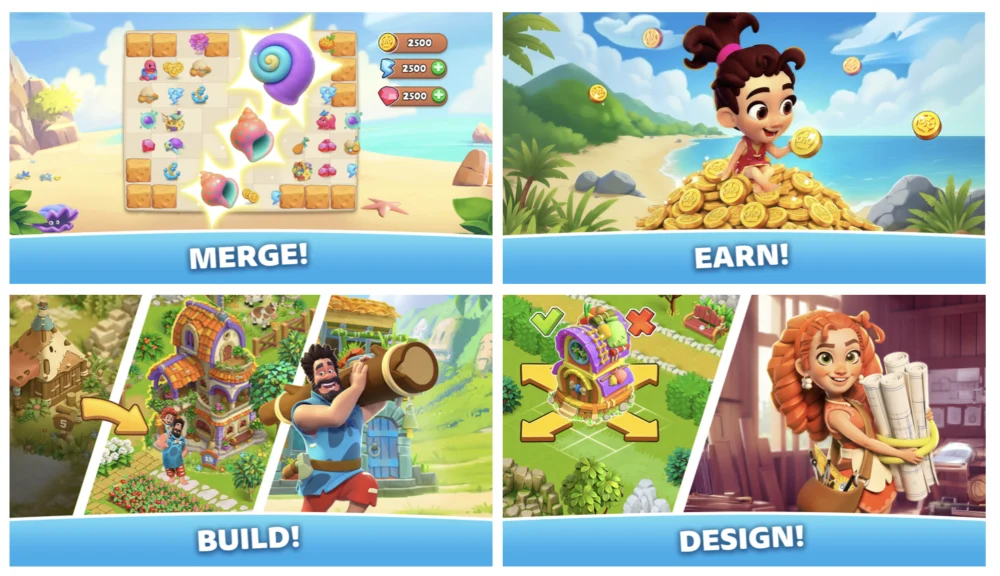
Playrix continues to dominate the puzzle-decoration hybrid market, but it is also experimenting with new genres. While Aqua Match, FamilyScapes, and Roomscapes follow the established "match-and-renovate" formula, the publisher is branching out with Questbound. Questbound is a squad-based battler with a fantasy theme, currently live in Australia, Canada, and the US on Android. This departure from their core competency suggests that even the most successful puzzle publishers are seeking to hedge their bets against market saturation.

Metacore, the developer behind Merge Mansion, is employing a unique testing strategy. The studio has released multiple variations of essentially the same game—titles such as Havisham Park, Funfair Revival, Hidden Heritage, and Heritage Trail. By testing different themes and titles for the same core mechanics, Metacore can identify which aesthetic resonates most with players before committing a full marketing budget to a single brand.

King, the Activision Blizzard-owned creator of Candy Crush, recently experimented with Minecraft Blast in collaboration with Mojang. Although the title was briefly available in Malaysia and Canada, it has since been removed. Official FAQs from Minecraft.net describe the project as being in "extremely early days," indicating that the "Blast" mechanic may undergo significant retooling before resurfacing.

Social Gaming and the "Monopoly Go" Effect
The massive success of Scopely’s Monopoly Go has triggered a wave of competitors and companion apps. Moon Active, the developer of Coin Master, is currently testing Coin Master – Board Adventure in markets like India and the Philippines. Analysts view this as a direct challenge to Monopoly Go’s dominance in the social board game space.

Scopely itself is focusing on ecosystem retention with Monopoly Go Chat, an official companion app currently in soft launch in France. By facilitating communication and social play outside the core game client, Scopely aims to increase user "stickiness" and build a more robust community. Additionally, Moon Active is diversifying with titles like Reality Bay (a film-set themed merge game) and Jelly Busters (an action-puzzle hybrid), indicating a push to expand beyond their signature "social casino" mechanics.

Open World and Crime Simulation: Garena and Miniclip
A surprising trend in the 2025 soft launch tracker is the rise of Grand Theft Auto (GTA)-inspired titles. Garena, the publisher of Free Fire, is testing Garena Free City. Initially launched in Argentina, the game has expanded its footprint to the Philippines, Algeria, and Egypt. Free City appears to combine urban exploration with social simulation, leveraging Garena’s expertise in large-scale multiplayer environments.

Miniclip is also entering this arena with Pure Crime: Gangster Shooting, developed by its Derby-based studio. Currently available as a placeholder on Google Play in the Philippines, the game signals Miniclip’s evolution from a web-portal and sports-game specialist into a publisher of more complex, mid-core titles. Furthermore, Miniclip is testing Paint Brawl: Color of War, a team-based multiplayer game that emphasizes colorful, non-violent competition.

Racing and Sports: Fingersoft and Zynga
Fingersoft’s Hill Climb Racing 3 is currently in soft launch in the UK and Nordic regions. For the first time in the franchise’s history, the game introduces real-time multiplayer, a feature aimed at increasing the competitive longevity of the physics-based racer.

Zynga and its subsidiary NaturalMotion are continuing the legacy of the CSR franchise with CSR 3. Testing is currently underway in several major international markets, including Italy, Malaysia, and South Africa. Zynga is also exploring the sports sector with Top Goal: Soccer Champion, developed by Nordeus. This PvP football title is being tested in 12 markets, attempting to replicate the management success of Top Eleven in a more direct, action-oriented format.

Geographical Testing Trends and Data Analysis
The distribution of soft launches provides insight into the priorities of global publishers. According to data from Appmagic, the Philippines remains the primary destination for technical soft launches due to its high English proficiency and mobile-first population. India has emerged as a critical test market for Android-focused titles, particularly for publishers like Moon Active and Playrix, due to its massive scale and growing middle class.

The Nordic countries (Finland, Norway, Sweden) are frequently used for "LTV testing." Because users in these regions typically have higher disposable income, publishers use these markets to determine if a game’s monetization structure is sustainable. If a game cannot achieve high monetization in the Nordics, it is unlikely to succeed in the broader Western market.

Industry Implications and Future Outlook
The current volume of games in testing suggests that 2026 will be a pivotal year for the mobile industry. The shift toward hybrid genres—such as Tripledot’s Puzzle Solitaire (mixing cards and logic puzzles) or Kingsglory’s Aniimo (an open-world creature catcher)—indicates that publishers are looking for "white space" in a crowded market.

Furthermore, the integration of PC and console-quality IPs onto mobile, as seen with Rust Mobile and The Division Resurgence, shows that the hardware gap is narrowing. However, the high failure rate during the soft launch phase serves as a reminder that brand recognition alone is not enough to guarantee success. Games must now offer deep social integration, sophisticated live-ops strategies, and fair monetization to survive the transition from a "peek" in testing to a global phenomenon.

As these games drop in and out of testing, the industry remains focused on the "March 31, 2026" deadline—a date that marks the end of the fiscal year for many major publishers and the expected global arrival of several high-profile titles. For players and stakeholders alike, the soft launch tracker is not just a list of games, but a roadmap of the technological and creative ambitions defining the next era of interactive entertainment.
About the Author