The digital storefront Itch.io, a prominent platform for independent game developers, has once again highlighted the breadth and creativity of the indie gaming scene through its "Games of the Week" feature. This week’s selection underscores a fascinating intersection of nostalgic reinterpretations, genre-bending narrative experiences, and the distinctive artistic output of prolific development collectives. The three titles—LCD, Please, a demake of the seminal Papers, Please; Anglerfish Project, an innovative blend of space exploration and narrative fishing; and Frog’s Adventure, a charming hand-drawn adventure from the Sokpop Collective—collectively illustrate the vibrant and experimental nature defining contemporary independent game development. These selections not only celebrate individual achievements but also reflect broader trends in game design, platform ecosystems, and player engagement.
The Enduring Legacy of "Papers, Please" and its Modern Demake: "LCD, Please"
The release of LCD, Please by acclaimed developer Lucas Pope serves as both a nostalgic callback and a testament to the enduring design principles of its predecessor, Papers, Please. The original game, launched in 2013, was a groundbreaking title that redefined player interaction with complex moral and ethical dilemmas within a bureaucratic framework.
"Papers, Please": A Milestone in Narrative Design and Social Commentary
Papers, Please, developed by Lucas Pope and published by 3909 LLC, cast players as an immigration inspector in the fictional communist state of Arstotzka. Tasked with reviewing documents and making life-altering decisions at a border checkpoint, the game forced players to confront the dehumanizing aspects of bureaucracy, the weight of personal responsibility, and the harsh realities of survival under an authoritarian regime. Its stark visual style, coupled with a narrative that intricately wove personal stories with geopolitical intrigue, resonated deeply with critics and players alike.
Upon its release, Papers, Please garnered widespread critical acclaim, earning numerous accolades including the BAFTA Games Award for Strategy and Simulation, the Independent Games Festival’s Seumas McNally Grand Prize, and multiple awards at the Game Developers Choice Awards. Its success was not merely commercial; it sparked conversations about the role of games as a medium for social commentary and serious themes, influencing a generation of developers to explore mature narratives and unconventional gameplay mechanics. The game’s intricate rule-set, combined with the constant pressure to earn enough to support one’s family while navigating moral compromises, created a uniquely tense and thought-provoking experience. It sold over 1.8 million copies by 2016, a significant achievement for an indie title, demonstrating a clear appetite for games that challenged player perspectives rather than simply entertaining them.
"LCD, Please": A Nostalgic Reimagining of Core Mechanics
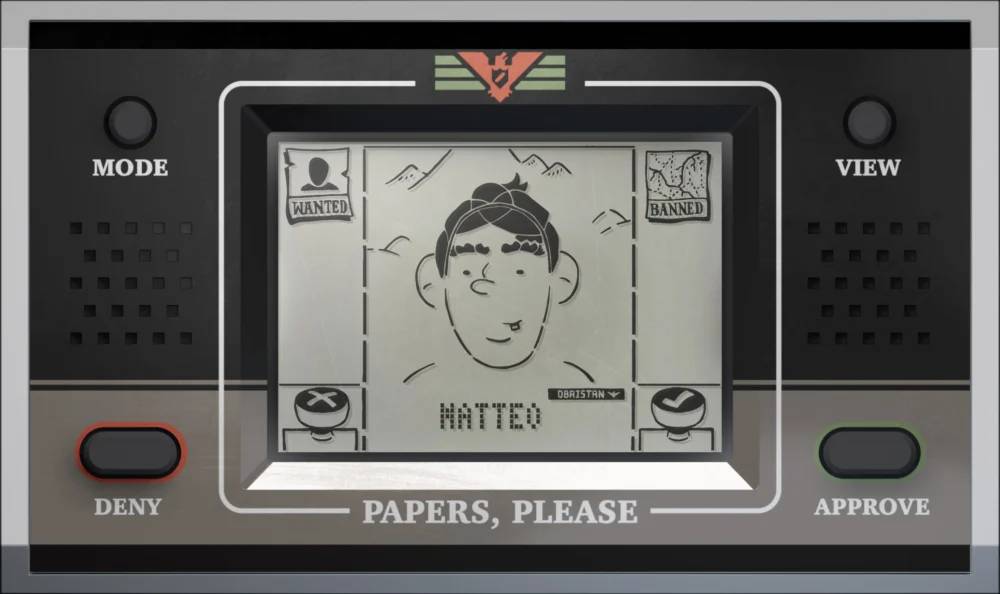
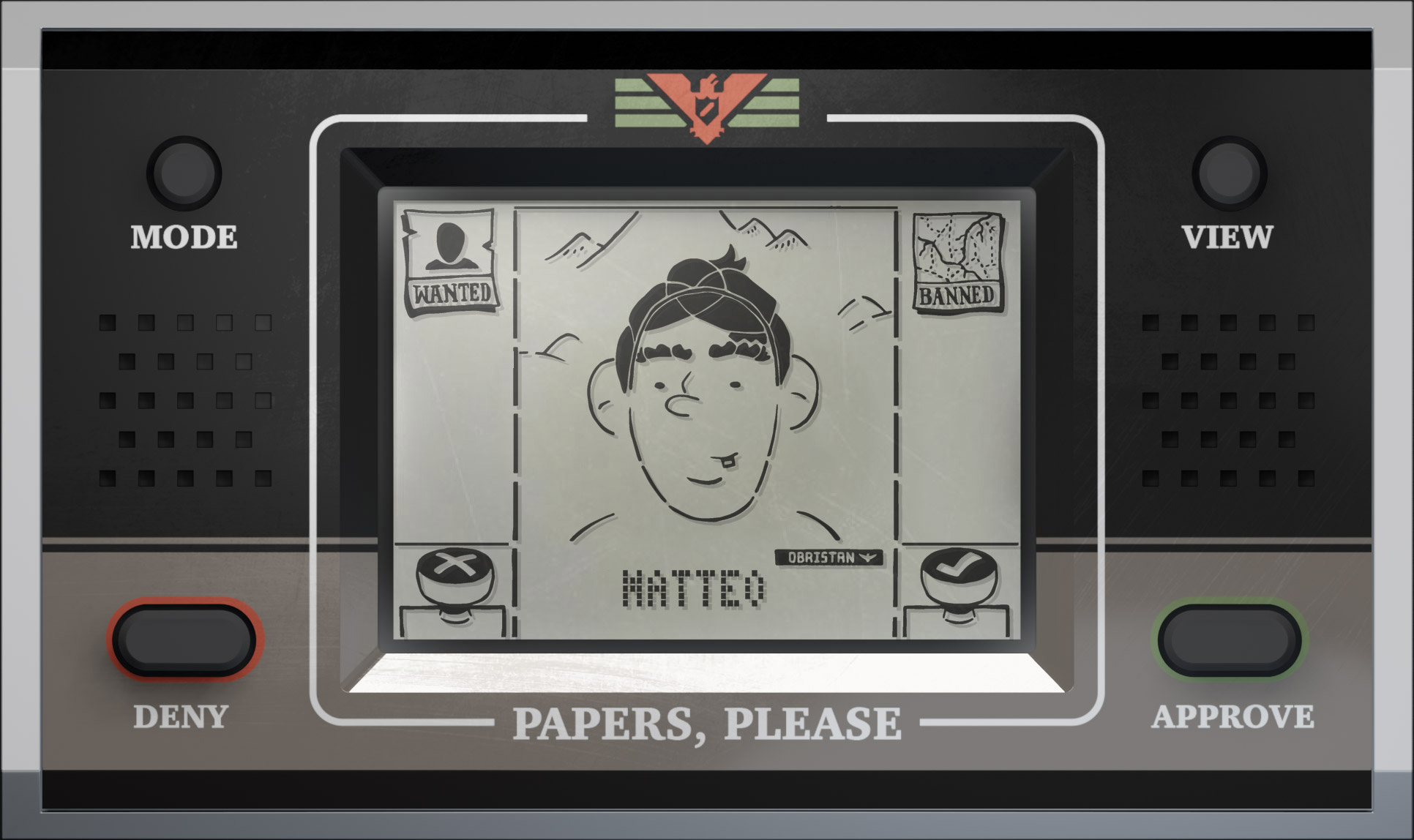
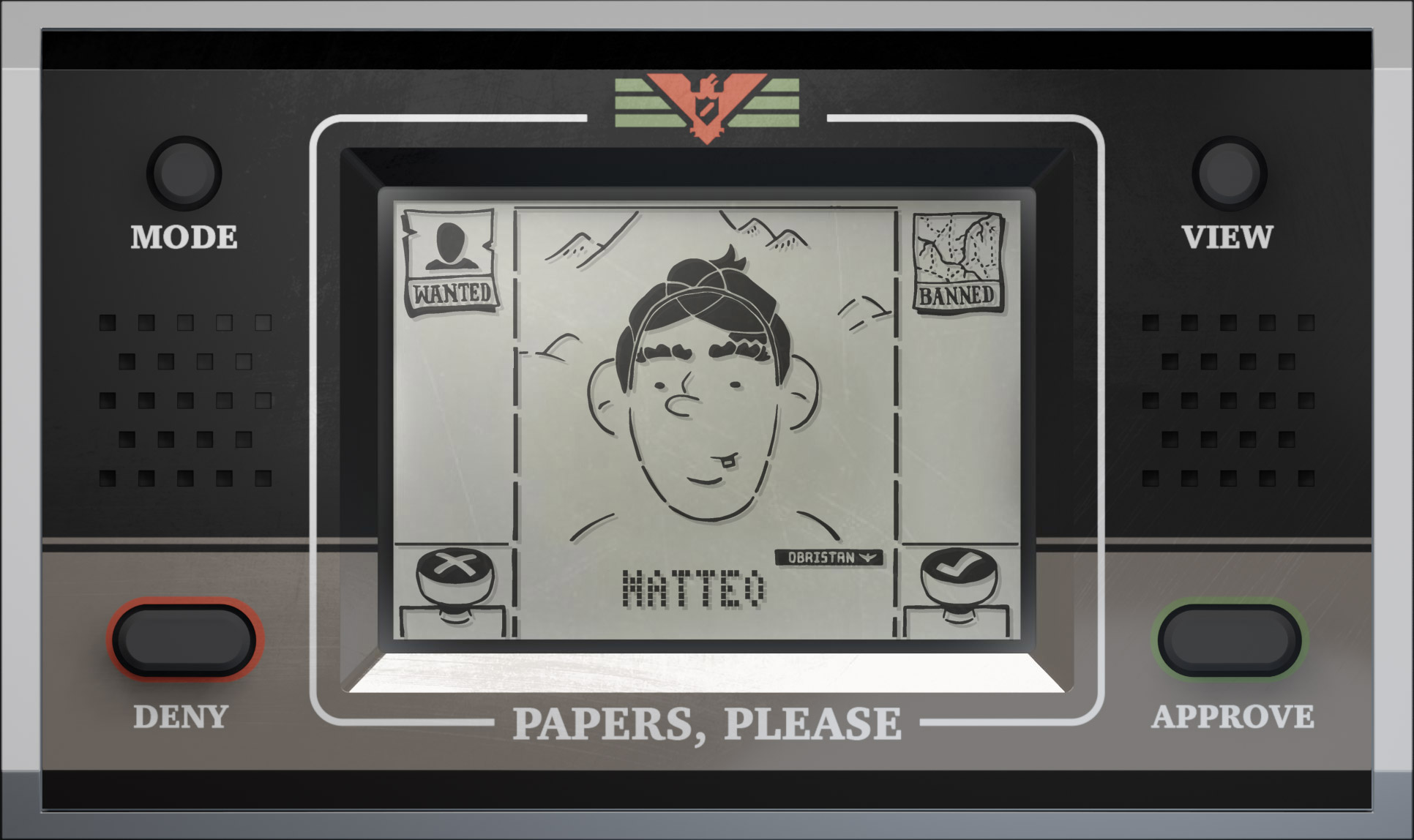
A decade after the original’s release, Lucas Pope revisited his creation with LCD, Please. This demake simplifies the complex document-checking mechanics of Papers, Please into the aesthetic and operational constraints of a vintage handheld LCD game. The visual presentation evokes the monochromatic, segmented displays characteristic of early electronic games, reducing the intricate details of passports and entry permits to a series of basic symbols and binary decisions.
Pope’s decision to distill the game into this minimalist format serves multiple purposes. Firstly, it offers a nostalgic experience for players familiar with classic handheld devices, tapping into a broader cultural trend of retro gaming. More significantly, it highlights the robustness of the original game’s core loop: the process of identifying discrepancies, enforcing rules, and making rapid judgments. By stripping away the photorealistic elements and narrative complexities, LCD, Please demonstrates how effectively the foundational gameplay of Papers, Please can stand on its own. It acts as a concise case study in effective game design, proving that powerful mechanics can transcend their original presentation. This demake underscores the enduring appeal of the original and reinforces its status as a masterclass in interactive system design, prompting both new and returning players to appreciate the elegance of its fundamental challenges.
"Anglerfish Project": Pioneering Narrative through Unconventional Mechanics
The Anglerfish Project, developed by Selkie Harbour, represents another facet of indie innovation: the inventive fusion of disparate genres to create a unique narrative experience. Moving beyond conventional gameplay loops, this title ventures into the realm of experimental storytelling, leveraging familiar mechanics in entirely novel ways.
Blending Genres: Space Exploration and Emotional Storytelling
At its core, Anglerfish Project is a narrative adventure game that ingeniously combines elements of space exploration with the meditative rhythm of fishing. However, the game subverts expectations by replacing traditional aquatic quarry with fragmented messages and pieces of information pulled from the vastness of deep space. Players operate a modified probe, casting it into the cosmic abyss and retrieving data packets that gradually coalesce into a broader narrative tapestry. This unconventional approach transforms the act of "fishing" from a resource-gathering or combat-oriented mechanic into a purely storytelling device. Each retrieval contributes to a growing understanding of an unseen universe and the beings inhabiting it, fostering a sense of cosmic mystery and emotional connection.
The game’s focus is squarely on its narrative and the emotional resonance it cultivates. The writing, characterized by its warmth and thoughtfulness, guides players through a journey of discovery that prioritizes introspection and empathy over action or challenge. This design choice positions Anglerfish Project within a burgeoning category of "kind games" or "cozy games," where the emphasis is on creating a gentle, reflective, and emotionally fulfilling experience rather than high-stakes competition or complex problem-solving. While the game’s runtime is described as short, its impact is designed to be profound, leaving players with a sense of connection and wonder.
The Rise of "Kind Games" and Experimental Storytelling
Anglerfish Project is emblematic of a significant trend within independent game development: the exploration of narrative and emotional themes through experimental mechanics. In an industry often dominated by action-oriented blockbusters, indie developers are increasingly carving out niches for titles that prioritize unique storytelling, atmosphere, and player reflection. This includes games that feature non-traditional forms of interaction, where the "gameplay" itself is the act of unraveling a story, deciphering cryptic clues, or simply existing within a thoughtfully crafted world.
This movement is partly a response to player demand for more diverse experiences, moving beyond established genres. It also reflects developers’ desire for greater creative freedom, allowing them to pursue artistic visions unfettered by commercial expectations for conventional gameplay. The success of titles like What Remains of Edith Finch, Firewatch, and Outer Wilds has paved the way for games like Anglerfish Project, demonstrating that rich narratives and emotional depth can be delivered through innovative interactive methods. The "kind game" subgenre, in particular, resonates with players seeking comfort, contemplation, and positive emotional experiences, offering a counterpoint to the often-stressful or competitive nature of many mainstream titles. These games expand the very definition of what constitutes "gameplay" and how players can engage with interactive media, pushing the boundaries of the medium’s expressive potential.
"Frog’s Adventure": Sokpop Collective’s Prolific Charm and Artistic Vision
The third featured title, Frog’s Adventure, comes from the renowned Sokpop Collective, a group celebrated for its unique development model and consistent output of charming, experimental games. Frog’s Adventure exemplifies Sokpop’s distinctive artistic style and their knack for creating engaging experiences within minimalist frameworks.
Sokpop Collective: A Unique Development Model and Prolific Output
The Sokpop Collective, based in the Netherlands, operates on a highly unusual and successful model: they release a new game every month. This prolific output is supported by a subscription service on platforms like Patreon, where patrons receive access to their entire back catalog and all new monthly releases. This model fosters rapid prototyping, encourages continuous creativity, and allows the collective to experiment with a vast array of genres, mechanics, and artistic styles without the immense pressure typically associated with single-game development cycles.
Since their inception in 2017, Sokpop has released over 100 games, covering everything from puzzle games and simulators to adventure titles and abstract experiences. This consistent stream of content has built a dedicated community of players who appreciate their diverse output and often whimsical approach. The collective’s methodology allows them to explore niche ideas and refine their craft through constant iteration, often leading to surprising and delightful results. Their games are frequently characterized by their distinctive low-poly or hand-drawn aesthetics, quirky humor, and a focus on simple yet engaging mechanics. This development strategy stands in stark contrast to the multi-year, multi-million-dollar development cycles common in the mainstream industry, proving that sustained creativity and community engagement can be built on a foundation of agility and artistic freedom.
"Frog’s Adventure": Aesthetic Appeal Meets Classic Adventure
Frog’s Adventure is a quintessential Sokpop title, immediately recognizable by its adorable, hand-drawn art style and charming protagonist. Players guide a sentient frog through a vibrant, visually appealing world, engaging in classic adventure game tropes such as wandering from point to point, interacting with a diverse cast of characters, and ferrying "doodads" (items) back and forth to solve simple quests.
The game’s aesthetic is a central component of its appeal. The hand-drawn visuals imbue Frog’s Adventure with a warm, inviting, and inherently joyous atmosphere. The frog protagonist, with its expressive design, instantly endears itself to players, making the journey enjoyable regardless of the complexity of the tasks at hand. This emphasis on visual charm and character personality demonstrates Sokpop’s understanding that aesthetic pleasure can be as compelling as intricate mechanics. While the gameplay loop involves traditional fetch quests and dialogue interactions, the overall experience is elevated by the game’s delightful presentation and the sheer pleasure of inhabiting its world. Frog’s Adventure underscores the power of strong art direction and character design in creating an immersive and memorable indie game experience, proving that even simple mechanics can be captivating when wrapped in a package of genuine charm.
Itch.io’s Role in Fostering Indie Game Diversity and Innovation
The selection of LCD, Please, Anglerfish Project, and Frog’s Adventure for Itch.io’s "Games of the Week" is not merely a spotlight on individual titles; it is a broader affirmation of Itch.io’s crucial role in the independent gaming ecosystem. As an open marketplace, Itch.io has become a vital platform for developers seeking creative freedom and direct engagement with their audience.
A Platform for Experimentation and Creator Empowerment
Itch.io distinguishes itself from larger digital storefronts through several key features that empower independent creators. Its highly flexible revenue share model allows developers to set their own percentage, even opting for 100% of the revenue if they choose, with Itch.io taking a default of 10%. This developer-centric approach significantly reduces financial barriers and maximizes potential earnings for creators, a critical factor for small studios and individual developers. The platform also boasts extremely low barriers to entry for publishing, allowing developers to upload and distribute their games with minimal friction. This ease of access encourages experimentation, enabling developers to release prototypes, game jam entries, and niche titles that might not find a home on more curated or commercially driven platforms.

Beyond its economic model, Itch.io fosters a vibrant community. Developers can create detailed game pages, publish devlogs, interact directly with players through comments and forums, and participate in bundles and game jams. This direct line of communication between creators and consumers cultivates a supportive environment where feedback is easily exchanged and unique projects can find their dedicated audience. The platform has become a haven for avant-garde, artistic, and socially conscious games, often serving as a launchpad for ideas that later influence mainstream development.
Impact on the Industry Landscape
Itch.io’s influence on the broader gaming landscape is substantial. It serves as a vital counterbalance to the often homogenous trends seen in AAA gaming, offering a diverse array of experiences that cater to every conceivable niche. By providing a fertile ground for experimentation, Itch.io acts as a crucial incubator for new mechanics, artistic styles, and narrative approaches that might otherwise go unexplored. The platform’s success highlights a growing demand from players for originality, artistic expression, and meaningful engagement beyond the established franchises.
Statistical data, while not always publicly granular for Itch.io specifically, points to a general boom in the indie game market. Reports from various industry analysis firms consistently show growth in both the number of indie titles released and their aggregate revenue. Itch.io contributes significantly to this growth by lowering the entry barrier, allowing a greater diversity of voices to emerge. For developers, this means unprecedented creative freedom and the ability to build a sustainable career on unique visions. For players, it means access to an ever-expanding library of distinct, often deeply personal, interactive experiences that push the boundaries of what games can be. The platform’s commitment to independent creators ensures a continuous flow of innovative titles, challenging established norms and enriching the entire gaming medium.
Conclusion: The Future of Independent Game Development
The "Games of the Week" selection on Itch.io—featuring LCD, Please, Anglerfish Project, and Frog’s Adventure—serves as a compelling snapshot of the current dynamism in independent game development. These titles collectively demonstrate a strong inclination towards revisiting established classics with fresh perspectives, pioneering new forms of narrative interaction, and leveraging distinctive artistic visions to create memorable experiences. From the thoughtful demake that celebrates foundational game design to the genre-blending narrative that expands emotional horizons, and the charming adventure from a uniquely structured collective, each game contributes to the rich tapestry of indie gaming.
Itch.io’s role as a benevolent host for this creative explosion cannot be overstated. By championing developer autonomy, facilitating direct community engagement, and providing an accessible publishing infrastructure, the platform continues to be a crucial incubator for innovation. As the gaming industry continues its rapid evolution, the contributions of independent developers, fostered by platforms like Itch.io, will remain central to pushing creative boundaries, challenging conventional wisdom, and ultimately, expanding the very definition and cultural impact of interactive entertainment. The future of gaming, it appears, is as diverse, imaginative, and independent as ever.
About the Author