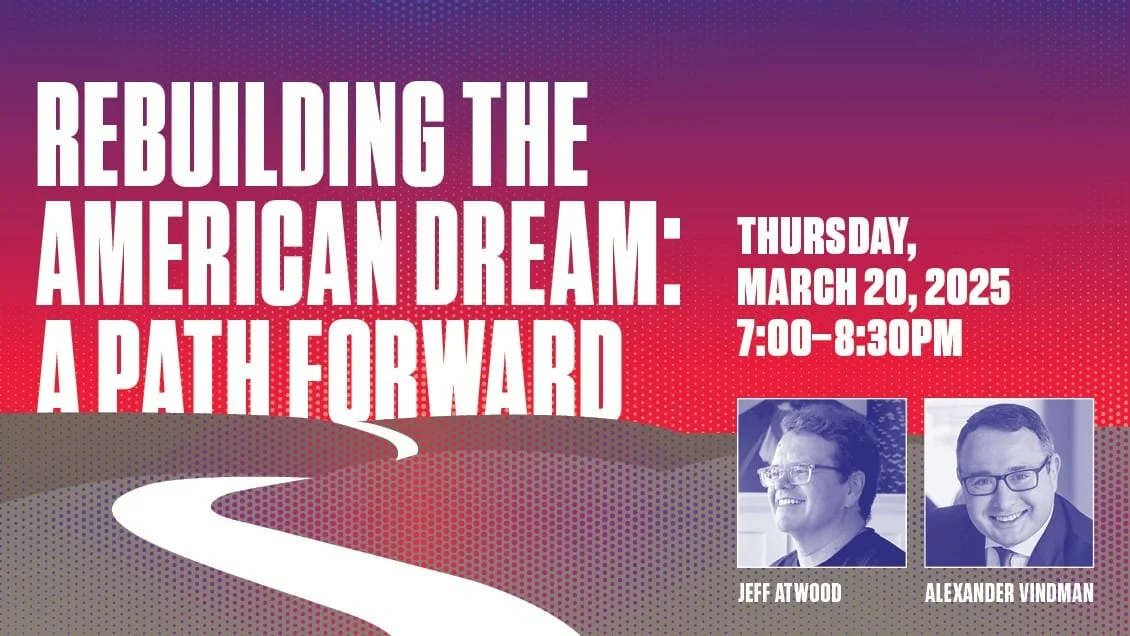
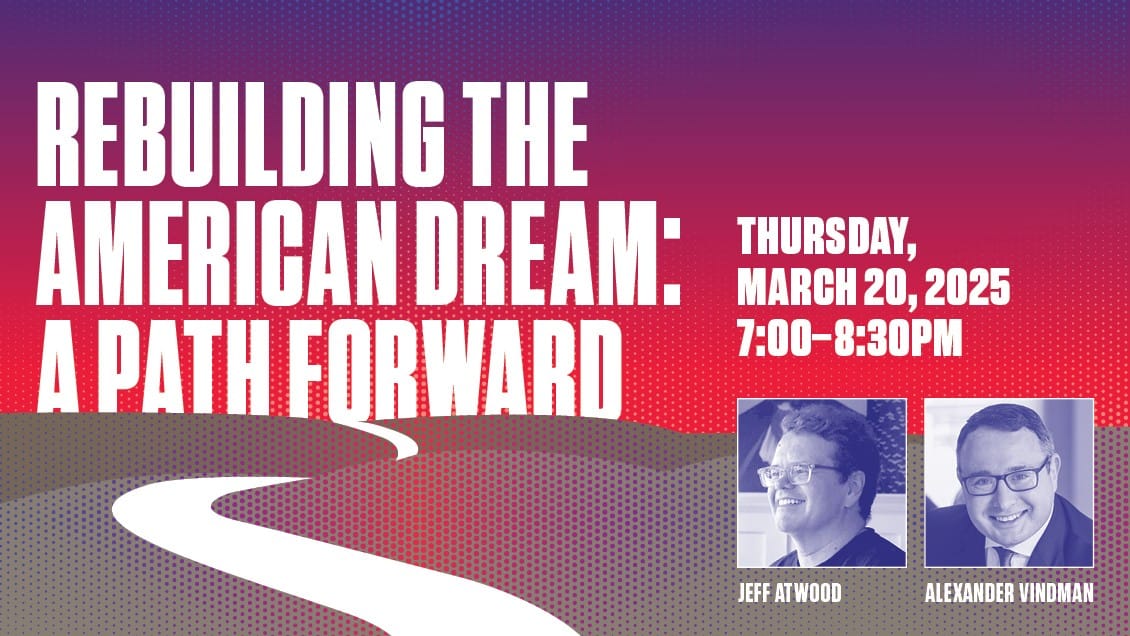
A significant public discourse on the future of the American Dream, civic duty, and the foundations of democracy unfolded recently at the historic Cooper Union Great Hall. Tech entrepreneur Jeff Atwood, founder of Stack Overflow and Discourse, joined forces with decorated military veteran and former National Security Council official Lieutenant Colonel (Ret.) Alexander Vindman to address pressing questions about national identity, community, and economic mobility. The event, titled "Rebuilding The American Dream: A Path Forward," brought together two figures from vastly different professional spheres, united by a shared commitment to strengthening American ideals. Their conversation, streamed live to a global audience, aimed to transcend individual acts of generosity, proposing systemic solutions to foster security, dignity, and possibility for all citizens.
The Confluence of Ideas: A Call to Action
The genesis of this pivotal discussion traces back to Atwood’s earlier reflections on the concept of "staying gold"—an articulation of the necessity to preserve the core values and best aspects of oneself, one’s community, and the American promise. However, Atwood emphasized that this preservation is not a passive endeavor; it demands active engagement, critical self-reflection, and often, challenging conversations about the nation’s past, present, and desired future. This philosophical underpinning served as the launchpad for the collaborative event with Colonel Vindman, an individual widely recognized for his unwavering commitment to democratic principles, even at significant personal cost.
The central question posed by the speakers was stark yet fundamental: "How can we build on our dream so that it works for everyone?" This query acknowledges a perceived erosion of the American Dream’s universal accessibility, a concern echoed by a substantial segment of the population. A 2023 survey by the Wall Street Journal and NORC at the University of Chicago revealed that only 36% of Americans believe the American Dream is still attainable, a stark decline from 53% in 2012. This sentiment underscores the urgency and relevance of the dialogue convened by Atwood and Vindman, aiming to diagnose the challenges and chart a pragmatic path forward.
Profiles in Principle: Jeff Atwood and Alexander Vindman
The pairing of Jeff Atwood and Alexander Vindman offered a compelling blend of perspectives. Atwood, a renowned figure in the technology sector, has profoundly shaped the landscape of online communities. As the co-founder of Stack Overflow, a leading Q&A site for programmers, and Discourse, an open-source discussion platform, Atwood has spent decades grappling with the intricacies of digital interaction, community governance, and fostering constructive online discourse. His work involves designing systems that encourage fairness, participation, and the creation of "artifacts for the common good"—a concept he equates to the shared enjoyment of public spaces like local parks, but in a digital realm. His insights into building scalable, self-governing digital ecosystems, he posits, bear surprising relevance to the challenges of national governance and democratic participation.
Colonel Alexander Vindman’s journey, by contrast, is rooted in military service and diplomatic integrity. Born in the Soviet Union and immigrating to the U.S. as a child, Vindman’s life embodies the classic narrative of the American Dream. He grew up in Brooklyn, enlisted in the U.S. Army, and served with distinction for 21 years, earning a Purple Heart for injuries sustained in Iraq. His career culminated as the Director for European Affairs for the National Security Council. Vindman gained national prominence for his principled stand during the 2019 impeachment inquiry, where he testified truthfully about events he witnessed, choosing to uphold his oath and the values he swore to protect over personal career advancement. His decision, which ultimately cost him his military career, cemented his status as a symbol of civic courage and an exemplar of what it means to defend democratic ideals. Atwood expressed profound admiration for Vindman’s willingness to "put everything on the line," highlighting the lessons in civic duty that can be drawn from his experience.
The Historic Stage: Cooper Union Great Hall
The choice of the Cooper Union Great Hall as the venue for this discussion was deliberate and symbolic. Located in New York City, the Great Hall has been a crucible of American intellectual and political discourse since its opening in 1859. It is most famously known as the site where Abraham Lincoln delivered his pivotal "Might Makes Right" speech in 1860, a speech widely credited with boosting his presidential campaign. Over the decades, the hall has hosted luminaries such as Frederick Douglass, Susan B. Anthony, Mark Twain, and multiple U.S. presidents. It has been a focal point for movements ranging from abolitionism and women’s suffrage to labor rights and civil rights.
This rich history imbues the Great Hall with an aura of profound significance, making it an apt setting for a conversation about the foundational principles and future direction of the American experiment. By convening in such a venerable space, Atwood and Vindman implicitly connected their contemporary concerns to the enduring legacy of American ideals and the ongoing struggle to achieve them. The venue itself served as a silent testament to the enduring power of public discourse in shaping the nation’s destiny.
Exploring the Pillars: Democracy, Community, and Economic Mobility
The joint talk delved into three interconnected themes: democracy, community, and economic mobility. These pillars, the speakers argued, are critical to understanding and revitalizing the American Dream.
Democracy: The discussion acknowledged the contemporary challenges facing democratic institutions, both domestically and globally. Colonel Vindman’s firsthand experience at the highest levels of government and his confrontation with pressures that threatened democratic norms provided a stark illustration of these challenges. The speakers emphasized that a healthy democracy relies on clear expectations, fair systems, strong boundaries, and a shared sense of purpose among its citizens. Atwood’s parallel experience in building resilient online communities highlighted that these principles are universal, applying whether one is "running a country or running a forum." The erosion of trust in institutions, the rise of misinformation, and increasing political polarization were implicitly addressed as threats requiring concerted effort to counteract. Data from organizations like Freedom House continually track the health of democracies worldwide, often pointing to a decline in global democratic freedoms, underscoring the vital need for robust internal mechanisms to protect and strengthen democratic processes.
Community: Both speakers stressed the importance of community, albeit from different vantage points. For Atwood, the internet offers unprecedented opportunities for community formation, yet also presents challenges in fostering productive and inclusive environments. His work on platforms like Discourse focuses on creating digital spaces where diverse viewpoints can engage constructively, avoiding the fragmentation and toxicity often associated with online interactions. This aligns with the broader societal need for stronger local and national communities, characterized by mutual respect and shared civic responsibility. The concept of "social capital"—the networks of relationships among people who live and work in a particular society, enabling that society to function effectively—was an implicit backdrop to this discussion. Declining rates of participation in civic organizations and increasing social isolation in some demographics suggest a weakening of community ties, making Atwood’s insights into digital community building all the more pertinent to broader societal challenges.
Economic Mobility: Perhaps the most complex and critical theme was economic mobility. The American Dream, at its core, promises that hard work and talent can lead to a better life, regardless of one’s starting point. However, numerous studies indicate that intergenerational economic mobility in the U.S. has stagnated or even declined in recent decades. The Pew Charitable Trusts’ "Economic Mobility Project" has consistently shown that a significant portion of Americans born into the bottom quintile of income distribution remain there, or move up only one quintile, challenging the notion of widespread upward mobility. The widening wealth gap, rising cost of living, and unequal access to education and healthcare are significant barriers.
Atwood articulated a vision beyond individual generosity, advocating for "systems that create security, dignity, and possibility for all." This shift from individual philanthropy to systemic change is crucial for addressing deeply entrenched inequalities. The discussion implicitly touched upon policies related to education, healthcare, infrastructure, and fair labor practices as mechanisms for structural change. For example, access to quality education is a well-documented predictor of upward mobility. A 2018 study by the National Bureau of Economic Research found that differences in access to high-quality K-12 schooling account for a substantial portion of the variation in intergenerational mobility across U.S. commuting zones. Similarly, robust social safety nets and fair economic policies can provide the security and dignity necessary for individuals to pursue opportunities.
Bridging Divides: A Collaborative Vision
The very act of Atwood and Vindman sharing a stage was a powerful statement about the potential for collaboration across ideological and professional divides. While Atwood’s background is in the fast-paced, often libertarian-leaning world of technology, and Vindman’s in the structured, duty-bound realm of military and foreign policy, their shared belief in the fundamental worth of every American’s dream formed a powerful common ground. They acknowledged their different backgrounds but emphasized their strong shared conviction that the American Dream is worth fighting for, irrespective of one’s personal journey or political leanings.
Their combined experiences offered a unique framework for problem-solving. Vindman provided the perspective of someone who embodied American ideals in the face of profound pressure, offering a moral compass and a testament to integrity. Atwood brought the practical experience of designing and scaling self-governing digital communities, offering insights into how systems can be structured to encourage participation, fairness, and positive outcomes for a diverse user base. The synergy between these two perspectives—one grounded in high-stakes geopolitical reality, the other in the architecture of digital social spaces—underscored the multi-faceted nature of the challenges facing the American Dream. It suggested that solutions will require a similar cross-pollination of ideas and approaches, drawing from civic duty, technological innovation, and a deep understanding of human behavior and societal structures.
Implications and a Path Forward
The "Rebuilding The American Dream" event was not merely an academic exercise; it was a call to action, offering "an honest, unfiltered conversation about how we move forward, with specifics." While the speakers could not promise easy answers to incredibly complex problems, they committed to laying out concrete steps toward long-term structural change. Their focus on moving beyond individual generosity toward systemic solutions resonated with a growing consensus that incremental changes are insufficient to address the scale of current challenges.
The implications of such a dialogue are far-reaching. It encourages citizens to look beyond partisan divides and consider the foundational elements of a thriving society. It challenges leaders in various sectors—technology, government, education, and business—to think critically about their roles in fostering democracy, community, and economic opportunity. By streaming the event on the Cooper Union Great Hall YouTube channel, the organizers ensured broad accessibility, extending the conversation beyond the physical walls of the historic venue and into the digital public square, where many of these contemporary challenges are debated and shaped.
The collaboration between Atwood and Vindman serves as a powerful model. It suggests that revitalizing the American Dream and strengthening democratic institutions requires diverse voices, innovative thinking, and an unwavering commitment to shared values. The closing sentiment, "Imagine what we could do if we all worked together," encapsulates the aspirational goal of the event: to inspire collective action toward a more secure, dignified, and prosperous future for all Americans. This collective effort, informed by the principles discussed at Cooper Union, represents the true path forward for rebuilding the promise of the American Dream in the 21st century.
About the Author