The Game Developers Conference (GDC) 2026 has officially opened its doors at the Moscone Center in San Francisco, signaling a transformative era for the world’s largest professional hardware and software developer gathering. Now rebranded as a "Festival of Gaming," the event reflects a broader industry trend toward experiential networking and decentralized business meetings. However, the physical footprint of the conference has seen a notable contraction, with the once-sprawling exhibition floor now consolidated entirely within the South Hall of the Moscone Center. This shift, coupled with the continued absence of major engine providers Epic Games and Unity from the main floor, highlights a pivot in how the industry’s titan corporations view the return on investment of traditional trade show booths.

A Reimagined Layout: From Exhibition to Festival
For decades, GDC was characterized by its dual-hall presence, with exhibitors and country pavilions filling both the North and South Halls of the Moscone Center. In 2026, the exhibition—now officially titled the Festival Hall—has been streamlined. The North Hall, which previously housed massive installations and high-traffic demo stations, has been bypassed in favor of a denser South Hall layout. This contraction was anticipated by industry analysts following a series of economic headwinds, including rising travel costs and a string of high-profile layoffs across the sector in 2024 and 2025.
To compensate for the reduced indoor footprint, organizers have expanded the event’s "Festival" elements. The Yerba Buena Center for the Arts and the adjacent Yerba Buena Gardens have been integrated more deeply into the official programming. Satellite events, food stalls, and outdoor entertainment zones have transformed the gardens into a primary hub for attendees. This move appears to be a strategic response to the growing "lobby culture" of GDC, where a significant portion of the 28,000 estimated attendees conduct business in nearby hotels and cafes without ever purchasing a full conference pass.

The Strategic Absence of Engine Giants
One of the most discussed aspects of the GDC 2026 show floor is the lack of a formal presence from Epic Games and Unity. For years, these two companies were the anchors of the event, occupying the largest and most central booths to showcase Unreal Engine and the Unity suite. Following the pattern set in recent years, both companies have opted for "behind-closed-doors" (BCD) suites in nearby luxury hotels and private meeting spaces.
Industry experts suggest this is a calculated move to prioritize high-level B2B (business-to-business) interactions over general foot traffic. By hosting private demonstrations and technical deep dives away from the noise of the South Hall, Epic and Unity can provide a more curated experience for their high-value enterprise clients. However, for the thousands of independent developers who look to these giants for technical inspiration and support, their absence on the floor leaves a palpable void in the traditional GDC experience.

Corporate Power Shifts on the South Hall Floor
Despite the contraction of the floor, several companies have stepped up to claim prime real estate. Upon descending the South Hall escalators, visitors are greeted by a massive installation from Servers.com, which has secured the prestigious front-row position. Adjacent to them is Xsolla, the video game commerce company, which has maintained its aggressive branding strategy. In addition to a large central booth, Xsolla has once again executed a full takeover of the nearby Howard Hotel, branding the entire property as a dedicated hub for its partners and clients.
Tencent, the global conglomerate, currently holds what appears to be the largest booth on the floor. Their presence serves as a reminder of the increasing influence of Chinese investment in Western development cycles. Nearby, Meta continues to maintain a significant presence, focusing heavily on the Meta Quest ecosystem. This comes at a curious time for the company, following a series of strategic reorientations and personnel reductions within its Reality Labs division. The booth’s focus remains firmly on hardware adoption and developer tools for the burgeoning mixed-reality market.

Xbox has taken a more community-centric approach, sponsoring a central cafe area that serves as both a meeting spot and a demo zone. Showcased prominently were the ROG Ally handheld devices and "Gears of War Reloaded," a strategic move to highlight the brand’s commitment to cross-platform accessibility. Xbox’s theme for 2026, "Build for what’s next," replaces the previous "This is an Xbox" campaign, signaling a shift toward future-proofing development in an era of cloud and mobile dominance.
Global Representation and the Rise of Trade Bodies
As corporate giants rethink their floor space, national trade bodies have moved in to fill the gap. GDC 2026 features prominent pavilions from Brazil, Italy, Spain, and Pakistan. These trade bodies act as incubators, providing smaller studios from their respective regions the opportunity to showcase titles to international publishers and investors.

The distribution of these pavilions is more scattered than in previous years. While some, like the Brazilian delegation, occupy central "prime" spots, others like Germany and Wales are interspersed among technology providers such as Google, Virtuos, and Optitrack. This fragmentation suggests a more integrated approach to the show floor, where regional talent is placed directly alongside the tools and services they utilize.
Innovation Amidst Consolidation: IGF and Indie Highlights
The Independent Games Festival (IGF) area remains a focal point of creativity and a perennial favorite for attendees. While the corporate booths have become more utilitarian, the indie section is characterized by experimental hardware and unique gameplay concepts.

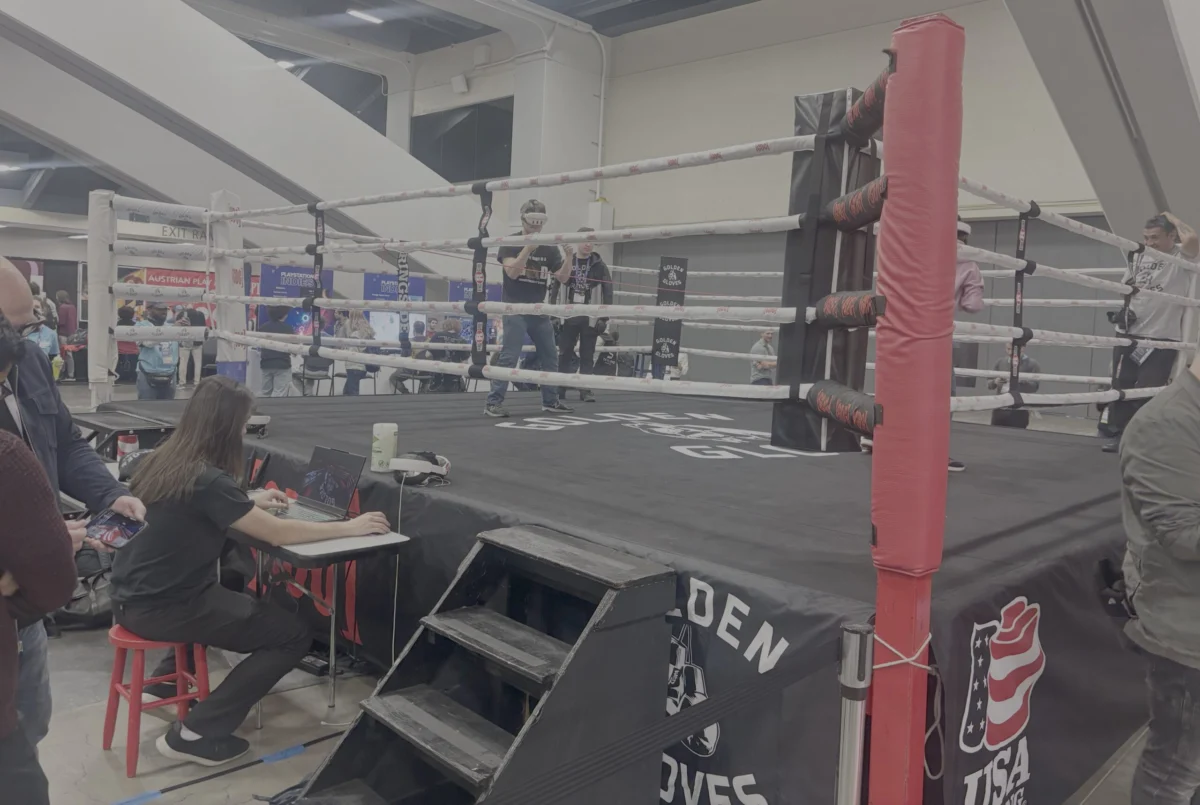
The most visually striking installation in the indie section is "Golden Gloves," a VR boxing experience that utilizes a full-sized, physical boxing ring on the show floor. Other highlights include "Patchwork," a surgery-themed game with unconventional controls, and a title utilizing a large inflatable ball as a primary input device. These installations represent the "Festival" spirit the organizers are keen to promote, offering sensory experiences that cannot be replicated in a virtual or remote meeting environment.
The Economic Context of International Attendance
While the floor felt busy during the opening hours on Wednesday, there is an underlying tension regarding international participation. Many developers from emerging markets have reported significant hurdles in attending GDC 2026, citing the exorbitant cost of accommodation in San Francisco and ongoing concerns regarding urban safety.

Supporting data suggests that while domestic attendance remains stable, the "non-ticketed" contingent has grown. A survey of local cafes and hotel lobbies reveals that a substantial number of developers travel to San Francisco specifically for the "fringe" events, choosing to bypass the $1,000+ cost of a conference pass. This "Shadow GDC" has become a vital part of the week’s ecosystem, though it presents a challenge for the organizers at Informa Tech as they attempt to monetize the event’s physical footprint.
Emerging Technologies and the Meta-Trends of 2026
The technological focus of GDC 2026 has moved away from the hype cycles of previous years. Blockchain gaming, once a dominant theme, has largely receded, with Nexus Cross being the only major firm representing the sector on the main floor. Instead, the focus has shifted toward AI-assisted development tools and backend infrastructure.

Sony’s presence remains understated, with a small "PlayStation Indies" section being their only visible footprint on the floor. Reports indicate that Sony, much like Amazon Web Services (AWS) and Netflix, has moved its primary operations to off-site or upstairs venues. AWS has reportedly taken over the Metreon space—a large complex adjacent to the Moscone—to host its media showcases and technical workshops, further decentralizing the conference experience.
Conclusion: The Future of the Mega-Conference
The 2026 iteration of GDC suggests that the era of the "all-encompassing" show floor may be coming to an end. The consolidation into the South Hall and the rebranding to a "Festival of Gaming" are clear indicators that the event is evolving into a hybrid of a professional summit and a public-facing celebration.

For the industry, GDC remains the most important week on the calendar for networking and deal-making. However, the physical reality of the conference is now one of fragmentation. With major players like Epic, Unity, and AWS moving to private suites, the show floor has become a space for mid-tier service providers and emerging international markets to shine. As the conference concludes its first full day of exhibition, the consensus among attendees is one of cautious optimism; the industry is smaller and more cost-conscious, but the drive for innovation and the necessity of face-to-face connection remains as strong as ever.
About the Author