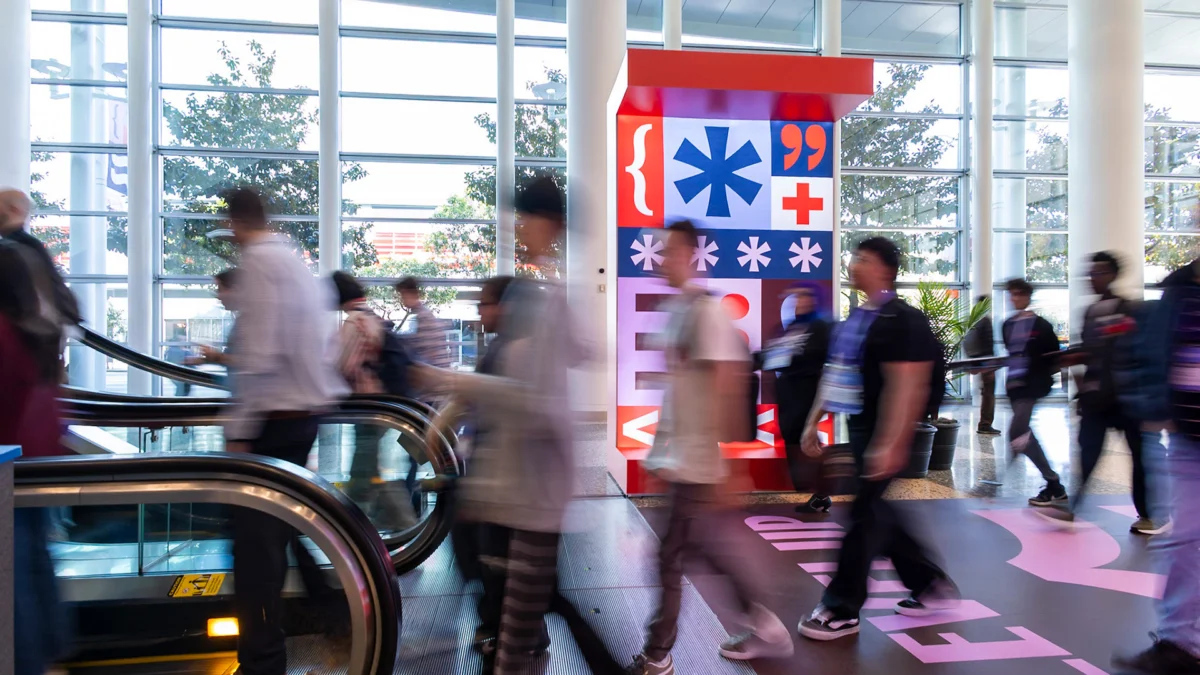
At the prestigious Game Developers Conference (GDC) 2026, a pivotal discussion unfolded regarding the accelerating momentum behind LGBTQ+ inclusion in video games. Industry professionals, academics, and advocates gathered to hear representatives from GLAAD (Gay & Lesbian Alliance Against Defamation) deliver a compelling presentation on the evolving landscape of queer characters and storylines within interactive entertainment. The panel, spearheaded by GLAAD Gaming’s Associate Director Blair Durkee and Program Consultant Sabrina Mah, dissected the common pitfalls developers encounter when attempting to craft genuine LGBTQ+ narratives, while simultaneously championing the immense value in creating exceptional games that naturally and authentically feature diverse communities. Their central message resonated clearly: inclusion is not merely a moral imperative but a strategic advantage, aligning with growing player demand and robust market data.
The Game Developers Conference, held annually, serves as the world’s largest professional gathering for game developers, bringing together programmers, artists, producers, game designers, audio professionals, business leaders, and more. It is a critical forum for sharing knowledge, networking, and discussing the future trajectory of the gaming industry. For GLAAD to host such a prominent panel at GDC 2026 underscores the increasing recognition of video games as a powerful cultural medium, deserving of the same scrutiny and advocacy for fair, accurate, and inclusive representation traditionally applied to film and television. GLAAD’s expansion into the gaming sector, which notably intensified in the late 2010s and early 2020s, reflects a strategic effort to influence an industry that reaches billions globally and shapes contemporary narratives for a vast, diverse audience. This engagement includes the introduction of GLAAD Media Awards categories specifically for video games, acknowledging titles that make significant strides in LGBTQ+ representation.
A cornerstone of the panel’s presentation was "The GLAAD Gaming Report," a comprehensive, data-centric analysis released in 2024. This report meticulously examined trends in video games and audience engagement over recent years, with a particular focus on the LGBTQ+ community. It offered an unprecedented, data-driven breakdown of how LGBTQ+ representation influences purchasing decisions and play styles, what queer audiences genuinely seek in their gaming experiences, and the profound positive impact that inclusive games can have on LGBTQ+ players. Among its most striking findings, the report revealed that a substantial 17 percent of the global gaming audience identifies as LGBTQ+. This demographic segment is not only significant in size but also demonstrably growing, particularly among Gen Z players who are increasingly prioritizing diversity and social consciousness in their media consumption.
Blair Durkee emphasized the straightforward nature of the task at hand for developers: "There’s really no shortage of ways you can make your game feel inclusive; you just have to have the willpower to do it." She advocated for a fundamental self-assessment within development studios: "A good place to start is just ask yourself, ‘Do our LGBTQ players feel seen and valued?’ And if you don’t have a good answer for that, you might have some work to do." This reflective query serves as a potent reminder that genuine inclusion begins with intentionality and a commitment to understanding one’s entire player base.
The GLAAD Gaming Report further elucidated that LGBTQ+ players exhibit a preference for specific types of representation. They particularly value the inclusion of LGBTQ+ individuals in supporting character roles, which allows for organic integration into narratives without necessarily making the character’s identity the sole focus. Equally important are choice-driven narratives, where players can make decisions that directly impact a character’s identity, allowing for a personalized and immersive experience that reflects their own sense of self or explores diverse possibilities. Durkee and Mah highlighted this as a compelling opportunity for developers to strategically leverage representation, not just as a social good, but as a mechanism to appeal directly to this growing and influential demographic. The report indicated that integrating LGBTQ+ characters or offering player choice in character identity can lead to increased potential sales from LGBTQ+ players, solidifying the business case for inclusivity.
A significant portion of the panel was dedicated to dismantling common misconceptions surrounding LGBTQ+ content in games. Sabrina Mah directly addressed the pervasive "myth that queer representation only detracts from non-LGBTQ+ players." She presented robust data to counter this notion, stating, "Actually, 62 to 70 percent of non-queer gamers say that queer representation would not make a difference in their decision, and nine to 14 percent would be more likely to buy or play a game with LGBTQ+ representation." This data decisively demonstrates that the vast majority of non-LGBTQ+ players are either indifferent or positively inclined towards inclusive content, thereby invalidating the commercial fear often cited by studios as a barrier to greater diversity.
Mah further elaborated on the demographic profile of those who expressed a negative reaction to LGBTQ+ content. While acknowledging that "we do have those who said they’d be less likely to buy," she quickly contextualized this group: "However, our research found that the majority of detractors are generally older, spend less money, and spend less time on games." Conversely, the segment of players who are supportive of LGBTQ+ representation are characterized as "younger, they spend more money, and they spend more time in games over time." This pattern, Mah predicted, indicates a clear trajectory for the future: "We expect this pattern of younger audience growth acceptance to continue." This forward-looking analysis presents a strong argument for developers to align their strategies with the evolving preferences of future generations of gamers, who are increasingly diverse and value authenticity and inclusion.
Beyond the statistical analysis, the panel underscored that mere inclusion is insufficient; "Authenticity Can’t Be Faked." Durkee and Mah stressed that while the data confirms general audience acceptance, the how of representation—the creative process by which developers portray LGBTQ+ characters and stories—remains paramount. Durkee warned that "good intentions" alone are inadequate. Audiences, she explained, "want good games to play overall, and they shouldn’t have to sacrifice one to get the other." This implies that LGBTQ+ content must be integrated into high-quality games that resonate on their own merits. A critical challenge highlighted was the heightened scrutiny faced by games featuring LGBTQ+ content. "For better or worse, when your game has LGBTQ content, we know that it will be housed at a higher level of scrutiny," Durkee observed. This often leads to a precarious situation where, "if the game overall doesn’t resonate with players, there will be bad actors out there ready to scapegoat the LGBTQ content as the reason." This phenomenon places an additional burden on developers to ensure that inclusive narratives are not only well-intentioned but also impeccably executed within a compelling game experience.
The panel also delved into the nuanced complexities of queer storytelling, emphasizing that these narratives carry significant cultural and emotional weight. Poorly executed representation risks not only alienating the very communities developers aim to connect with but also perpetuating harmful stereotypes. To mitigate these risks, Durkee and Mah strongly advocated for involving individuals with lived experiences in the development process. This can take the form of working with outside consultants specializing in LGBTQ+ narratives or, ideally, leveraging the diverse perspectives of LGBTQ+ individuals already within development teams. As they eloquently put it, "Authenticity is more than a setting on a dial for how prominent the inclusive content is." It is about embedding these perspectives into the very fabric of the game’s world and characters.
Developers were advised to steer clear of "tokenizing" characters—the practice of including a single, often superficially developed LGBTQ+ character merely to "check a box" for representation. Instead, the panelists urged a deeper immersion into the worlds being built: how would LGBTQ+ characters realistically exist and navigate these environments? How do their identities inform their experiences, relationships, and contributions to the narrative? Durkee provided concrete examples of effective representation, including the naturalistic inclusion of trans characters in titles such as Far Cry 6 and The Elder Scrolls Online. The latter, notably, received GLAAD’s inaugural award for outstanding video game, a testament to its thoughtful and impactful portrayal of LGBTQ+ individuals within its sprawling fantasy world. This recognition by GLAAD itself signifies a benchmark for quality and authenticity in the industry.
The broader implications of GLAAD’s findings and recommendations at GDC 2026 are multifaceted. Economically, the data presents a clear pathway for market expansion. By catering authentically to the 17% LGBTQ+ gaming audience and the significant percentage of allies, developers can tap into a loyal and growing consumer base, potentially boosting sales, fostering long-term engagement, and enhancing brand reputation. Socially, the normalization of LGBTQ+ characters in mainstream gaming contributes significantly to fostering empathy, breaking down stereotypes, and creating more inclusive digital spaces. For many LGBTQ+ players, seeing themselves reflected positively and authentically in games can be a profound and affirming experience, offering a sense of belonging and validation that is often scarce in other forms of media or real-world interactions. Creatively, the push for authentic representation encourages developers to explore richer, more diverse narratives and character archetypes, pushing the boundaries of storytelling in interactive mediums. This can lead to more innovative gameplay mechanics, deeper emotional connections with characters, and ultimately, a more vibrant and varied gaming landscape for everyone.
Concluding their impactful panel, both Durkee and Mah reiterated that truly authentic representation is not a passive outcome but the direct result of a developer’s steadfast determination. "The best approach to ensure that your game is received well by your entire audience is to treat inclusion and authenticity as a core pillar of the development process," Durkee asserted. She warned against a superficial approach: "If you treat it as something tacked on, players will perceive it as something tacked on, and that will not get a good response." The message was unequivocal: inclusion must be baked into the foundational design, narrative, and character development stages. When this integrated approach is adopted, "players will reward you for it, and as a bonus, they might even change the world for the better." This closing statement encapsulates the dual promise of authentic LGBTQ+ representation in gaming: commercial success for thoughtful developers and a meaningful, positive societal impact through the power of interactive storytelling. As the gaming industry continues its rapid evolution, the insights from GLAAD at GDC 2026 serve as a critical roadmap for a more inclusive, equitable, and ultimately more successful future.
About the Author