The landscape of digital content creation has been irrevocably transformed by the advent of Unreal Engine 5 (UE5) and its groundbreaking technologies. Among the most significant innovations is the MetaHuman character library, a collection of exceptionally high-fidelity digital humans now freely accessible for integration into a wide array of projects. This development marks a pivotal moment, democratizing access to photorealistic character models that once required significant time, expertise, and financial investment. This comprehensive guide will detail the precise steps for incorporating these advanced MetaHumans into a UE5 project, while also providing essential background, context, and an analysis of their broader implications for various industries.
The Evolution of Digital Character Creation and Epic Games’ Vision
For decades, the creation of realistic digital characters has been one of the most resource-intensive and technically challenging aspects of game development, film production, and virtual experiences. Achieving true photorealism often demanded specialized artists, extensive motion capture sessions, and sophisticated rigging and animation pipelines, placing it largely out of reach for independent creators and smaller studios.

Epic Games, the visionary force behind Unreal Engine, recognized this bottleneck and embarked on a strategic initiative to revolutionize digital character creation. This journey began with key acquisitions, notably 3Lateral in 2019, a company renowned for its expertise in creating hyper-realistic digital humans and developing advanced facial rigging and animation technologies. This was further bolstered by the integration of Quixel, a leading provider of photogrammetry-based 3D assets, which brought an unparalleled library of high-quality scans and textures into the Epic ecosystem. These strategic moves laid the foundational technology for what would become MetaHuman.
Unveiled to the public, the MetaHuman Framework and MetaHuman Creator tool represent a culmination of these efforts, designed to empower creators to generate or select fully rigged, ready-to-animate digital humans with unprecedented ease and fidelity. The MetaHuman library, in particular, offers a robust selection of pre-configured characters, serving as an immediate solution for projects requiring top-tier digital actors without the overhead of bespoke creation. Epic Games’ decision to make these assets freely available underscores their commitment to fostering innovation and lowering the barriers to entry for high-end content production, aligning with their broader vision for an open and accessible metaverse.
Understanding the MetaHuman Framework: A Synergy of Advanced Technologies
MetaHumans are more than just highly detailed 3D models; they are complete digital characters built upon a sophisticated framework that integrates multiple cutting-edge technologies. Each MetaHuman in the library is comprised of a modular system of meshes, including detailed facial geometry, intricately groomed hair (utilizing Unreal Engine’s advanced Groom system), realistic clothing, and fully functional skeletal rigs with advanced facial and body controls.
The photorealistic quality of MetaHumans stems from several key components:
- Quixel Megascans Integration: Leveraging Quixel’s vast library, MetaHumans feature incredibly detailed textures and materials derived from real-world scans, contributing to their lifelike appearance.
- 3Lateral’s Facial Rigging: The underlying facial rigging system, developed by 3Lateral, provides an astonishing range of realistic expressions and subtle nuances, making them ideal for performance capture and high-fidelity animation.
- Unreal Engine’s Rendering Pipeline: When rendered within UE5, MetaHumans benefit from technologies like Nanite (virtualized geometry for immense detail without performance hitches) and Lumen (global illumination for realistic lighting), further enhancing their visual fidelity.
This integrated approach ensures that MetaHumans are not only visually stunning but also production-ready, equipped for various applications from cinematic sequences to interactive real-time experiences.
Accessing the MetaHuman Library: The Gateway Through Quixel Bridge
Integrating MetaHumans into an Unreal Engine 5 project begins with accessing the centralized repository through Quixel Bridge, a critical component of the Epic Games ecosystem. Quixel Bridge serves as a direct conduit to the vast libraries of Megascans assets, and crucially, the MetaHuman collection.
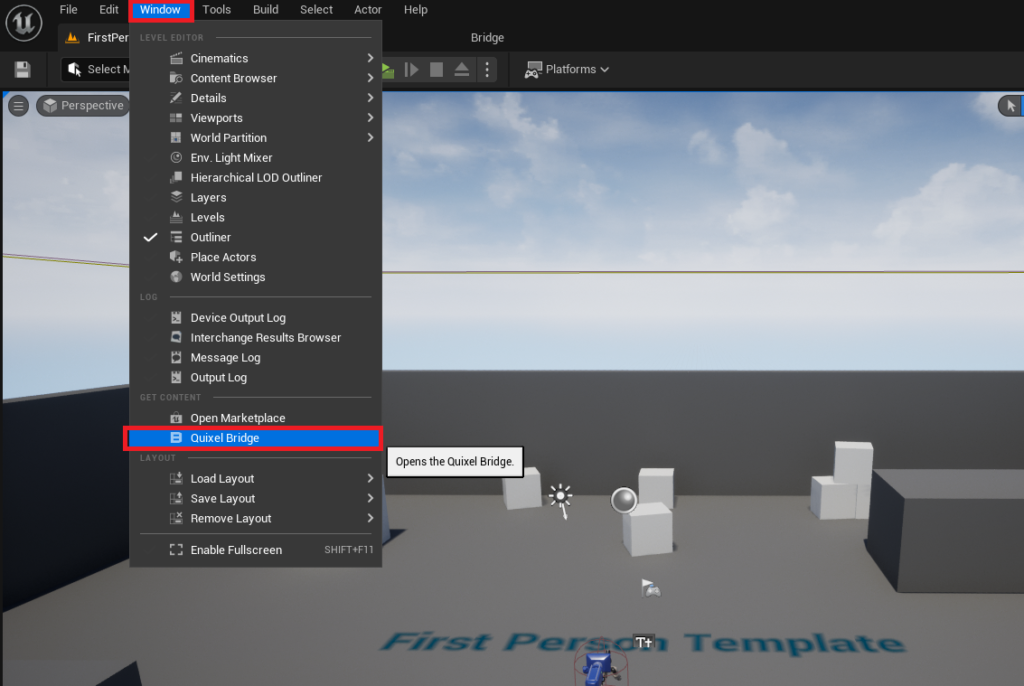
Step-by-Step Access:
- Initiating Quixel Bridge: Within the Unreal Engine editor, users must first navigate to the "Window" tab located in the top menu bar. From the dropdown menu, selecting "Quixel Bridge" will launch the integrated asset browser. This seamless integration streamlines the workflow, eliminating the need to open external applications.
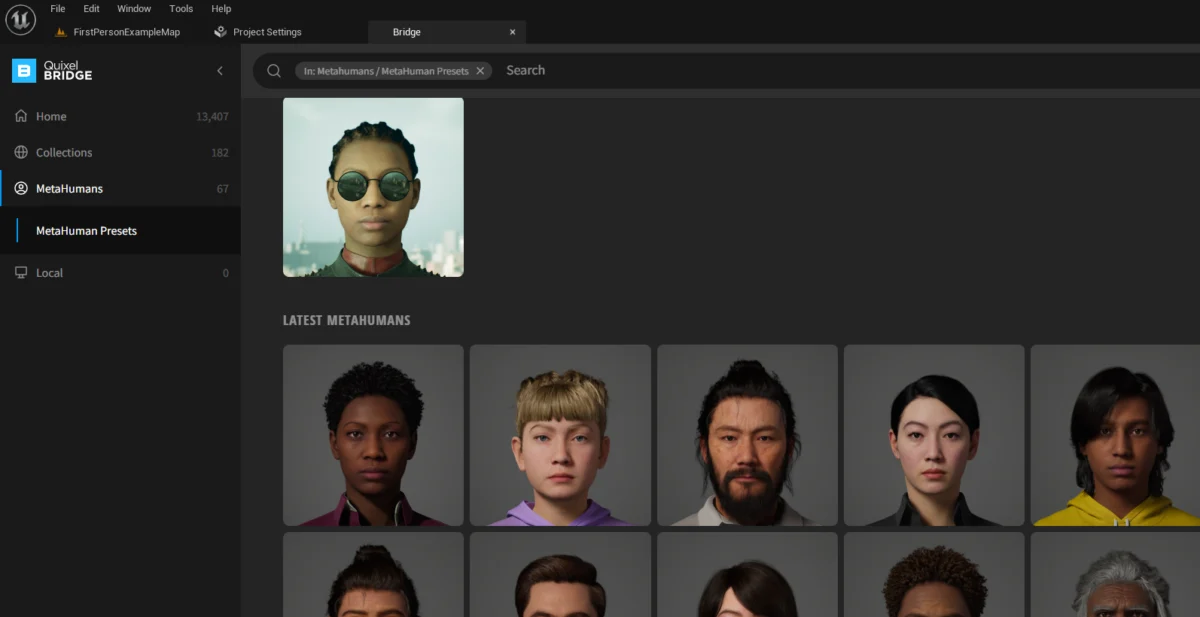
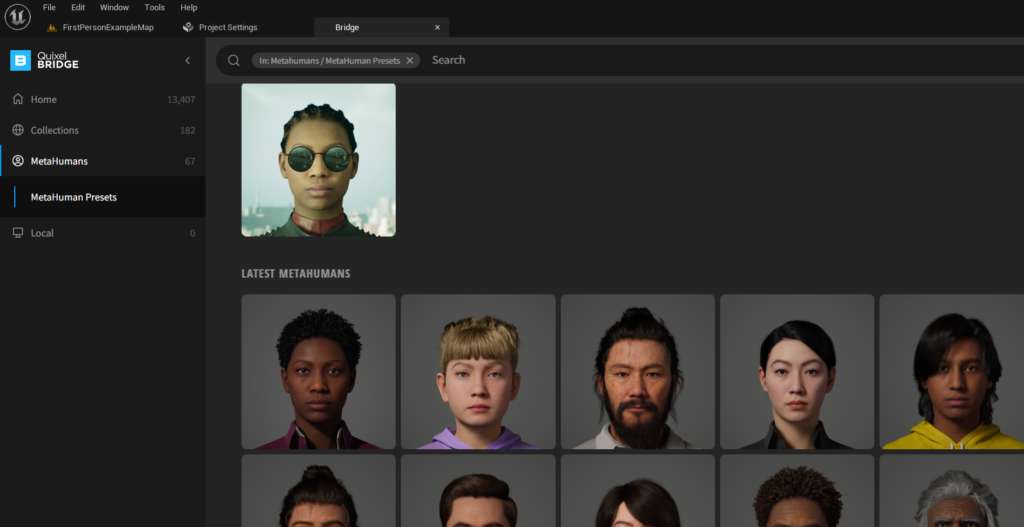
- Navigating to the MetaHumans Tab: Once Quixel Bridge has successfully opened within the editor, typically as a docked panel or a separate window, attention should be directed to the left-hand navigation pane. Here, users will observe a dedicated "MetaHumans" tab. Clicking this tab will filter the vast Quixel library specifically to display the available MetaHuman characters.
- Browsing the MetaHuman Collection: Upon entering the MetaHumans section, users are presented with a grid display showcasing a diverse range of pre-configured MetaHuman avatars. This library offers a variety of ages, ethnicities, and styles, providing immediate options for various project requirements. Each avatar is a testament to the technology’s capability, featuring intricate details and a high degree of realism. This visual browsing experience allows developers to quickly identify characters that align with their creative vision.
Authentication and Seamless Integration with Epic Games Account
Before any MetaHuman character can be downloaded and added to an active Unreal Engine project, a crucial authentication step is required. This process ensures that users are linked to their Epic Games account, which is essential for accessing the full breadth of the Quixel Megascans and MetaHuman libraries.
The Sign-In Process:

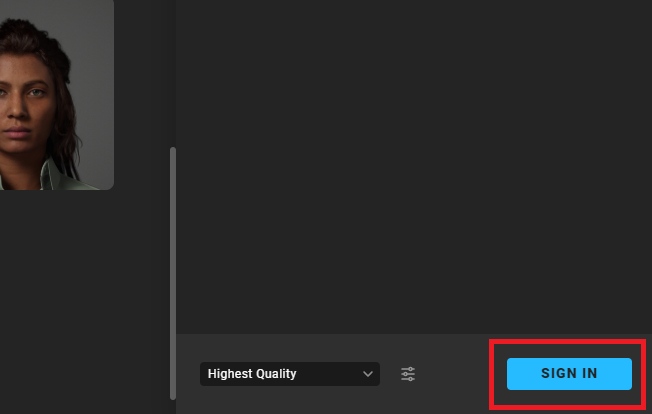
- Selection Prompt: When a user clicks on any of the MetaHuman avatars within the browsing grid, a prompt will typically appear, or a "Sign In" button will become visible, usually located in the bottom-right corner of the Quixel Bridge window. This signifies that authentication is necessary to proceed with asset acquisition.
- Epic Games Account Login: Users will then be directed to log in using their existing Epic Games account credentials. This integration leverages the established Epic Games login system, providing a secure and unified experience across Epic’s suite of tools and services. It is important to note that access to MetaHumans is tied to this account, reinforcing Epic’s ecosystem strategy. Once logged in, the full functionality of Quixel Bridge, including the ability to download and add MetaHumans, becomes available. This seamless login process ensures that the "free to use" promise of MetaHumans is easily realized for all Epic Games account holders.
Adding the Character to Your Project: Download, Import, and Configuration
With successful authentication, the process moves to acquiring and integrating the chosen MetaHuman character directly into the Unreal Engine project. This involves downloading the extensive asset files and configuring the project to properly utilize MetaHuman technologies.
Download and Import Procedure:
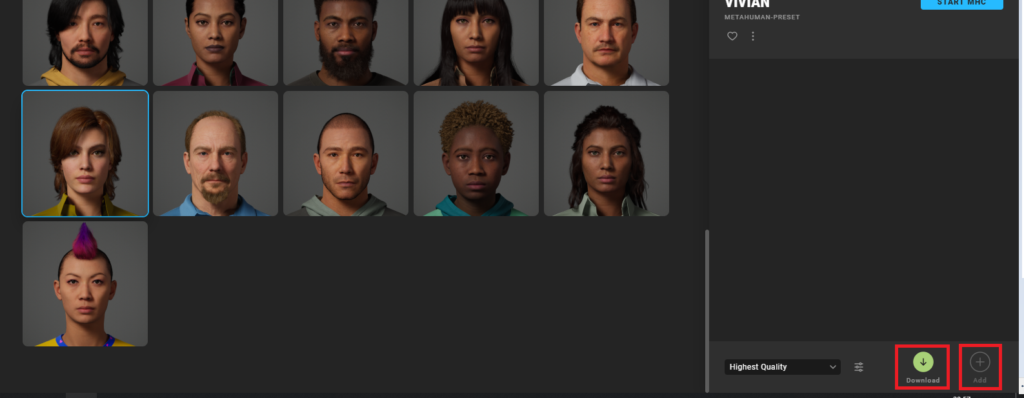
- Downloading the MetaHuman: After selecting a MetaHuman avatar and being logged in, two key actions become available: "Download" and "Add." The first step is to click "Download." This initiates the transfer of the MetaHuman’s high-resolution assets, including meshes, textures, grooms, and blueprints, from Epic’s servers to the local machine. Due to the high fidelity of these assets, download times can vary depending on internet connection speed and the complexity of the chosen MetaHuman.
- Adding to Project: Once the download is successfully completed, the "Add" button will become active. Clicking "Add" will commence the import process, integrating all the necessary MetaHuman files directly into the currently opened Unreal Engine project. This action automatically places the assets into a dedicated folder structure within the project’s content directory.
Crucial Project Configuration and Restart:
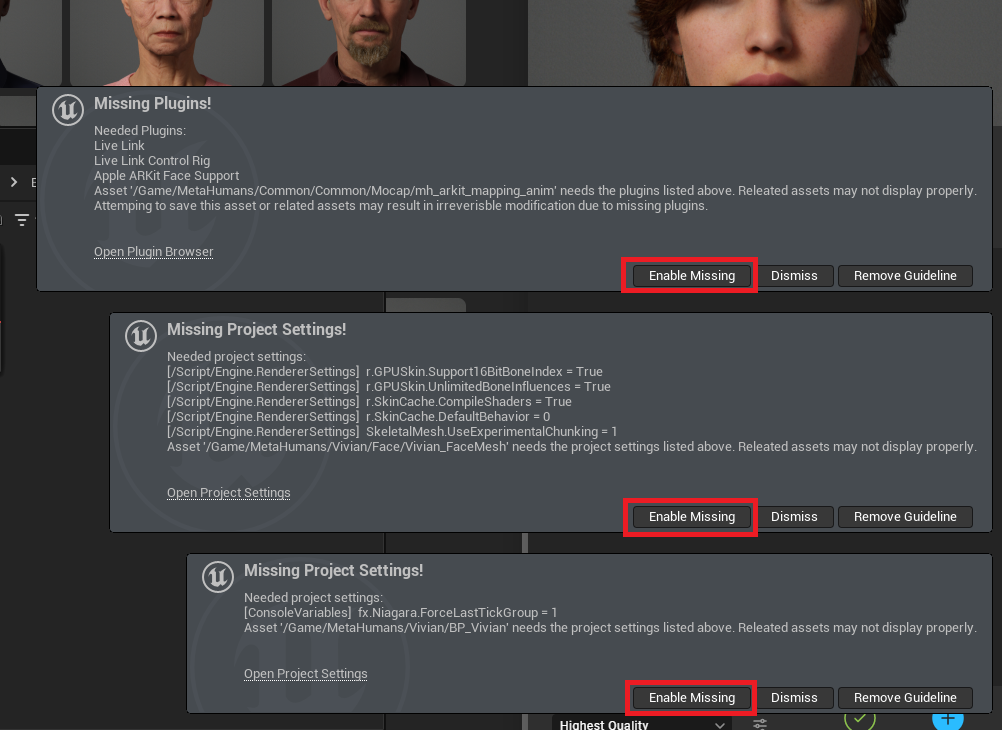
- Enabling Missing Dependencies: During the import process, the Unreal Engine editor will perform an analysis of the project’s current settings and installed plugins. It is highly probable that notifications will appear in the bottom-left corner of the editor, prompting the user to "Enable Missing" features. These "missing" elements are typically essential plugins and project settings specifically designed to support MetaHumans, such as the MetaHuman Plugin itself, the Groom plugin (for realistic hair rendering), and specific rendering settings required for optimal performance and visual fidelity. It is imperative to accept and enable these missing components to ensure the MetaHuman functions correctly.
- Restarting the Editor: After enabling the necessary settings and plugins, the editor will usually present a "Restart Now" button. This restart is a critical step, as it allows Unreal Engine to fully apply the newly enabled plugins and reconfigure its rendering pipeline and project settings to properly support the intricate details of MetaHuman characters. Skipping this step or delaying the restart can lead to visual glitches, missing components, or improper functionality of the MetaHuman within the project.
Locating the MetaHuman Asset in the Project
Once the Unreal Engine editor has successfully restarted and all necessary configurations have been applied, the newly imported MetaHuman character is ready to be utilized within the project.
Finding the Blueprint Asset:
- Navigating the Content Drawer: Users should open the "Content Drawer" (or Content Browser) within the Unreal Engine editor.
- Accessing the MetaHumans Folder: Inside the Content Drawer, a new folder named "MetaHumans" will have been created. Clicking this folder will reveal sub-folders, each corresponding to the name of the MetaHuman character(s) that have been downloaded.
- Identifying the Blueprint: Within the specific MetaHuman’s folder, users will find several assets. The primary asset representing the fully assembled and ready-to-use MetaHuman character is typically a Blueprint (BP) asset, identifiable by its name starting with "BP_". This Blueprint encapsulates all the modular components of the MetaHuman—body mesh, facial mesh, hair grooms, clothing, skeletal rig, and animation controls—into a single, easy-to-manage actor that can be dragged and dropped directly into the scene.
These MetaHuman blueprints are fully rigged and ready for animation, making them ideal for use as player characters, non-player characters (NPCs), or digital doubles in various interactive and linear media projects.
Broader Impact and Future Implications
The integration of MetaHumans into Unreal Engine 5 projects signifies a profound shift in content creation, extending its impact far beyond the immediate convenience it offers developers.
Democratization of High-Fidelity Content: The most immediate and significant implication is the democratization of high-end digital character creation. What once required specialist teams and proprietary pipelines is now accessible to individuals and small studios. This lowers the barrier to entry for producing visually stunning content, fostering greater creativity and diversity in projects across the globe.
Transformative Impact Across Industries:
- Game Development: Developers can rapidly prototype and iterate on characters, reducing production timelines and costs. The ability to quickly populate games with diverse, photorealistic NPCs or offer highly customizable player avatars is a game-changer.
- Film and Television: MetaHumans are invaluable for virtual production, pre-visualization, and creating digital doubles. Filmmakers can achieve cinematic quality digital performances with greater flexibility and control, bridging the gap between live-action and CGI.
- Advertising and Marketing: Brands can create realistic digital spokespersons or characters for campaigns, offering new avenues for engaging audiences with personalized and immersive experiences.
- Architectural Visualization: Populating architectural renders with lifelike human figures enhances realism and client engagement.
- Metaverse and Virtual Worlds: As foundational elements for realistic avatars, MetaHumans are poised to play a crucial role in building believable and immersive virtual economies and social spaces. Epic Games’ commitment to making them freely available strongly positions Unreal Engine as a key platform for metaverse development.
The Horizon: MetaHuman Creator and Customization: While the MetaHuman library offers pre-configured characters, the companion MetaHuman Creator tool further expands creative possibilities. This cloud-streamed application allows users to design entirely custom MetaHumans from scratch, blending different facial features, adjusting body proportions, and selecting from a vast array of clothing and hairstyles. This combination of a robust library and powerful customization tool ensures that creators have unparalleled control over their digital cast.
Challenges and Considerations: Despite their advantages, MetaHumans do come with considerations. Their high fidelity demands significant computational resources, requiring powerful hardware for optimal performance in real-time applications. Additionally, while the "uncanny valley" effect is significantly mitigated, ethical discussions surrounding the use of hyper-realistic digital humans and their potential for misuse remain relevant.
Conclusion
The integration of MetaHumans into Unreal Engine 5 represents a monumental leap forward for digital content creation. By following a straightforward process through Quixel Bridge, developers can effortlessly access and deploy these ready-to-use, high-fidelity digital human blueprints into their projects. This capability not only streamlines workflows but also unlocks unprecedented creative potential across gaming, film, virtual production, and emerging metaverse applications. As Epic Games continues to evolve the MetaHuman framework and associated tools like the MetaHuman Creator, the future promises even greater accessibility and customization, solidifying MetaHumans as an indispensable asset in the ever-expanding landscape of real-time 3D content. The era of democratized photorealistic digital characters has truly arrived, empowering creators to bring their most ambitious visions to life with unparalleled realism.
About the Author