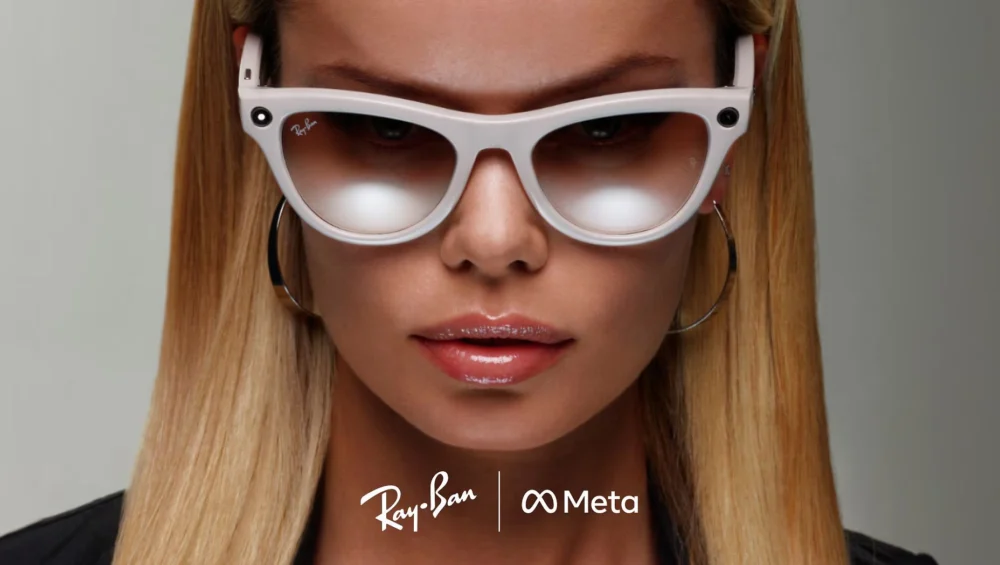
Meta Platforms and its partner EssilorLuxottica have reported a significant milestone in the adoption of wearable technology, confirming that their collaborative smartglasses line sold more than seven million units in 2025 alone. This figure represents a tripling of sales compared to previous iterations, signaling a decisive shift in consumer interest from traditional virtual reality (VR) headsets toward stylish, AI-integrated eyewear. The French-Italian eyewear giant, EssilorLuxottica, characterized the growth in the United States as "exponential," noting that the Ray-Ban Meta collection has become one of its most successful product lines. This surge in volume suggests that Meta’s strategic pivot toward augmented reality (AR) and artificial intelligence is gaining substantial traction in the mainstream consumer market.
Strategic Shift in the XR Hardware Landscape
The success of the Ray-Ban Meta smartglasses highlights a fundamental divergence in the extended reality (XR) sector. While high-end VR headsets like the Quest 3 and Quest 3S continue to serve a dedicated gaming and enterprise niche, their growth has remained relatively slow compared to the rapid adoption of smart eyewear. Industry analysts attribute this discrepancy to two primary factors: distribution and utility. Unlike VR headsets, which are often relegated to specialty electronics retailers, Meta’s smartglasses are sold through traditional optical shops and boutiques. Consumers entering a store to purchase standard prescription or sun-protective eyewear are now being presented with an integrated technology option that fits a pre-existing lifestyle habit.
Furthermore, the use case for smartglasses is more immediately apparent to the average consumer. While VR requires a dedicated environment and often causes social isolation, smartglasses provide utility in the real world through hands-free photography, audio streaming, and AI-assisted tasks. This "always-on" nature has resulted in higher retention rates. Meta’s Chief Technology Officer, Andrew "Boz" Bosworth, recently noted in an interview with journalist Alex Heath that the retention data for the Ray-Ban Meta glasses is "impressive," countering the industry-wide concern that many XR devices are purchased only to be abandoned on a shelf shortly after.

Meta Hardware Roadmap: Quest 4 and Project Puffin
Despite the momentum in the smartglasses category, Meta remains committed to its head-mounted display (HMD) roadmap. During the same interview, Bosworth confirmed that the company is currently developing two distinct new headsets. While he declined to provide specific release dates, internal leaks and industry rumors suggest a bifurcated strategy. One device is expected to be the Meta Quest 4, which will likely double down on the company’s gaming heritage with improved processing power and display resolution.
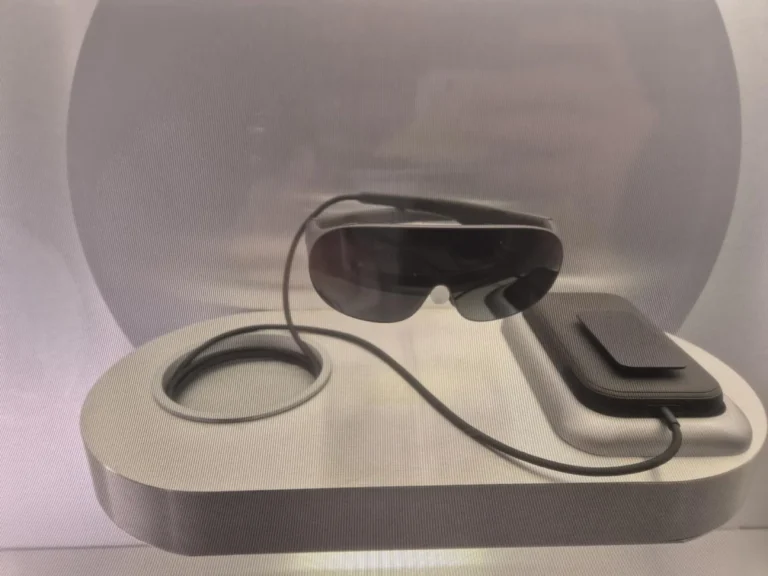
The second device, codenamed "Puffin" (also referred to in various reports as "Loma" or "Phoenix"), is rumored to be a more lightweight, high-performance headset designed to compete directly with the Apple Vision Pro. This device is expected to focus on "spatial computing"—a term increasingly used to describe productivity and media consumption in a mixed-reality environment. By developing a lighter, more ergonomic form factor, Meta aims to address the comfort issues that have historically hindered the mass adoption of immersive HMDs.
The Convergence of AI, Robotics, and Wearable Data
A critical component of Meta’s long-term strategy is the integration of its Llama AI models with its hardware ecosystem. Bosworth revealed that the teams developing smartglasses and those working on generative AI are now working in close coordination. Crucially, the upcoming Meta AI models are being trained using egocentric data—first-person perspectives captured by smartglasses. This unique data set allows the AI to understand the world from the user’s point of view, potentially making Meta’s AI the most effective assistant for wearable devices.
In a move that broadens the company’s technological scope even further, Meta has confirmed its entry into the field of humanoid robotics. While the company has not yet detailed a commercial product, the move suggests an intention to apply its computer vision and AI research to physical automation. Analysts suggest that the same spatial awareness technologies used in the Quest headsets and Ray-Ban Meta glasses will serve as the foundational "brain" for these robotic systems.

Privacy Concerns and the Facial Recognition Debate
As smartglasses become more ubiquitous, the potential for controversial features has re-entered the public discourse. Reports from the New York Times and CNET indicate that internal debates are occurring within Meta regarding the activation of facial recognition features on the Ray-Ban Meta glasses. This technology would theoretically allow users to identify individuals in real-time, cross-referencing their faces with social media profiles or contact lists.
The debate is complicated by leaked internal memos suggesting that some within the company believe the current "dynamic political environment" provides an opportune moment to launch such features, as civil society groups may be distracted by other global concerns. This revelation has drawn criticism from privacy advocates who argue that such a feature would fundamentally alter public anonymity. Industry experts emphasize that if facial recognition is to be implemented, it must include robust "opt-in" mechanisms, allowing individuals to control who can recognize them and what data is shared.
Market Projections and Industry Trends
The broader XR market is showing signs of significant financial expansion. According to market research firm Omdia, revenue from near-eye displays—the screens used in AR, VR, and MR devices—is projected to reach $1.2 billion in 2026. This represents a year-on-year growth rate of over 200%. This growth is primarily driven by the transition to OLED on Silicon (OLEDoS), also known as Micro OLED, which offers the high brightness and contrast ratios necessary for both immersive VR and transparent AR applications.
While Meta dominates the headlines, other players are adjusting their strategies. HTC, a pioneer in the VR space, has recently shifted focus toward its "Vive Eagle" smartglasses and content production through investments in companies like Atlas V. Meanwhile, Apple continues to refine its ecosystem; Google recently released a native YouTube app for the Apple Vision Pro, bringing a massive library of immersive and 2D content to the platform. This move is seen as a vital step in making the Vision Pro a viable media consumption device, especially after Disney+ reportedly removed some 3D content features for European users.

Chronology of Recent XR Developments
- September 2023: Launch of the Ray-Ban Meta Smart Glasses, featuring improved audio and cameras.
- Late 2024: Sales data begins to show the smartglasses outperforming the Quest 3 in weekly volume in specific regions.
- January 2025: Internal reports surface regarding Meta’s humanoid robotics division.
- February 2025: EssilorLuxottica confirms 7 million units sold; Meta CTO confirms Quest 4 development.
- Mid-2025: Debate intensifies regarding the implementation of facial recognition in public spaces via wearables.
Broader Impact and Future Outlook
The success of the Ray-Ban Meta glasses serves as a proof of concept for "ambient computing," where technology is integrated into everyday objects rather than requiring a dedicated screen or peripheral. As AI becomes more sophisticated, the hardware will likely shrink, eventually leading to true augmented reality glasses that can overlay digital information onto the physical world without the bulk of current headsets.
However, the rapid growth of this sector brings significant regulatory and ethical challenges. The prospect of millions of cameras being worn in public, potentially equipped with facial recognition and AI analysis, will likely lead to new privacy legislation globally. For now, the data indicates that the consumer has spoken: style, comfort, and immediate utility are the current drivers of the XR market, placing Meta in a commanding position as it navigates the transition from a social media company to a hardware and AI powerhouse.
About the Author