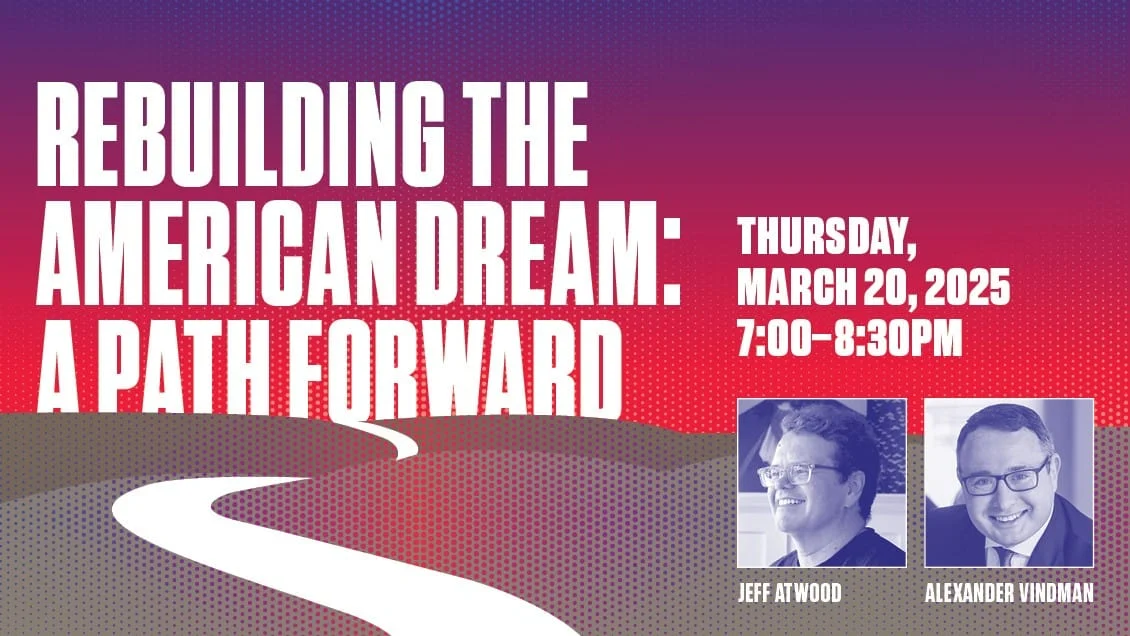
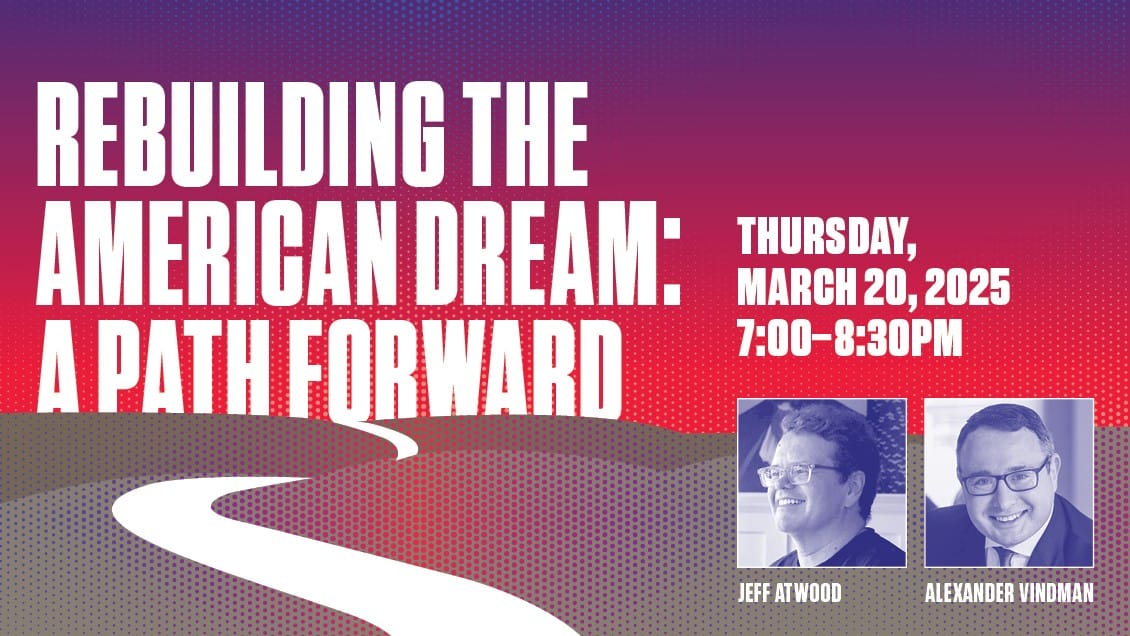
New York, NY – In a pivotal gathering aimed at galvanizing public discourse on the future of American society, prominent internet entrepreneur Jeff Atwood, founder of Stack Overflow and Discourse, joined forces with decorated military veteran and former National Security Council official Colonel Alexander Vindman for a joint address at the venerable Cooper Union Great Hall. The event, titled "Rebuilding The American Dream: A Path Forward," convened to explore critical pathways toward revitalizing the foundational promise of the American Dream through the lenses of democracy, community, and economic mobility. Streamed live via the Cooper Union Great Hall YouTube channel, the discussion underscored a collective imperative to transcend individual acts of generosity in favor of establishing robust systems that ensure security, dignity, and opportunity for all citizens.
The Genesis of a Crucial Dialogue: "Staying Gold" in a Shifting Landscape
The impetus for this significant collaboration can be traced back to Atwood’s earlier philosophical essay, "Stay Gold," which articulated a compelling vision for preserving the core tenets of oneself, one’s community, and the American Dream itself. This philosophy posits that "staying gold" is not a passive state but an active, continuous endeavor demanding conscious effort, decisive action, and often, challenging conversations. These dialogues, as Atwood emphasized, necessitate a rigorous examination of the nation’s past, a candid assessment of its present condition, and a clear articulation of its aspirational future. The joint talk with Colonel Vindman represented a tangible, high-profile manifestation of this philosophy, moving from theoretical introspection to practical deliberation on how to enact meaningful, long-term structural change.
As the year 2025 unfolds, the intrinsic promise of the American Dream—that hard work, fairness, and ample opportunity can reliably lead to a better future—has increasingly evolved from a self-evident truth into a pressing national question. The central query guiding the Cooper Union discussion was: "How can we build on our dream so that it works for everyone?" This question acknowledges the growing complexities and disparities that challenge the traditional narrative of upward mobility and equitable access, prompting a re-evaluation of the mechanisms necessary to ensure the dream remains attainable for all segments of society.
A Historic Venue for Timely Discussions: Cooper Union’s Great Hall
The selection of Cooper Union’s Great Hall as the venue for this discourse was profoundly symbolic. Nestled in New York City’s East Village, the Great Hall has historically served as a crucible for some of the most consequential public discussions and speeches in American history. It was here, in 1860, that Abraham Lincoln delivered his pivotal "Right Makes Might" speech, a foundational address that significantly bolstered his presidential campaign and articulated a powerful defense of federal authority against the expansion of slavery. Beyond Lincoln, the hall has hosted luminaries such as Frederick Douglass, Susan B. Anthony, Mark Twain, and multiple U.S. presidents, becoming synonymous with the vigorous exchange of ideas central to democratic progress and social reform. Its hallowed walls have witnessed the birth of the NAACP, the American Red Cross, and the women’s suffrage movement, imbuing any contemporary address with a profound sense of historical continuity and gravitas. For Atwood and Vindman to choose this stage underscored the gravity of their topic and positioned their dialogue within a rich tradition of civic engagement and democratic advocacy.
The Architect of Digital Communities: Jeff Atwood’s Vision for Systemic Fairness
Jeff Atwood, a name synonymous with fostering vibrant online communities, brings a unique perspective rooted in the architecture of digital interaction. As the co-founder of Stack Overflow, a globally recognized question-and-answer platform for programmers, and Discourse, an open-source discussion platform, Atwood has spent decades meticulously observing and engineering how people interact, collaborate, and self-govern within virtual spaces. Stack Overflow alone serves millions of developers worldwide, facilitating knowledge sharing on an unprecedented scale and demonstrating the power of collective intelligence when guided by clear rules and fair systems. Discourse, similarly, is designed to cultivate constructive dialogue, emphasizing moderation tools and community-driven governance to prevent the degradation often seen in less structured online forums.
Atwood’s insights from the digital realm offer a compelling parallel to the challenges facing contemporary democracy. He argues that whether one is "running a country or running a forum," fundamental principles remain consistent: the necessity of clear expectations, the implementation of fair systems, the establishment of strong boundaries, and the cultivation of a shared sense of purpose. These elements, he contends, are crucial for creating "artifacts for the common good," analogous to local parks where everyone can benefit. His experience in crafting digital ecosystems that encourage participation, minimize toxicity, and generate valuable collective output provides an unconventional but highly relevant framework for considering how to rebuild societal structures to promote fairness and opportunity. His emphasis on moving beyond individual acts of generosity towards systemic solutions stems directly from this experience, recognizing that ad-hoc altruism, while commendable, cannot sustainably address deeply entrenched structural inequalities.
The Embodiment of Civic Duty: Colonel Alexander Vindman’s Stand for Democratic Ideals
Joining Atwood was Colonel Alexander Vindman, whose life story is a testament to the ideals of the American Dream and the profound responsibilities of civic duty. Born in the Soviet Union, Vindman immigrated to the United States as a child, settling in Brooklyn and later embarking on a distinguished 21-year career in the U.S. Army. His military service saw him deploy to Iraq, where he earned a Purple Heart for injuries sustained in combat, a stark indicator of his personal sacrifice and commitment to national service. He rose through the ranks to become the Director for European Affairs on the National Security Council, a position of significant trust and influence.
Colonel Vindman’s public profile dramatically escalated when he chose to uphold his oath to the Constitution, providing testimony during a critical period that ultimately cost him his military career. His decision, made in the face of intense pressure and potential personal repercussions, demonstrated an unwavering commitment to the values of democracy, integrity, and the rule of law. His life narrative—from an immigrant seeking refuge and opportunity to a decorated officer willing to sacrifice his career for his principles—encapsulates a powerful embodiment of the American Dream’s moral core. Vindman’s perspective offers an invaluable counterpoint to Atwood’s, grounding the theoretical discussions of systemic fairness in the lived experience of defending democratic institutions and ideals at the highest levels of government. His presence underscored the tangible, often personal, costs associated with upholding the very systems Atwood seeks to fortify.
The American Dream in Question: Navigating 21st-Century Challenges
The core of the discussion revolved around the precarious state of the American Dream in the 21st century. Data from various reputable sources paint a complex picture. According to a 2022 Pew Research Center study, a significant portion of Americans believe that the American Dream is becoming increasingly difficult to achieve, with many citing economic inequality, stagnant wages, and rising costs of living as primary barriers. The Federal Reserve’s Survey of Consumer Finances consistently highlights a widening wealth gap, with the top 10% of households owning over 70% of the nation’s wealth, while lower and middle-income families struggle with financial precarity. Intergenerational economic mobility, once a hallmark of the American experience, has also shown signs of stagnation, with studies indicating that children born into poverty have a lower chance of escaping it compared to previous generations.
These trends challenge the notion that hard work alone guarantees upward mobility. The discussion at Cooper Union sought to move beyond lamenting these statistics to actively charting a course toward solutions. By examining the interplay of democracy, community, and economic mobility, Atwood and Vindman aimed to dissect the structural impediments that hinder widespread opportunity. They posited that a robust democracy is essential for ensuring fair representation and policy-making, that strong, inclusive communities are vital for social cohesion and support networks, and that equitable economic systems are fundamental for providing genuine pathways to prosperity for all, regardless of background.
From Individual Generosity to Systemic Solutions: A Call for Structural Change
One of the most profound themes explored was the imperative to transition from an over-reliance on individual generosity to the implementation of systemic solutions. While individual acts of charity and philanthropy are commendable and necessary, they are ultimately insufficient to address the scale and depth of systemic inequalities. The speakers argued that true, sustainable change requires a fundamental rethinking and restructuring of foundational systems—economic, social, and political—that currently perpetuate disparities.
This involves advocating for policies that promote equitable access to education, affordable healthcare, fair housing, and robust social safety nets. It means re-evaluating tax structures, labor laws, and regulatory frameworks to ensure they foster widespread economic participation rather than concentrating wealth. It also implies strengthening democratic processes to ensure every voice is heard and represented, combating disinformation, and fostering a culture of civic engagement that extends beyond electoral cycles. The vision articulated was one where "security, dignity, and possibility for all" are not merely aspirations but inherent outcomes of a well-designed and justly operating society. This shift represents a mature understanding that societal well-being is not just a sum of individual efforts but a product of collective design and commitment to equitable structures.
The Synergy of Diverse Perspectives: Tech and Public Service Converge
The pairing of a technology innovator like Jeff Atwood with a public service veteran like Alexander Vindman created a unique and potent synergy. Atwood’s expertise in building scalable, self-governing digital communities provided a fresh lens through which to examine the principles of societal governance. His understanding of how to establish clear rules, foster constructive dialogue, and mitigate conflict in online spaces offers surprising applicability to the complexities of national civic life. Colonel Vindman, on the other hand, brought the gravitas of direct experience in defending democratic institutions, having navigated the high stakes of national security and the personal costs of upholding integrity in public service.
Their combined perspectives suggested that the lessons learned in managing online discourse—the need for transparency, accountability, and a shared understanding of common goals—are remarkably pertinent to strengthening real-world democratic processes. The collaboration symbolized a bridge between the rapidly evolving digital frontier and the enduring challenges of human governance, proposing that innovation in one area might inform solutions in the other. It implicitly challenged the audience to consider how principles of fairness and constructive engagement, whether in a coding forum or a national security council, are universally applicable to fostering a more just and resilient society.
Broader Implications and the Path Forward
The "Rebuilding The American Dream: A Path Forward" event at Cooper Union carried significant implications for contemporary public discourse. By bringing together two figures from vastly different professional realms—one from the cutting edge of digital community building, the other from the front lines of national defense—the discussion signaled a broader societal recognition that the challenges facing the American Dream are multifaceted and demand interdisciplinary solutions.
The event served as a powerful call to collective action, moving beyond passive observation to active participation in shaping the nation’s future. The concluding message, "Imagine what we could do if we all worked together," was not merely rhetorical but an invitation to engage in the difficult, sustained effort required to enact systemic change. It encouraged individuals, communities, academic institutions, and policymakers to collaborate in forging innovative approaches that can restore the promise of security, dignity, and possibility for every American. The live streaming of the event ensured that this crucial dialogue extended far beyond the historic hall, reaching a global audience and potentially sparking further discussions and initiatives aimed at fortifying democratic ideals and ensuring a more equitable future.
Accessing the Dialogue: The Cooper Union Great Hall YouTube Channel
For those unable to attend the live event, the full discussion, "Rebuilding The American Dream : A Path Forward," was made accessible through the Cooper Union Great Hall YouTube channel. This digital dissemination strategy further amplified the reach of the critical dialogue, ensuring that the insights and proposed solutions from Jeff Atwood and Colonel Alexander Vindman could inform and inspire a wider audience, fostering a broader engagement with the urgent task of reimagining and rebuilding the American Dream for generations to come.
About the Author