The recent unveiling of the fifth-generation Spectacles, now simply branded as "Specs," by Snap Inc. at the Augmented World Expo (AWE) has ignited a significant debate within the technology sector regarding the trajectory of wearable augmented reality (AR). While the announcement represents a technical milestone for the Santa Monica-based company, the public and critical reception has highlighted a growing friction between the engineering realities of immersive hardware and the aesthetic expectations of the consumer market. Industry analysts are currently weighing the device’s substantial hardware advancements against its high entry cost and bulky form factor, which have made the device a target for viral criticism and skepticism from mainstream tech commentators.
Hardware Specifications and Market Positioning
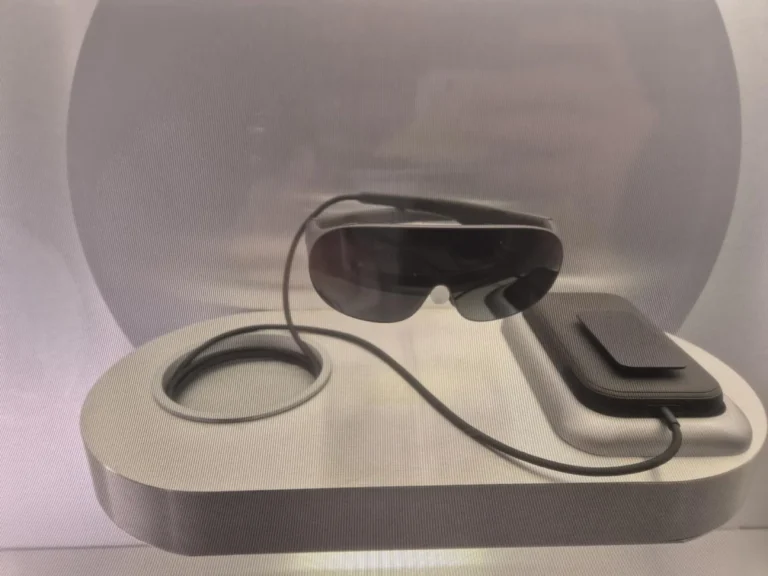
The new Snap Specs represent a significant departure from previous iterations, moving toward a fully integrated, standalone AR experience. The device features dual Snapdragon processors to distribute the thermal load and power the proprietary Snap OS. From a visual standpoint, the Specs utilize Liquid Crystal on Silicon (LCoS) micro-displays and waveguides that offer a 46-degree diagonal field of view—a notable improvement over the 26.3-degree field of view found in the 2021 developer edition.
Despite these technical leaps, the device remains substantial in size, weighing approximately 226 grams. This is nearly five times the weight of standard eyeglasses and significantly heavier than the Ray-Ban Meta smart glasses, which weigh roughly 50 grams. Snap has positioned the Specs not as a retail product for the general public, but as a sophisticated development kit. The distribution model reflects this: the glasses are available via a subscription-based model costing $99 per month with a two-year commitment, bringing the total cost of ownership to $2,376.
A Decade of Iteration: The Spectacles Chronology
To understand the current state of Snap’s AR ambitions, it is necessary to examine the decade-long timeline of the Spectacles product line. Snap has consistently used a strategy of "iterative innovation," releasing hardware to gather real-world data rather than waiting for a finalized, miniaturized product.

- 2016: Spectacles (V1): Launched via "Snapbot" vending machines, these were basic camera glasses capable of recording circular video for the Snapchat app. They were criticized for limited utility but praised for their playful marketing.
- 2018: Spectacles 2 (Nico and Veronica): This iteration introduced water resistance, improved audio, and more traditional frame styles, attempting to bridge the gap between tech gadget and fashion accessory.
- 2019: Spectacles 3: Featuring dual cameras, this version allowed users to capture depth information, enabling the application of 3D effects in post-production.
- 2021: Spectacles (4th Generation): The first version to include actual AR displays. This was a closed-release developer kit that introduced the world to Snap’s spatial engine.
- 2024: Specs (5th Generation): The current iteration, featuring enhanced processing power, a wider field of view, and a dedicated spatial operating system designed for hand-tracking and environmental persistence.
The Innovation Paradox: Criticism vs. Technical Achievement
The tech community’s response to the Specs highlights a recurring theme in the history of emerging technology: the "Innovation Paradox." This occurs when a company releases a functional but unrefined prototype to the public, only to face backlash for the very compromises required to make the technology work.
Market observers have noted that Snap is frequently compared to Meta’s Ray-Ban collaboration. However, these two products serve fundamentally different purposes. Meta’s current Ray-Ban glasses are "smart glasses" without a display, focusing on AI, audio, and photography. Snap’s Specs are "AR glasses" with integrated optics capable of overlaying digital objects onto the physical world. The engineering requirements for the latter—including batteries, waveguides, and cooling systems—necessitate a larger frame.
This discrepancy in public perception is often exacerbated by communication strategies. Industry critics argue that when executives frame developer-centric hardware as "consumer-oriented," they set unrealistic expectations. Snap’s leadership has faced scrutiny for promoting the Specs as a window into the future of social interaction while the hardware remains, by most standards, visually imposing and economically inaccessible for the average user.
Historical Context: Lessons from Google, Meta, and Apple
Snap is not the first major corporation to face significant public relations challenges while innovating in the open. The history of the XR (Extended Reality) industry is defined by such moments:
The Google Glass Precedent
In 2013, Google launched the "Explorer Edition" of Google Glass. Despite being a marvel of miniaturization for its time, the device became a lightning rod for privacy concerns and social stigma, leading to the derogatory term "glasshole." Google’s error, according to retrospective analysis, was marketing a prototype as a lifestyle revolution before the social and technical infrastructure was ready.

Meta’s "Metaverse" Pivot
Meta Platforms Inc. has faced years of criticism following its 2021 rebranding and subsequent multi-billion-dollar investment in Reality Labs. The company’s vision was often conflated with early-stage software like Horizon Worlds, leading to a disconnect between the high-end hardware being developed (such as the recent "Orion" prototype) and the public’s perception of the "Metaverse" as a finished product.
Apple’s Vision Pro Strategy
In contrast, Apple Inc. took a more guarded approach with the Vision Pro, released in early 2024. By branding the device as a "Spatial Computer" rather than AR/VR glasses, and by maintaining a premium $3,499 price point, Apple signaled that the device was intended for professionals and enthusiasts rather than the mass market. Apple also notably avoided showing high-ranking executives wearing the device in unscripted settings to prevent the "meme-ification" that has affected Evan Spiegel and Mark Zuckerberg.
The Role of Open Innovation in the XR Ecosystem
Despite the criticism, many industry experts argue that "innovation in the open" is essential for the advancement of the field. The agile development methodology—releasing a product, gathering feedback, and iterating—is often more effective than decades of secret laboratory research. Without real-world testing, developers cannot build the software ecosystems necessary to make AR useful.
For Snap, the Specs serve as a platform for Lens creators. If the company were to wait until the technology could fit into a standard pair of Wayfarers, they would lack the developer community and spatial content library needed to make the glasses valuable when the hardware finally arrives. Analysts suggest that the $99/month subscription is a deliberate filter to ensure the devices end up in the hands of serious developers rather than casual consumers who might be disappointed by the current limitations.
Future Implications and Industry Outlook
The long-term success of Snap’s hardware division may depend on its ability to bridge the communication gap between its engineering milestones and public expectations. As AI integration becomes more prevalent, the utility of AR glasses is expected to rise, potentially justifying the bulkier frames in the eyes of the consumer.

Furthermore, the industry is seeing a shift in how social media companies operate. By moving into hardware, Snap and Meta are attempting to break their dependence on mobile operating systems controlled by Apple and Google. While the path to a "post-smartphone" era is fraught with PR disasters and expensive failures, the investment continues. According to market data from IDC, the AR headset market is expected to see a compound annual growth rate (CAGR) of over 40% through 2028, suggesting that while the current "Specs" may be a niche tool, the category they represent is poised for significant expansion.
In conclusion, the criticism surrounding the Snap Specs serves as a reminder of the difficult balance tech companies must strike. They must innovate boldly enough to define the future, yet manage expectations carefully enough to survive the scrutiny of the present. As the XR ecosystem matures, the distinction between a "bulky prototype" and a "revolutionary tool" will likely be determined by the software and utility that developers create on these early, criticized platforms.
About the Author