Unreal Engine 5 (UE5) continues to redefine the landscape of real-time 3D content creation, and a cornerstone of its innovative ecosystem is the MetaHuman character library. This groundbreaking resource offers a collection of exceptionally high-fidelity digital humans, freely available for integration into a wide array of projects, from video games and film to virtual production and architectural visualization. The accessibility of these photorealistic digital assets represents a significant leap forward in democratizing advanced character artistry, allowing developers and creators of all scales to incorporate professional-grade digital actors without prohibitive costs or extensive development cycles. This guide outlines the essential steps for integrating MetaHumans into a UE5 project, while also providing crucial context on their development, technical underpinnings, and broader implications for the creative industries.
The Evolution of Digital Humans: A Precursor to MetaHumans

The quest for realistic digital humans has been a persistent driving force in computer graphics for decades. From early polygonal models in the 1990s to the motion-captured performances of the 2000s and the advanced subsurface scattering techniques of the 2010s, each era brought new levels of fidelity. However, achieving truly convincing digital humans has traditionally been a labor-intensive and expensive endeavor, often requiring specialized teams of artists, animators, and technical directors with expertise in sculpting, texturing, rigging, and shading. This complexity created a significant barrier for many creators, particularly independent developers or smaller studios.
Epic Games, recognizing this bottleneck, embarked on a strategic initiative to simplify and accelerate digital character creation. The acquisition of Quixel in 2019, renowned for its Megascans library of photogrammetry-scanned assets, was a pivotal moment. This move brought a wealth of real-world scanned data and advanced processing pipelines into Epic’s fold, laying the groundwork for what would become MetaHumans. The goal was clear: leverage photogrammetry, advanced rigging, and procedural generation to create a system capable of producing highly realistic, fully rigged, and animatable digital humans with unprecedented speed and ease. The MetaHuman Framework, launched in 2021, emerged as the culmination of these efforts, promising to transform character pipelines across the industry.
Accessing the MetaHuman Library: Your Gateway to Digital Actors
Integrating MetaHumans into an Unreal Engine 5 project begins with accessing the dedicated library within the editor. This process is streamlined through Quixel Bridge, an integrated content management system that serves as the central hub for Epic’s vast asset ecosystem, including the expansive Megascans library and, critically, the MetaHuman collection.
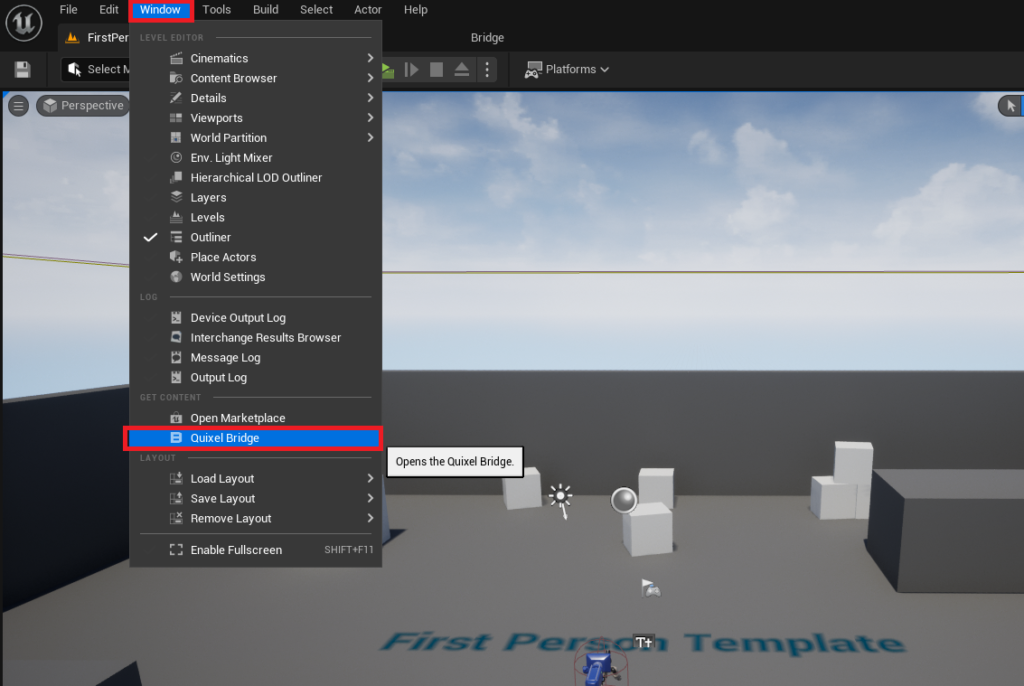
The initial step involves navigating the Unreal Engine editor interface. Users must click on the Window tab, typically located at the top of the editor, and then select Quixel Bridge from the dropdown menu. This action opens the Quixel Bridge panel, which operates either as an integrated window within the editor or a standalone application, depending on user preference and editor version. The seamless integration of Quixel Bridge is a testament to Epic’s commitment to providing a cohesive workflow, allowing artists and developers to browse, download, and import high-quality assets directly without interrupting their creative flow.
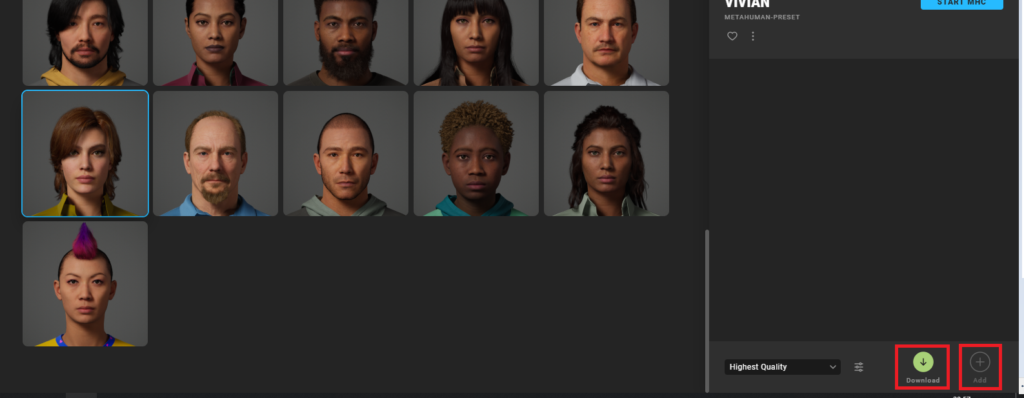
Once Quixel Bridge has successfully initialized and opened within the editor, attention must shift to its internal navigation. Within the Bridge interface, users will find several tabs categorized by asset type. To access the digital human collection, click on the prominently displayed MetaHumans tab. This action filters the extensive Quixel library, presenting only the pre-configured MetaHuman characters available for immediate use.
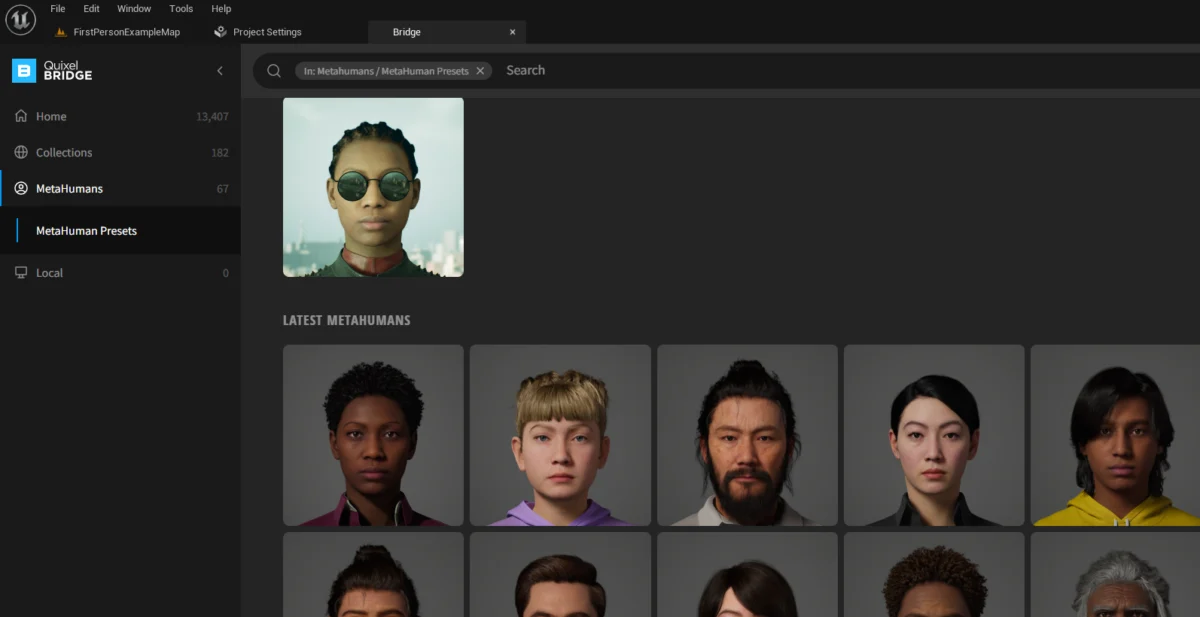
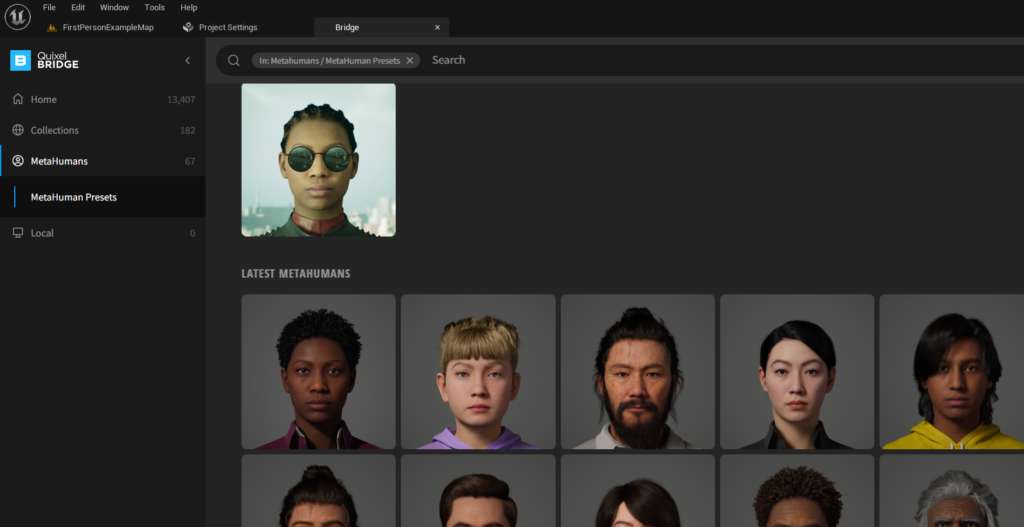
The MetaHumans tab reveals a curated grid of pre-designed digital avatars. These characters showcase the immense fidelity achievable with the MetaHuman framework, featuring diverse appearances, ages, and ethnicities, all rendered with exceptional detail. Each character is a fully realized asset, complete with detailed skin textures, realistic hair (using Unreal Engine’s advanced Groom system), sophisticated eye shaders, and a comprehensive facial and body rig ready for animation. This pre-configured library provides an immediate solution for projects requiring high-quality characters without the need for custom generation.
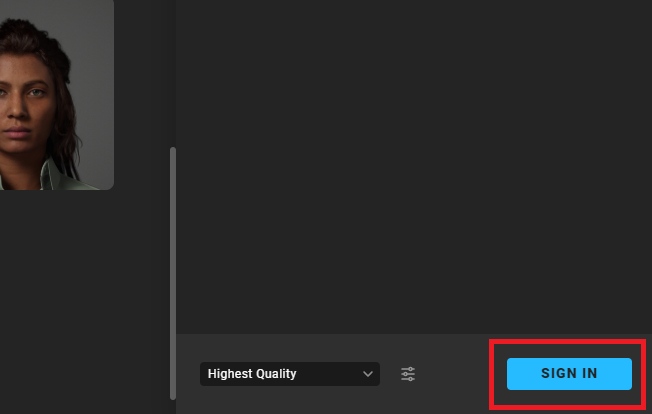
Before any MetaHuman can be downloaded and added to an active UE5 project, a crucial authentication step is required. Upon selecting one of the avatars from the grid, users will typically notice a "Sign In" button, often located in the bottom right corner of the Quixel Bridge window. This prompt necessitates logging in with an active Epic Games account. This authentication serves multiple purposes: it verifies user access to Epic’s content ecosystem, tracks usage in accordance with licensing agreements, and provides full access to the vast libraries of both Quixel Megascans and the MetaHuman collection. The process is straightforward, typically involving a browser-based login that securely links the user’s Epic Games account to the Quixel Bridge application. This ensures that all assets downloaded are properly licensed for use within Unreal Engine projects.
Adding MetaHumans to Your Project: Configuration and Integration

With successful authentication established, the process of integrating a chosen MetaHuman into your Unreal Engine 5 project becomes direct. After selecting the desired MetaHuman avatar, two primary actions become available: Download and Add. The initial step is to click Download. This initiates the transfer of the MetaHuman asset files from Epic’s servers to your local machine. It is worth noting that MetaHuman assets are exceptionally detailed and thus can be substantial in file size, particularly at higher quality presets (e.g., 8K textures). Users often have options to select different quality levels (e.g., 8K, 4K, 2K textures) before downloading, allowing them to balance fidelity with project performance and storage considerations. Choosing a lower quality preset for initial testing or for projects targeting less powerful hardware can significantly reduce download times and project footprint.
Once the download is complete, the Download button will transform into an Add button. Clicking this Add button instructs Quixel Bridge to import the downloaded MetaHuman assets directly into the currently open Unreal Engine 5 project. This action triggers a series of automated processes within the editor, as Unreal Engine begins to import and configure the complex array of meshes, textures, materials, and blueprints that constitute a MetaHuman.
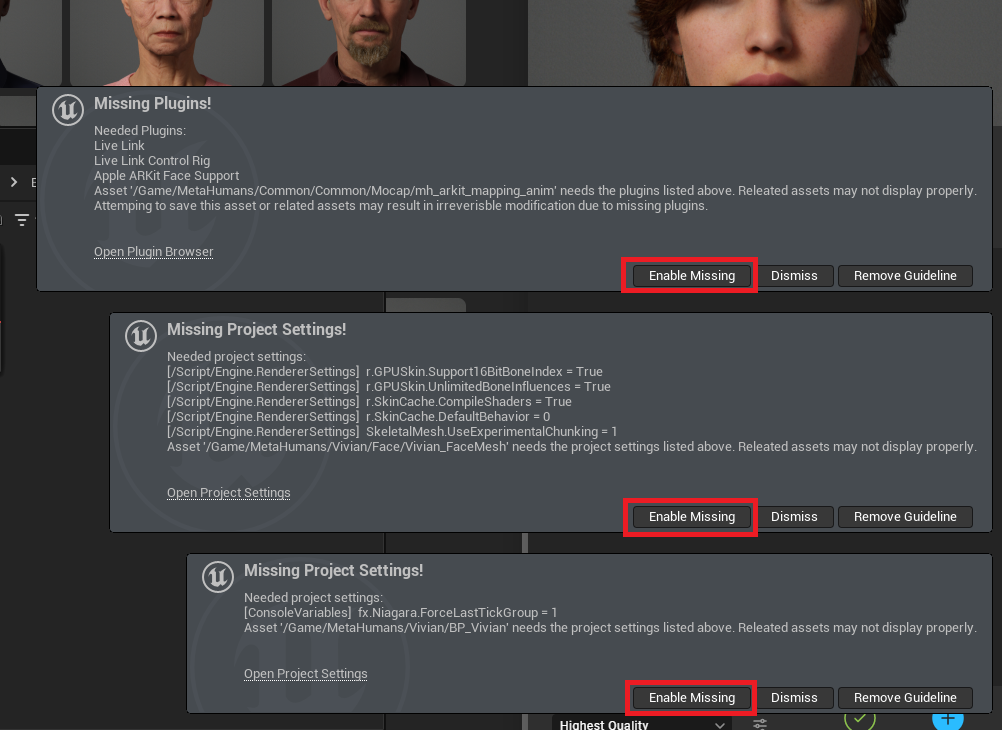
During this import process, the Unreal Engine editor may display notifications, typically in the bottom left corner of the interface, indicating that certain plugins or project settings are missing or need to be enabled for optimal MetaHuman functionality. These notifications are critical and should not be ignored. MetaHumans leverage advanced rendering and animation features within Unreal Engine, such as the Groom plugin for realistic hair and fur, Alembic for complex animated geometry, and specific project settings related to virtualized geometry, Level of Detail (LOD) generation, and shader compilation. When prompted, users must click Enable Missing to allow the editor to automatically activate the necessary plugins and adjust relevant project settings. This automatic configuration ensures that all the intricate components of a MetaHuman, from their individual hair strands to their highly detailed skin pores, are rendered and function correctly within the engine environment.
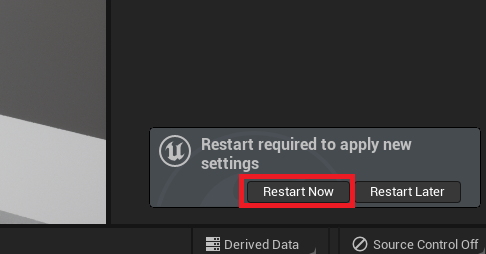
After enabling the missing settings and plugins, Unreal Engine will often require a restart to apply these fundamental changes. A Restart Now button will typically appear, prompting the user to close and reopen the editor. This restart is not merely a formality; it is a necessary step for the newly activated plugins and modified project settings to take full effect across the entire engine and its loaded assets. Failure to restart can result in MetaHumans appearing incorrectly, displaying visual glitches, or not functioning as intended within the project.
Upon the editor restarting and successfully loading the project, the newly imported MetaHuman can be located within the Content Drawer (or Content Browser, depending on your layout). Users should navigate to the MetaHumans folder, which is automatically created upon import. Inside this folder, a sub-folder bearing the name of the chosen MetaHuman will be present. Within this character-specific folder, the core asset representing the complete MetaHuman will be identifiable by its filename, typically starting with "BP_" (e.g., BP_MetaHumanName). This BP_ prefix denotes that the asset is an Unreal Engine Blueprint – a powerful visual scripting system that encapsulates the entire character, including its skeletal mesh, materials, animation blueprints, and any custom logic. This Blueprint asset is the ready-to-use character that can be dragged and dropped directly into any scene within the UE5 project.
The Power and Potential of Integrated MetaHumans
The successful integration of a MetaHuman Blueprint into an Unreal Engine 5 project unlocks a vast array of possibilities for content creators. These assets are not merely static models; they are fully rigged and highly customizable characters designed for dynamic use. Each MetaHuman Blueprint contains multiple modular meshes that collectively form the complete character, including body parts, clothing, and accessories. This modularity allows for further customization, enabling developers to swap out clothing, adjust body proportions, or even integrate custom elements while retaining the underlying high-fidelity rig.
The rigging system employed by MetaHumans is exceptionally advanced, supporting both facial and body animation with remarkable precision. This means that the characters are immediately ready for use as player characters, non-player characters (NPCs), or lead roles in cinematic sequences. Their compatibility with Unreal Engine’s robust animation toolset, including sequencer, control rig, and motion capture integration (such as Live Link), allows for complex and nuanced performances with minimal setup time. This capability significantly accelerates character-driven storytelling and interactive experiences.
Future Developments and Broader Industry Impact
While the pre-configured MetaHuman library offers immense value, Epic Games’ vision extends further with the MetaHuman Creator tool. This cloud-streamed application empowers users to design entirely custom MetaHumans from scratch or by blending existing digital identities. Through intuitive sliders and presets, creators can sculpt facial features, adjust body types, select hairstyles, apply makeup, and choose from a wide array of clothing options, all in real-time. This level of customization, previously reserved for expert character artists, is now accessible to a much broader audience, further democratizing the creation of unique, photorealistic digital humans. The MetaHuman Creator is a game-changer for projects requiring specific character designs or a diverse cast of digital actors.
The implications of MetaHumans extend far beyond traditional gaming. In virtual production, MetaHumans can serve as highly realistic digital doubles or virtual actors, seamlessly integrated into live-action sets. For architectural visualization, they can populate scenes with lifelike individuals, enhancing the realism of proposed designs. The burgeoning metaverse concept also stands to benefit immensely, as MetaHumans offer a robust framework for creating expressive and consistent digital identities that can traverse various virtual worlds.
From an industry perspective, MetaHumans are poised to significantly impact workflows. For AAA studios, they offer a powerful base from which to begin character development, drastically reducing the initial setup time and allowing artists to focus on unique stylistic elements. For independent developers, the free access to high-fidelity characters removes a major barrier, enabling smaller teams to achieve production values previously thought impossible. The availability of these assets also encourages experimentation and innovation in storytelling, as the technical hurdles of character creation are substantially lowered.
However, the widespread adoption of highly realistic digital humans also brings ethical considerations. Discussions around digital likeness, the potential for deepfakes, and the responsible creation and deployment of AI-driven digital characters are ongoing. Epic Games, as a leader in this space, is implicitly tasked with setting standards and fostering best practices for the ethical use of its powerful tools.
In conclusion, Unreal Engine 5’s MetaHuman library represents a pivotal moment in the evolution of digital content creation. By offering free, high-fidelity, and fully rigged digital humans with a straightforward integration process, Epic Games has significantly lowered the barrier to entry for photorealistic character artistry. From the initial access via Quixel Bridge and the critical configuration steps, to the eventual deployment of a ready-to-use MetaHuman Blueprint, the process is designed for efficiency. With the MetaHuman Creator further expanding customization possibilities, these digital actors are not just assets; they are a catalyst for innovation, promising to shape the future of interactive entertainment, virtual production, and the immersive digital experiences of tomorrow. The ongoing commitment to democratizing high-end tools continues to empower creators globally, fostering an environment where artistic vision can be realized with unprecedented fidelity and speed.
About the Author