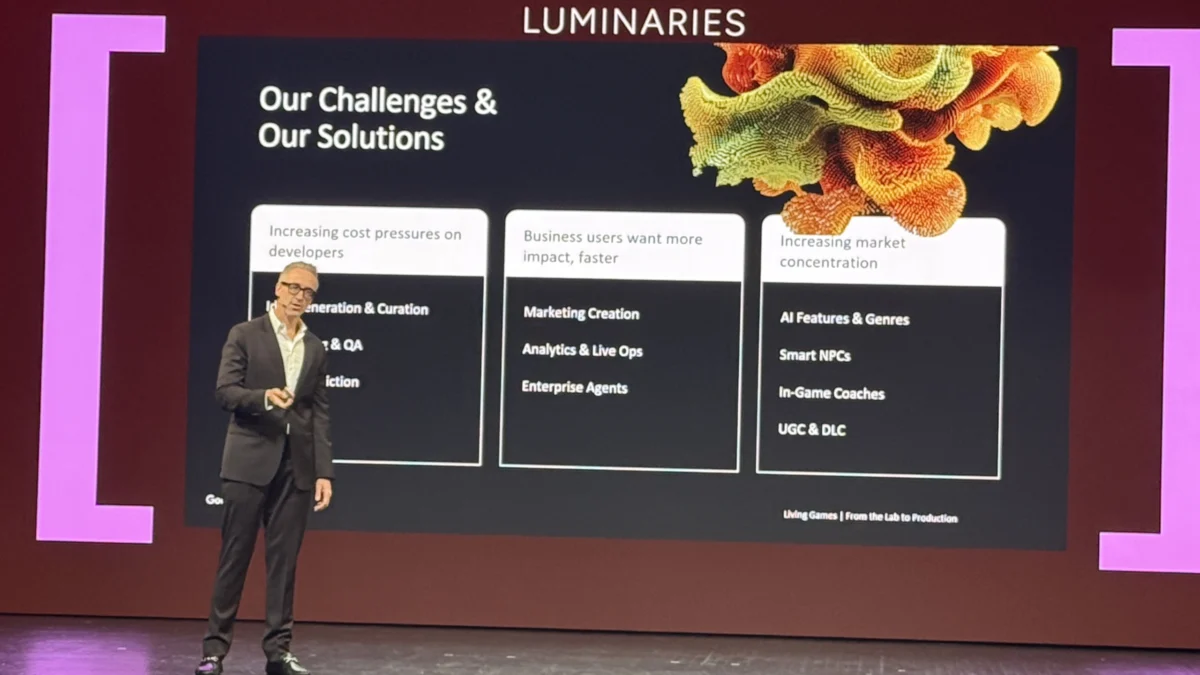
Jack Buser, a veteran with three decades of experience navigating the dynamic landscape of the game industry, delivered a compelling address as part of the inaugural Luminaries series at the GDC Festival of Gaming. His talk, "Build ‘Living Games’ with AI," provided a deep dive into the industry’s current challenges and presented artificial intelligence as a pivotal force poised to reshape game development and player experience fundamentally. Buser drew parallels between the transformative shifts he witnessed early in his career—such as the transition from 2D to 3D graphics and the nascent stages of online multiplayer—and the present-day embrace of AI tools, albeit against a backdrop of unprecedented economic pressures.
Recalling his first GDC experience, Buser painted a vivid picture of an industry on the cusp of a major technological leap. "We were really witnessing the tail-end of our industry’s transformation from 2D to 3D. We heard people in the halls talking about netcode because games were going online," he stated. This era was characterized by a palpable excitement among developers, who were actively exploring and brainstorming innovative ways to leverage these new advancements. The industry was not just adapting; it was enthusiastically migrating towards new paradigms that would define gaming for decades to come.
Buser posits that the current climate, with its intense focus on AI, echoes that earlier period of profound transformation. However, he acknowledges that the present moment is complicated by a significant industry recession. This economic downturn adds a layer of complexity that was less prevalent during the 2D-to-3D shift. Crucially, Buser emphasized that the AI he envisions is not designed to replace human developers but rather to serve as a powerful augmentative tool. His vision centers on AI tools and agents that can significantly reduce friction in development workflows, unlock new creative opportunities, and enhance the overall experience for game makers and players alike. Google Cloud, where Buser holds a prominent role, is actively championing this perspective, positioning AI as an indispensable ally in overcoming contemporary industry hurdles.
The Game Industry’s Transformative Era: Navigating Economic Headwinds
Buser opened his address by acknowledging the precarious position the game industry finds itself in. While global game revenues have shown resilience and even growth in certain segments, the industry as a whole has paradoxically contracted. This contraction is largely attributed to escalating development costs, which continue to soar, and the lingering repercussions of the post-pandemic economic recession that has swept across various sectors.
"Coming out of the pandemic was a shock to the system. Our industry actually shrank again. I had been around this industry for a long, long time and never felt anything like that," Buser candidly shared. The initial surge in gaming during lockdowns created a false sense of perpetual growth, leading to significant overinvestment and expansion across many studios. When this surge normalized, the subsequent downturn, marked by widespread layoffs, studio closures, and project cancellations, left an indelible mark. While the industry has since returned to a state of revenue growth, Buser noted a critical disconnect: the growth often doesn’t "feel good" due to a sharp and disproportionate rise in operating margins and continued belt-tightening measures.
"Even though our revenues are growing, we’ve had to tighten our belts tighter than ever before," he explained, highlighting the difficult decisions many companies are forced to make. A significant factor contributing to this strained environment is the dominance of "forever games"—titles like Fortnite, Minecraft, and Roblox. These established, years-old games continue to command an enormous share of global player attention and engagement, creating an increasingly challenging competitive landscape for new releases.
"If you’re launching a game you’re competing for far less than half the global playtime these days," Buser stressed. This market dynamic is evident in the financial figures. He cited reports indicating that a staggering 67 percent of the reported industry growth and market expansion is attributable to a single platform: Roblox. This concentration of player engagement and revenue within a few dominant titles makes it incredibly difficult for new intellectual properties or smaller studios to gain a foothold and achieve profitability. The implication is clear: the traditional model of developing and launching standalone games faces unprecedented headwinds.
Compounding these domestic market challenges, Buser highlighted another critical trend: 50 percent of recent player spend growth originated from players in mainland China. This statistic underscores the immense power and influence of the Chinese market and its unique characteristics. Buser believes that Chinese studios are at the forefront of demonstrating the practical adoption of AI in the video game industry. Tencent, a global gaming behemoth, has publicly announced that AI has already been integrated into 40 of its titles, with plans for even broader implementation across its portfolio. This aggressive adoption by a major market player serves as a bellwether for the rest of the world, suggesting that studios globally will need to follow suit to remain competitive.
Buser encapsulated the industry’s predicament with a stark assessment: "Studios are spending double to create a video game and competing for less than half the playtime. That is a completely broken model, folks. You don’t need me to do complex arithmetic to figure that one out." He concluded this segment by emphasizing the existential nature of these problems, asserting that AI, through real-world applications, offers tangible solutions to mitigate these profound challenges. The implication is that AI is not merely an optional enhancement but a strategic imperative for survival and sustained growth in the current market.
Where AI Can Make the Most Impact in Game Development: The "Living Game" Concept
Against this backdrop of economic strain and intense competition, Buser and Google Cloud introduce the concept of a "Living Game." This term encapsulates the synergistic intersection of live game principles—whether applied to expansive multiplayer experiences like Fortnite or to single-player titles that continuously gather player telemetry data—and advanced AI capabilities. The core idea is to create games that are not static products but dynamic, evolving ecosystems that adapt to and learn from their players.
"For players, this means that the game is actually able to adapt to them in ways we’ve never seen before," Buser explained. Imagine games that dynamically adjust difficulty based on individual skill, generate personalized content, or create narrative branches influenced by player choices in real-time. This level of personalized engagement promises to deepen immersion and prolong player interest significantly.
"But for developers, this means that these breakthrough experiences can be brought to market faster and more cost-effectively than ever before." This dual benefit addresses both the creative aspirations of developers and the pressing economic realities of rising costs and shrinking market share for new titles. By streamlining development processes and enhancing game longevity through adaptive experiences, AI offers a potential antidote to the "broken model" Buser described.
Buser employed a powerful analogy to clarify AI’s role: he presented AI tools as an "Iron Man" suit that developers can step into. This suit, he explained, cannot act independently; it requires human direction and creativity. However, it bestows upon its wearer "superpowers" that would be impossible to achieve without the metaphorical suit. This analogy underscores the collaborative nature of AI in development, emphasizing augmentation rather than replacement. Google Cloud identifies three critical areas where these "superpowers" can profoundly assist developers: during the development pipeline, in shaping business strategy, and in player-facing elements such as live operations and non-player characters (NPCs).
"This really speaks to that existential nature of some of these pressures we’re feeling as an industry. So how do studios fix this broken cost model? You have to think about AI not as something that replaces humans in the studio," Buser reiterated, reinforcing the message that AI is a tool for empowerment, not displacement.
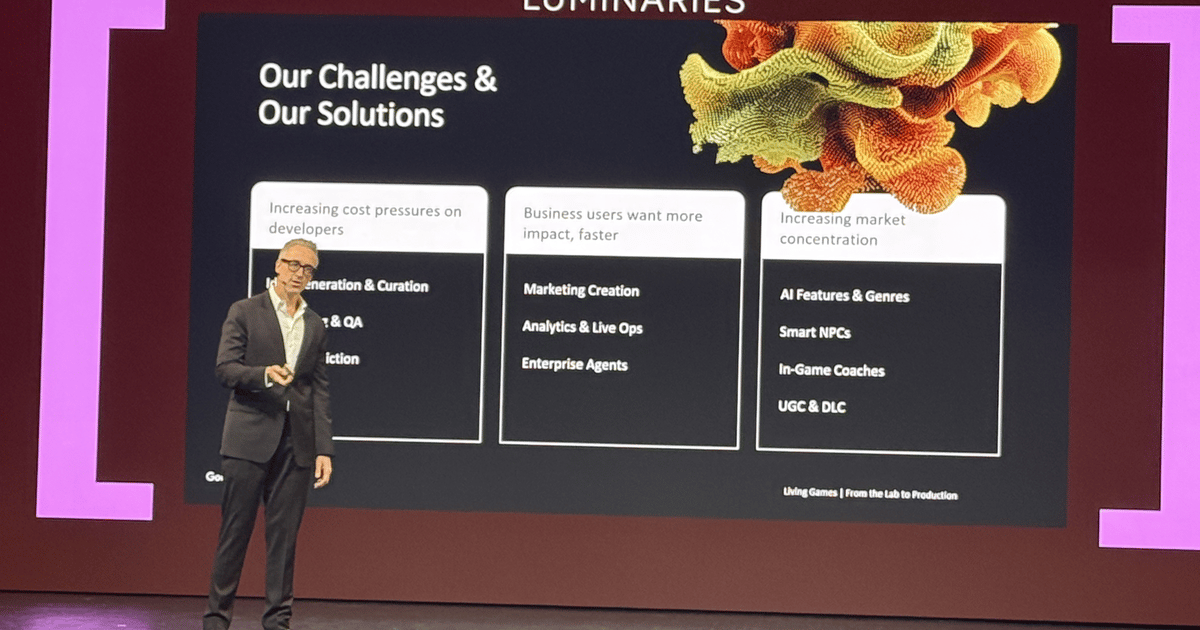
Development: Turbocharging Creativity and Efficiency
In the critical pre-production phase of game development, Buser highlighted the often-overlooked yet incredibly time-consuming processes of idea generation and asset organization. Traditionally, highly creative developers find themselves "buried in asset tagging, searching for assets, and curation of all of these thousands, if not millions, of objects." This manual, repetitive labor diverts valuable creative energy from core design tasks.
Buser championed the use of AI to "turbocharge" the idea generation process. AI models can rapidly generate vast quantities of concepts, art assets, and design elements, freeing creative teams to focus on refining and selecting the most impactful components. Beyond mere generation, AI can also act as a sophisticated "curation machine." By ingesting game design documentation, art bibles, and style guides, AI can intelligently analyze both human-created and AI-generated assets, surfacing those most relevant and aligned with the project’s vision. This capability, Buser asserted, could save "thousands of hours in pre-production," dramatically accelerating the initial phases of development.
"If you’re thinking about where to start in your development pipeline in terms of leveraging AI, pre-production is a fantastic place," Buser advised. Following this initial phase, he pointed to the "last 10 percent" of game development, often referred to as "the toil," where developers frequently endure the most strenuous work, particularly during the Quality Assurance (QA) process. Tasks like regression testing and bug fixes can heavily burden teams. Buser suggested an approach where AI functions "like an immune system for your game" throughout the entire development lifecycle. By automating repetitive testing, identifying potential issues proactively, and even assisting with bug resolution, AI creates vital room for human developers to focus on higher-value, more creative problem-solving tasks. This continuous AI integration promises a more robust and efficient development process, ensuring a higher quality product upon release.
Business Strategy: Surgical Precision in Marketing and Player Understanding
Buser also outlined several areas where AI can significantly accelerate and refine the strategic business elements of game development. Marketing campaigns, historically a labor-intensive and often generalized process, represent a prime target for AI-driven transformation. Buser argued that traditional marketing struggles to keep pace with the rapid development cycles of modern games. AI, he posited, aids game makers by both accelerating and hyper-personalizing the marketing process.
"The idea is that you are able to actually communicate with your customers and your players now with surgical precision, and in record time," Buser explained. This precision is made possible by leveraging AI to unify disparate data silos across a company. By bringing together diverse datasets—such as sentiment analysis from social media, player logs detailing in-game behavior, purchase histories, and demographic information—developers can create a "single view of the player." This consolidated data pool, when queried and activated by AI tools, can "generate answers to questions you might not even have thought to ask," providing unprecedented insights into player preferences, motivations, and pain points. The result is accelerated marketing efforts with significantly increased effectiveness and player engagement.
These unified data silos, according to Buser, empower developers to achieve a profound understanding of their player base. AI can process "billions of records in near real-time to enable what we call hyper-personalization." This capability extends beyond targeted advertising; it can be used to "predict churn before it even happens" and dynamically "adjust gameplay as well as offers that you put in front of your players in near real-time." For example, if AI detects signs that a player is losing interest, it could trigger a personalized in-game event, offer a tailored discount, or even subtly adjust gameplay elements to re-engage them.
"This is the beating heart of games today," Buser emphasized. "Without robust analytics, it’s very very hard to understand how to build your game or how to communicate with players." In an era where player retention and lifetime value are paramount, AI-driven analytics and hyper-personalization offer a critical competitive advantage, allowing studios to foster deeper, more enduring relationships with their communities.
Player Experience: Enhancing Engagement and Safety
Ultimately, the goal of all game development is to deliver exceptional player experiences. As Buser succinctly put it, "At the end of the day, we are in the business of building amazing player experiences." When considering AI’s role in this domain, the immediate thought for many often turns to "Smart NPCs." While Buser did dedicate time to discussing the potential for building more reactive, personalized, and believable in-game characters and narratives through AI, he was quick to highlight another, more immediate and impactful application: anti-toxicity and moderation.
The prevalence of toxic behavior in online gaming is a well-documented issue. Buser cited data indicating that 70 percent of players have experienced toxic behavior in a game, a statistic that massively contributes to player churn and undermines community health. Historically, moderation has been a labor-intensive, reactive process involving manual reports and investigations that can take days or even weeks. Buser advocated for deploying AI to this critical task, transforming it from a slow, reactive system into a proactive, real-time defense.
By utilizing AI for moderation and player safety, studios can detect and react to toxic behavior—whether in text chat, voice chat, or in-game actions—in real-time. This immediate intervention can prevent escalation, protect vulnerable players, and foster a more welcoming environment. The ability of AI to analyze vast amounts of data and identify patterns of abuse far more rapidly and consistently than human moderators significantly improves player experience and safety, ultimately contributing to higher player retention and a healthier community. This application of AI addresses a fundamental social challenge within gaming, proving its utility beyond mere gameplay mechanics.
Broader Implications and the Future Outlook
Buser concluded his talk by reiterating that the industry is not merely undergoing incremental changes but is in the midst of a profound transformation. "This is stuff that was just simply impossible even just a few short years ago. We’re at the most exciting part of the journey right now," he enthused, conveying a sense of optimism despite the prevailing economic challenges. The rapid advancements in AI capabilities are opening doors to creative possibilities that were previously confined to science fiction.
"We’re actually seeing the transformation of game genres in front of our eyes here at GDC this year. I would encourage everybody to think about where we are as an industry in this moment, in terms of what we’re able to deliver from a player experience standpoint," he urged the audience. This transformation isn’t just about making existing games better; it’s about fundamentally altering the nature of game design and interaction.
His most ambitious prediction offered a glimpse into the near future: "In fact, I’ll predict that within three to five years we’re going to see every major genre completely transformed because of AI, and we’re going to see entirely new genres that we can’t even predict as we sit here today." This bold statement suggests a paradigm shift on par with, or even exceeding, the impact of 3D graphics or online multiplayer. Imagine new forms of interactive storytelling, procedurally generated worlds that truly feel alive, or adaptive gameplay mechanics that constantly surprise and challenge players in unforeseen ways. The emergence of entirely new genres speaks to a creative explosion enabled by AI, pushing the boundaries of what interactive entertainment can be.
This vision from Google Cloud’s Jack Buser paints a picture of an industry grappling with significant headwinds but also standing on the precipice of an unprecedented era of innovation driven by artificial intelligence. Far from being a threat to human creativity, AI is presented as the essential "Iron Man suit" that will empower developers to overcome current limitations, build more engaging and adaptable "Living Games," and ultimately forge the next generation of groundbreaking player experiences. The challenge for studios now is not if, but how quickly and effectively they will embrace this transformative technology.
About the Author