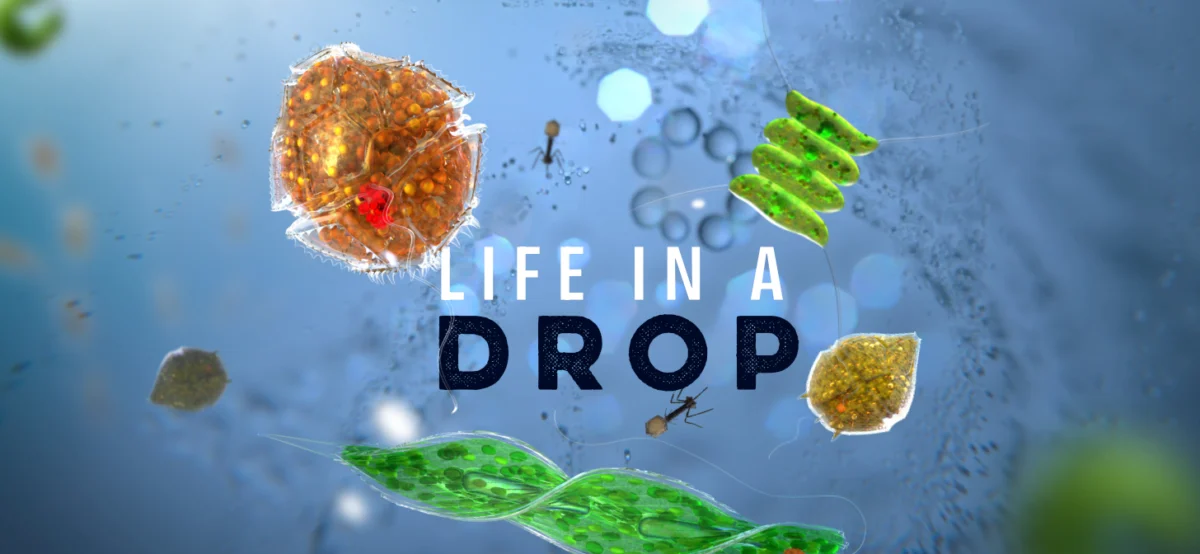
Budapest, Hungary – A groundbreaking 15-minute popular science short film, "Life in a Drop," has emerged from the laboratories of the Hungarian Centre for Ecological Research, meticulously crafted over eighteen months by a dedicated team of animators utilizing the powerful open-source 3D creation suite, Blender. This ambitious project transcends traditional scientific communication, offering a visually stunning and scientifically accurate glimpse into the often-unseen world of aquatic microorganisms.
The genesis of "Life in a Drop" lies within the ongoing research conducted by scientists at the Institute of Aquatic Ecology, a key component of the Hungarian Centre for Ecological Research. For years, these researchers have been at the forefront of developing sophisticated 3D models of various algae species found in aquatic environments. These intricate digital replicas serve a dual purpose: facilitating precise scientific calculations and contributing to professional scientific visualizations. The models, built using Blender, have enabled researchers to accurately determine crucial parameters such as surface area, volume, biomass, and projected shadow area. The findings derived from these analyses have been consistently published in highly respected scientific journals, underscoring the rigor and importance of their work.
However, the journey of these 3D algae models has now taken a significant evolutionary leap. "Life in a Drop" represents a departure from purely academic dissemination, transforming complex scientific data into an accessible and engaging narrative. The film’s creation marks a significant milestone, showcasing the potent synergy between cutting-edge scientific inquiry and advanced digital animation techniques.

A Deep Dive into the Animation Process
What sets "Life in a Drop" apart is its near-exclusive reliance on Blender for its production. With the exception of the final editing and post-production stages, which were managed using DaVinci Resolve, the entire creative process—from initial concept to final rendering—was executed within the Blender ecosystem by a trio of talented Hungarian animators. This comprehensive use of a single, powerful software platform speaks volumes about Blender’s versatility and its growing prominence in professional animation workflows, even in highly specialized scientific fields.
The pre-production phase was particularly innovative. The animators employed Blender’s Grease Pencil tool, a 2D animation feature integrated within the 3D environment, alongside simplified 3D models. This allowed for the rapid creation of an animatic, a preliminary sequence of drawings or images showing the planned shots of a film or television program. A key advantage of utilizing Blender from this early stage was the ability to incorporate camera movements and musical cues directly into the animatic. This facilitated a highly efficient workflow, enabling the team to clearly define and assign individual tasks to each animator based on a dynamic and interactive blueprint.
Following the animatic, every subsequent production step was seamlessly integrated within Blender. This included meticulous modeling of the microscopic organisms, intricate shading and texturing to achieve realistic appearances, sophisticated rigging for animation, complex simulations to replicate natural movements and interactions, and the innovative use of visual programming with Geometry Nodes for procedural content generation. The team even developed custom add-ons to enhance their workflow, demonstrating a deep mastery of the software. The final rendering of all visual elements was also performed within Blender, a testament to its robust rendering capabilities.
The Scientific Foundation and Creative Vision
The scientific backbone of "Life in a Drop" was provided by a distinguished three-person research team: Gábor Borics, DSc (Doctor of Science), Viktória B-Béres, PhD (Doctor of Philosophy), and Enikő Török-Krasznai, PhD. Their extensive knowledge of aquatic ecosystems and microscopic life forms was instrumental in ensuring the scientific accuracy and integrity of the film’s narrative and visual representations.

Complementing the scientific expertise were the three animators who served as generalists, each contributing to multiple aspects of the animation process: István Attila Tóth, Verona Lerf, and Tibor Kisantal. Kisantal also serves as the writer of the original report, providing valuable insight into the project’s development.
Gábor Borics, DSc, who also took on the roles of screenwriter and production manager, eloquently articulated the overarching vision and aspirations for "Life in a Drop." His statement encapsulates the profound educational and philosophical underpinnings of the film:
"For us, who live our lives in the macroscopic world, we have no idea—nor can we possibly have one—of what goes on in the microcosm, at a scale beyond the reach of our eyes. If we have achieved nothing more than ensuring that, after watching our film, viewers are left with the realization that the tiny creatures of this hidden world must also contend with challenges similar to our own—albeit using different means and on a different scale of time and space—then our work has not been in vain. If the message also gets across that, without these wonderfully beautiful little creatures, our world would never have come into being and could not survive—then we have truly achieved our goal. I believe that anyone who has seen our film will look at a single drop of water in a different light."
This profound sentiment highlights the film’s intent to foster a deeper appreciation for the interconnectedness of life and the vital, often overlooked, roles played by even the smallest organisms in sustaining our planet’s ecosystems.

A Chronology of Creation and Scientific Discovery
The development of "Life in a Drop" can be understood within a broader timeline of scientific advancement and technological evolution:
- Early Research & 3D Modeling (Ongoing): Scientists at the Institute of Aquatic Ecology begin creating detailed 3D models of algae using scientific data. This foundational work provides the raw material for later visualization.
- Blender Adoption for Scientific Visualization (Circa 2010s onwards): As Blender’s capabilities grow, it becomes an increasingly attractive tool for scientific institutions seeking cost-effective and powerful visualization solutions. Researchers begin leveraging Blender for professional scientific visualizations and preliminary animation tests.
- Initiation of "Life in a Drop" Project (Approximately 1.5 years prior to release): Recognizing the potential for broader public engagement, the decision is made to embark on the creation of a popular science short film. The core scientific team collaborates with a dedicated animation team.
- Pre-production and Animatic Development (Early stages): The animators utilize Grease Pencil and simplified 3D models within Blender to storyboard and create a dynamic animatic, incorporating camera movements and early sound design. This phase is crucial for planning the film’s narrative flow and visual execution.
- Full Production in Blender (Majority of the 18-month period): The animation team undertakes all primary production tasks within Blender, including detailed modeling, texturing, shading, rigging, simulations, and rendering. Development of custom tools and add-ons may occur during this intensive period.
- Scientific Review and Refinement (Throughout production): The scientific team continuously reviews the animated sequences to ensure accuracy and fidelity to the real-world behavior and morphology of the microorganisms depicted.
- Editing and Post-production (Final months): The rendered scenes are compiled and edited using DaVinci Resolve. Color correction, sound mixing, and final visual effects are applied to complete the film.
- Public Release (Current): "Life in a Drop" is officially unveiled, making its scientific narrative accessible to a global audience.
Supporting Data and Scientific Context
The microscopic world depicted in "Life in a Drop" is a realm of immense biodiversity and crucial ecological functions. Algae, the primary focus of the film, are photosynthetic organisms that form the base of many aquatic food webs. They are responsible for a significant portion of the Earth’s oxygen production, often referred to as the "lungs of the planet."
- Oxygen Production: Phytoplankton, a diverse group of algae, are estimated to produce between 50% and 85% of the oxygen in Earth’s atmosphere. This underscores their indispensable role in maintaining breathable air for all life forms.
- Carbon Sequestration: Algae play a vital role in the global carbon cycle. Through photosynthesis, they absorb vast amounts of carbon dioxide from the atmosphere, helping to mitigate climate change. When algae die, a portion of this carbon sinks to the ocean floor, effectively sequestering it for long periods.
- Biomass and Productivity: The sheer biomass of microscopic aquatic life is staggering. While individual organisms are tiny, their collective numbers and rapid reproductive rates contribute to a highly productive ecosystem. For instance, certain species of diatoms, a type of algae, can reproduce every few hours under optimal conditions.
- Ecological Significance: These microorganisms are not just producers; they are also consumed by zooplankton, which in turn are preyed upon by larger organisms, forming intricate food chains. Disruptions to algal populations can have cascading effects throughout the entire aquatic ecosystem, impacting fish stocks, marine mammals, and ultimately, human populations that rely on these resources.
- Impact of Environmental Changes: The health and distribution of algal populations are highly sensitive to environmental changes, including water temperature, nutrient levels, pH, and pollution. Research into these factors, which is the bedrock of the Institute of Aquatic Ecology’s work, is crucial for understanding and addressing issues like algal blooms, ocean acidification, and the overall health of aquatic environments. The 3D models developed by the scientists allow for more accurate predictions and analyses of these complex interactions.
Broader Impact and Implications
The success of "Life in a Drop" has far-reaching implications for both scientific communication and the animation industry.
For Scientific Communication:
The film serves as a powerful testament to the potential of visual storytelling in making complex scientific concepts accessible and engaging to a broad audience. By translating abstract data into compelling imagery, it can foster greater public understanding and appreciation for scientific research, particularly in fields that are not immediately visible to the naked eye. This approach can inspire future generations of scientists and promote informed public discourse on critical environmental issues. The film’s success may encourage other research institutions to explore similar animation-based outreach strategies, potentially leading to a new era of science popularization.

For the Animation Industry:
The comprehensive use of Blender for a scientifically rigorous and aesthetically sophisticated production highlights the software’s growing maturity and capability. It demonstrates that Blender is not just a tool for independent artists or hobbyists but a viable and powerful option for professional productions, even those with stringent scientific requirements. This could lead to increased adoption of Blender in educational, documentary, and even commercial animation pipelines, potentially democratizing access to high-quality animation production. The project’s efficiency, achieved through extensive use of Blender’s integrated features and custom add-ons, could also offer valuable insights into optimized production workflows for other animated projects.
The film’s production team has also made the film available for viewing, including embedding it on their website. This commitment to accessibility ensures that the valuable scientific insights and artistic achievements are readily available to educators, students, and the general public worldwide. The team’s dedication to sharing their work, as exemplified by their detailed website and the film’s public release, further solidifies its potential to educate and inspire.
"Life in a Drop" stands as a remarkable achievement, demonstrating how scientific inquiry, artistic talent, and advanced digital tools can converge to create a work that is both intellectually stimulating and visually captivating, fundamentally altering how we perceive the unseen world that sustains our own.
About the Author